




Researchers Identify Common Factors in Truck-Related Crashes
Two Kansas State University civil engineers are working to make Kansas roads and highways safer by reducing the number and severity of vehicular crashes that involve large, cargo-carrying trucks
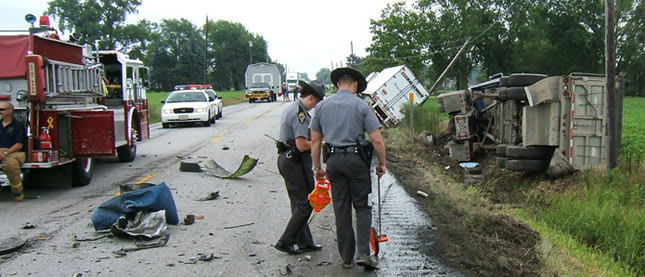
Two Kansas State University civil engineers are working to make Kansas roads and highways safer by reducing the number and severity of vehicular crashes that involve large, cargo-carrying trucks.
Sunanda Dissanayake, associate professor of civil engineering, and Siddhartha Kotikalapudi, master's student in civil engineering, India, are looking at five years' worth of statistics about crashes involving commercial trucks. Although large trucks account for just 3% of registered vehicles in the U.S., truck-related crashes tend to be more severe than non-truck crashes.
"In 2009 the Federal Motor Carrier Safety Administration recorded that one out of every 10 traffic fatalities in the U.S. was a result from collisions involving large trucks," Dissanayake says. "When you consider that between 30,000 to 35,000 people die each year in all motor vehicle crashes, it's a pretty significant issue."
Dissanayake and Kotikalapudi are currently in the second phase of their study, titled "Study of characteristics and evaluation of factors associated with large truck crashes," which is being funded by the Mid-America Transportation Center.
Using information from the National Highway Traffic Safety Administration's Fatality Analysis Reporting System - a comprehensive database with statistics about fatal crashes - the researchers analyzed truck-related fatalities throughout the nation for the first phase. Currently, they are analyzing Kansas data from 2004-2008 and identifying the characteristics and factors that contributed to the crashes. A total of 18,919 crashes involving large trucks were recorded in the state throughout those five years. Of those accidents involving another vehicle, 81% ended with fatalities to occupants in the other vehicles, Dissanayake says.
To find the cause of these truck crashes, the engineers studied the driver, road, vehicle and environmental characteristics involved in accident.
Researchers found that among the 18,919 truck crashes in Kansas, 13,260, or 73%, were contributory causes related to the truck driver. Failing to give enough time and attention to the task being completed - such as switching lanes, passing another vehicle, etc. - was the biggest contributor to driver-related crashes. Similarly, speeding, failing to yield the right of way, improper lane changes and following another vehicle too closely made up the top five contributors.
"Even though it may not feel that way, there are a lot of processes going on when you drive," Dissanayake says. "Your brain is getting lots of information and processing it to determine what your action will be. So if a driver misses a detail or doesn't give enough time to process that information related to what they are doing, it could lead to a crash."
Other causes contributing to truck crashes included: environmental-related, such as animals or rain (13%); road-related, such as ice or wet asphalt (7.8%); and vehicle-related, such as falling cargo or defective brakes (6.1%).
Additionally, researchers found:
- Nearly 78% of truck-crashes happened during daylight and with no adverse weather conditions such as rain or snow
- A majority of the truck crashes happened between noon and 3 p.m.
- More truck crashes happened in locations with a high speed limit.
Dissanayake and Kotikalapudi are using these findings, as well as those from statistical models based on the data, to develop new safety guidelines and educational tools for truck drivers in an effort to reduce truck-related crashes.
Similarly, recommendations may also be made for new or amended legislation - both for the truck drivers and other drivers - Dissanayake says.
"Kansas recently introduced the 'Click It or Ticket' seatbelt law, for example," she says. "The fine for not wearing a seat belt is $10. Some people may feel that a $10 fine is affordable and is not a deterrent to have their freedom compromised, so that might be an issue that needs to be looked into further."
More Safety & Compliance
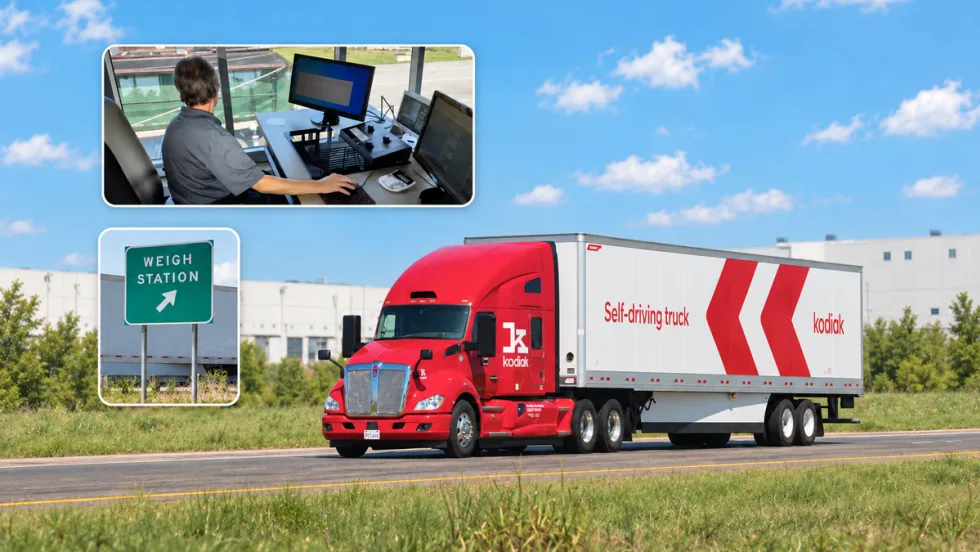
PrePass, Kodiak Connect Driverless Trucks to Roadside Enforcement
The system will allow enforcement agencies to verify Enhanced Inspection information and decide whether Kodiak’s autonomous trucks can bypass roadside screening sites.
Read More →
From One Generation to the Next: How Mentorship Builds Safer Truck Drivers
After three decades in trucking, Harold Perry shares what he's learned about driver safety, mentorship, and helping the next generation build confidence behind the wheel.
Read More →
FMCSA Pauses Biennial-Update Enforcement Amid Motus Transition
Carriers whose updates were due on or after June 1 have more time, while FMCSA works to stabilize its new registration system and warns of phishing sites impersonating its new carrier registration system, Motus.
Read More →
ZF Expands Commercial Vehicle Push in North America
ZF is expanding its North American commercial-vehicle presence with new transmission applications, electrification, trailer technology and autonomous-driving systems.
Read More →
Truck Drivers Need More Than Another Alert
Fleets have more visibility into truck health, safety events, and driver activity than ever. The next challenge is turning all that information into useful guidance for the person who has to decide what to do next.
Read More →
Tesla Wants a Self-Driving Semi. Are Cameras Enough?
Could Tesla’s camera-only autonomous driving technology work on an 80,000-pound Semi? In this commentary, HDT's Deborah Lockridge takes a look at Tesla, Cybercab, and how autonomous trucks see the road.
Read More →
What DOT’s Automated Vehicle Strategy Means for Trucking
The U.S. Department of Transportation issued a new automated-vehicle strategy that outlines plans for driverless-truck regulations, cross-state freight corridors, and federal safety standards.
Read More →
NYC Expands Speed, Pedestrian Safety Tech Across Fleet
New York City is expanding intelligent speed assistance and pedestrian-alert systems across its municipal fleet, moving the technologies from pilot programs into vehicle procurement and retrofit requirements.
Read More →
FMCSA Removes 110 Truck Driver Training Schools from Certified ELDT List
Federal regulators also are targeting more than 160 additional training providers and launching a nationwide audit of third-party CDL skills testers as part of a broader crackdown on trucking fraud.
Read More →
Beyond DOT Compliance: What Makes a Trucking Fleet Truly Safe?
A trucking fleet can follow every rule and still make unsafe decisions. The real test comes when safety conflicts with freight, productivity, or cost.
Read More →