




Report Reveals Utility Trailer's Environmental and Sustainability Improvements
The results of a third-party sustainability performance report shows that Utility Trailer Manufacturing has managed to cut emissions and improve sustainability at its manufacturing operations over the past two decades.

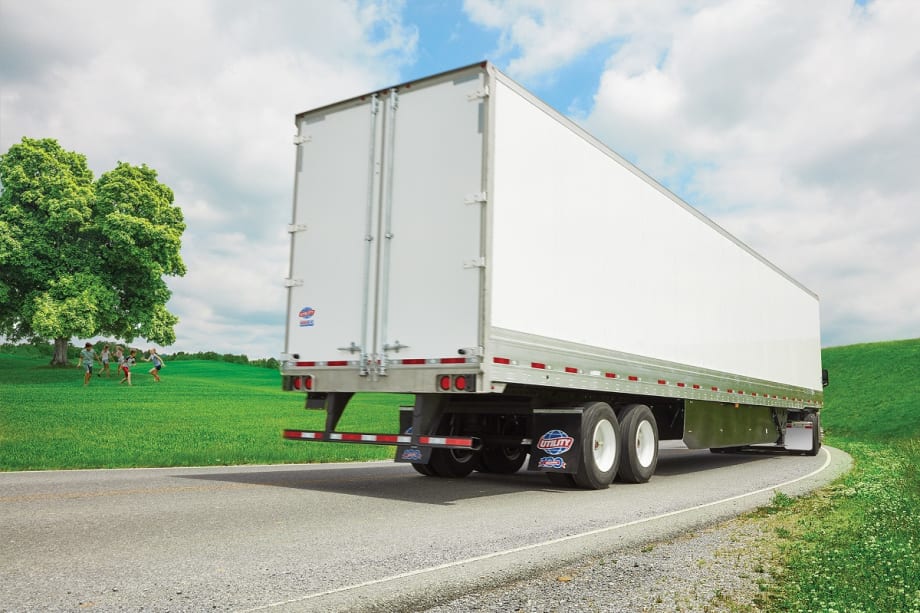
The results of a third-party sustainability performance report shows that Utility Trailer Manufacturing has managed to cut emissions and improve sustainability at its manufacturing operations over the past two decades.
Photo courtesy Utility Trailer Manufacturing
The results of a third-party sustainability performance report shows that Utility Trailer Manufacturing has managed to cut emissions from its manufacturing operations in several key categories.
The report was conducted by Ramboll, an engineering, design and consultancy company founded in Denmark. Using two decades of data from all five of Utility’s manufacturing plants in the U.S., the report provides insight into the benefits and impact of Utility’s effort to responsibly reduce their overall air emissions, waste and energy consumption.
With proactive green initiatives, Utility eliminated ozone-depleting emissions from their inject-foam insulation process and reduced their overall waste and emissions. Results show that Greenhouse Gas emissions decreased by 27%, Volatile Organic Compounds emissions were cut down 62%, and Hazardous Air Pollutants air emissions dropped 97%.
“We are honored to say that all Utility manufacturing plants are classified as Minor Sources of Emissions under the USEPA’s Clean Air Act regulations” said Brett Olsen, marketing manager for Utility. “We take pride in managing our production and manufacturing with integrity as it relates to forward-thinking environmental practices.”
To add to their reduced emissions, Utility also sources 100% of its wood from forests certified by the Sustainable Forest Initiative, and their focus on cardboard recycling yielded a 23% increase.
Utility was able to improve worker safety as well. The company’s recordable injuries decreased by 63%, while the most severe injuries declined by 67%, making it 31% lower than the industry average, according to the report.
Utility’s reductions to water, energy, and materials usage cut down costs, improved efficiency, and provided substantial financial savings for the company each year, according to the company.
“These results prove that our proactive initiatives are achieving a safer, smarter, and more sustainable workplace,” said Olsen. “By staying ahead of the curve, we are pursuing and implementing sustainable practices that better our employees, our environment, and best utilize our natural resources.”
More Fuel Smarts

How Volvo Updated Its D13 for EPA 2027 [Watch]
Volvo’s updated D13 promises lower emissions without sacrificing performance or fuel economy. Take a closer look at what changed inside the engine in this HDT Spotlight video.
Read More →
Diesel Price Spike Shortens Payback for Natural Gas Trucks, Report Says
Energy Vision estimates fleets could recover the higher purchase price of an RNG-fueled Class 8 tractor in 1.3 to 2.8 years under current fuel-price scenarios.
Read More →
Calstart Becomes Catalyst Mobility, Reflecting Broader Focus
Calstart is now Catalyst Mobility, reflecting the nonprofit’s growing national role in clean transportation, including zero-emission trucks, infrastructure and incentive programs.
Read More →

Record Diesel Prices Squeeze Trucking Fleets
Average U.S. diesel prices have climbed to nearly $6 a gallon, surpassing the 2022 record as tight refinery capacity and Middle East disruptions keep fuel costs elevated.
Read More →
How Fuel Delivery Shapes Engine Performance
Fuel delivery depends on more than what happens at the injector. For fleet, maintenance and technical professionals, looking at the full path from pump to injector can provide useful context for understanding engine performance.
Read More →
East Coast Port Launches $45M Electric Truck Push
The Port Authority of New York and New Jersey announced millions in incentives for zero-emission drayage trucks, yard tractors, and new charging hubs near the port.
Read More →
California Bill Could Shed Light on Electric Truck Prices
Why do battery-electric Class 8 trucks remain so expensive? A California bill headed to Gov. Gavin Newsom would give fleets and state agencies more visibility into what manufacturers charge.
Read More →
Detroit Opens Orders for EPA 2027 Engines
Detroit isn’t starting from scratch to meet EPA 2027 diesel emissions standards. Its Gen 6 DD13 and DD15 engines keep much of today’s platform while updating the fuel and aftertreatment systems.
Read More →
Zero-Emission Truck Corridor Planned for West Coast
California, Oregon, Washington, British Columbia and Baja California are coordinating plans for truck charging and hydrogen fueling from Canada to Mexico.
Read More →
A Closer Look at Kenworth’s Electric T880E Vocational Truck [Video]
Learn more about Kenworth's T880E battery-electric vocational truck at the Paccar Technical Center, including its range, applications, upfitting considerations, and PTO options, in this HDT Spotlight video.
Read More →