




Renewable Diesel, Biodiesel Cut GHG Emissions in California
New numbers from the California Air Resources Board demonstrate the importance of renewable fuels in cutting greenhouse gases from heavy-duty vehicles in California.


Neste is one of the companies providing renewable diesel. To date, Neste has provided more than 1.5 billion gallons of renewable diesel to California businesses and cities, Neste officials said.
Photo: Neste
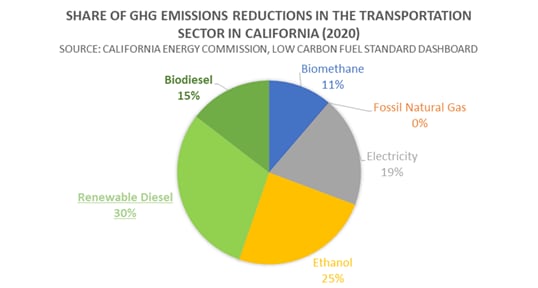
Renewable diesel and biodiesel are playing a major role in reducing greenhouse gas emissions from the transport sector in California, according to newly released data from the California Air Resources Board on California’s Low Carbon Fuel Standard Program.
The Diesel Technology Forum, a not-for-profit organization dedicated to raising awareness about the importance of diesel engines, fuel, and technology, points out that low-carbon transportation fuels powering internal combustion engines delivered the state’s biggest reduction in transportation-related sources of greenhouse gas emissions.
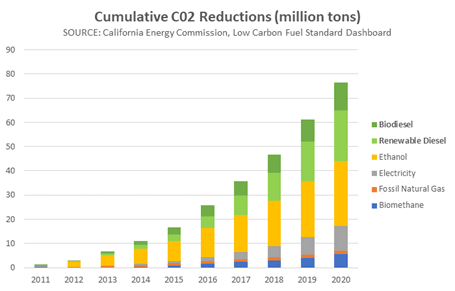
Biodiesel and renewable diesel fuel are the biggest carbon-cutting technologies from the transportation sector in the report, edging out ethanol and beating the benefits of electrified cars, trucks and buses by three to one, notes the forum.
Graph: Diesel Technology Forum
Cumulatively, over the period of 2011-2020, California’s consumption of biodiesel and renewable diesel fuels accounted for 43% (over 32 million tons) of all greenhouse gas eliminated from the transportation sector, while battery-electric transportation options accounted for only 13% (10 million tons), according to Allen Schaeffer, executive director of the Diesel Technology Forum.
Availability of low carbon-biobased diesel fuel is expanding. CARB estimates that biobased diesel fuel has grown from about 16 million gallons in 2011 to nearly 1 billion gallons in 2020. Renewable diesel fuel is one the fastest-growing low-carbon transportation fuels sold in the state, notes DTF.
These are fuels derived from waste feedstocks, including vegetable oils and animal fats, to yield very low carbon transportation fuels.
Traditional fuel producers such as Marathon and Phillips66 have announced investments to retool petroleum refineries to produce renewable diesel fuel, in addition to existing large renewable diesel providers such as Neste and Renewable Energy Group. Love’s, Cargill and their affiliates recently announced a joint venture to produce and market renewable diesel.
Energy analysts estimate that announced capacity from these announcements would equate to nearly 3 billion gallons of the fuel produced annually, or about as much petroleum diesel fuel consumed in California in 2019.
Graph: Diesel Technology Forum
“Relative to other strategies, today the switch to biobased diesel fuel is a cost-effective solution that allows municipal and private fleets to generate big climate benefits at least cost by using existing assets like fueling infrastructure and diesel engines,” said Schaeffer in a news release.
For example:
The City of Oakland was an early adopter of renewable diesel fuel. All of the city-owned trucks, equipment and emergency generators are now operating on 100T renewable diesel fuel to displace 230,000 gallons of petroleum diesel and reduce greenhouse gas emissions by 75%.
The City of San Diego is now fueling its fleet of 1,125 heavy-duty vehicles and equipment with renewable diesel fuel to achieve more than 80% reduction on greenhouse gas emissions
“Meeting the climate challenge will require many solutions,” Schaeffer said in a news release. “While the promise of zero-emissions technologies is growing, internal combustion engines using biobased diesel fuels have been delivering significant carbon reductions across broad sectors of the economy. The greatest benefits are occurring from the use of these biobased diesel fuels in heavy-duty vehicles, Class 8 trucks, that represent 60% of all emissions generated by the fleet of commercial vehicles.
“With other West Coast states recently adopting low-carbon transportation policies, we expect a green corridor from California through British Columbia and biobased diesel fuels will generate impressive climate benefits as they have in California.”
More Fuel Smarts

How Volvo Updated Its D13 for EPA 2027 [Watch]
Volvo’s updated D13 promises lower emissions without sacrificing performance or fuel economy. Take a closer look at what changed inside the engine in this HDT Spotlight video.
Read More →
Diesel Price Spike Shortens Payback for Natural Gas Trucks, Report Says
Energy Vision estimates fleets could recover the higher purchase price of an RNG-fueled Class 8 tractor in 1.3 to 2.8 years under current fuel-price scenarios.
Read More →
Calstart Becomes Catalyst Mobility, Reflecting Broader Focus
Calstart is now Catalyst Mobility, reflecting the nonprofit’s growing national role in clean transportation, including zero-emission trucks, infrastructure and incentive programs.
Read More →

Record Diesel Prices Squeeze Trucking Fleets
Average U.S. diesel prices have climbed to nearly $6 a gallon, surpassing the 2022 record as tight refinery capacity and Middle East disruptions keep fuel costs elevated.
Read More →
How Fuel Delivery Shapes Engine Performance
Fuel delivery depends on more than what happens at the injector. For fleet, maintenance and technical professionals, looking at the full path from pump to injector can provide useful context for understanding engine performance.
Read More →
East Coast Port Launches $45M Electric Truck Push
The Port Authority of New York and New Jersey announced millions in incentives for zero-emission drayage trucks, yard tractors, and new charging hubs near the port.
Read More →
California Bill Could Shed Light on Electric Truck Prices
Why do battery-electric Class 8 trucks remain so expensive? A California bill headed to Gov. Gavin Newsom would give fleets and state agencies more visibility into what manufacturers charge.
Read More →
Detroit Opens Orders for EPA 2027 Engines
Detroit isn’t starting from scratch to meet EPA 2027 diesel emissions standards. Its Gen 6 DD13 and DD15 engines keep much of today’s platform while updating the fuel and aftertreatment systems.
Read More →
Zero-Emission Truck Corridor Planned for West Coast
California, Oregon, Washington, British Columbia and Baja California are coordinating plans for truck charging and hydrogen fueling from Canada to Mexico.
Read More →
A Closer Look at Kenworth’s Electric T880E Vocational Truck [Video]
Learn more about Kenworth's T880E battery-electric vocational truck at the Paccar Technical Center, including its range, applications, upfitting considerations, and PTO options, in this HDT Spotlight video.
Read More →