





Related: Proterra Offers Turnkey Management for Battery-Electric Vehicles
Proterra Launches Vehicle Electrification Solutions Service for Truck Makers
Proterra has launched the Proterra Powered vehicle electrification solution aimed at commercial vehicle manufacturers, leveraging the company’s electric vehicle technology to help OEMs design heavy-duty electric vehicles.
August 7, 2019
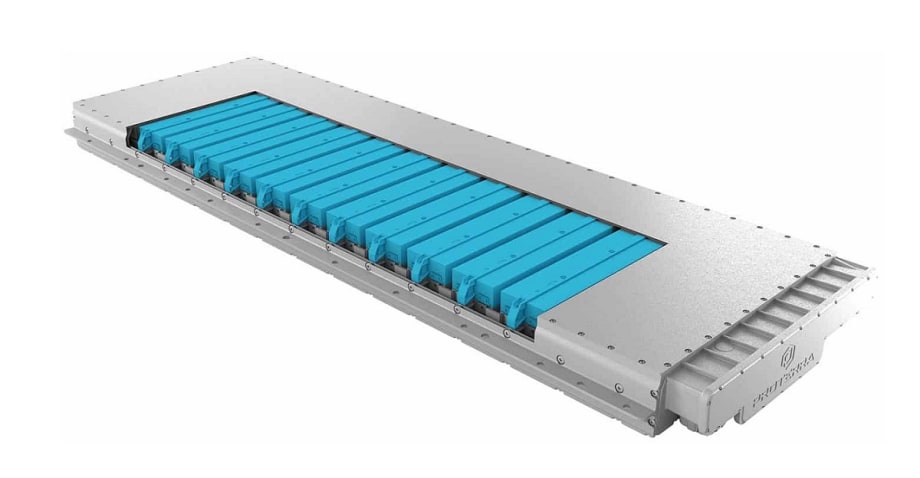
Proterra has launched the Proterra Powered vehicle electrification solution aimed at commercial vehicle manufacturers, leveraging the company’s electric vehicle technology to help OEMs design heavy-duty electric vehicles.
Photo via Proterra
2 min to read
Proterra has launched the Proterra Powered vehicle electrification solutions aimed at commercial vehicle manufacturers, leveraging the company’s electric vehicle technology to help OEMs design heavy-duty electric vehicles.
In addition to providing vehicle electrification hardware, Proterra works with partners step by step to ensure a successful EV program. From initial design consulting, engineering services and integration, to service support, training, and charging infrastructure implementation, Proterra offers comprehensive solutions for vehicle electrification. The company has already helped produce electric transit buses under the Proterra Catalyst name and plans to use its technologies in other large commercial vehicle applications.
Proterra has spent years developing battery systems, electric drivetrain technology and standardized, heavy-duty charging systems for commercial vehicles. The company is already partnering with OEMs like Daimler, Van Hool and Alexander Dennis to produce battery electric vehicles based on the company’s electrification technologies.
“Commercial urban fleets are the best use case for EV technology and we are at the beginning of an electrification revolution for heavy-duty vehicles due to declining battery costs, improved electric powertrain technology, lowered maintenance, and the immense public health benefits EVs bring to our communities,” said Ryan Popple, Proterra CEO. “As more OEMs adopt EV technology for their vehicles, Proterra is uniquely positioned to be the best electrification partner because of our years of experience testing and evolving our battery system, drivetrains and charging systems through the deployment of our Proterra Catalyst transit vehicles, with vehicles on the road all across North America.”
Proterra’s battery systems were designed for better range and feature a flexible design to fit within a wide variety of vehicles. Stored in ruggedized commercial grade housing, the batteries modular designs enable customizable battery pack dimensions that can be configured to fit a variety of heavy-duty vehicle platforms.
Proterra also offers high power charging systems that are purpose-built for heavy-duty applications and use standardized technology for interoperability. Proterra charging systems utilize the universal J1772-CCS Type 1 charging standard, and can be used for a range of battery-electric powered vehicles.
Proterra also offers a turn-key approach to delivering the complete energy ecosystem for heavy-duty electric fleets through Proterra Energy fleet solutions, including charging infrastructure design, build, financing, operations, maintenance and energy optimization using the Proterra Apex connected vehicle intelligence system.
More Fuel Smarts

How Volvo Updated Its D13 for EPA 2027 [Watch]
Volvo’s updated D13 promises lower emissions without sacrificing performance or fuel economy. Take a closer look at what changed inside the engine in this HDT Spotlight video.
Read More →
Diesel Price Spike Shortens Payback for Natural Gas Trucks, Report Says
Energy Vision estimates fleets could recover the higher purchase price of an RNG-fueled Class 8 tractor in 1.3 to 2.8 years under current fuel-price scenarios.
Read More →
Calstart Becomes Catalyst Mobility, Reflecting Broader Focus
Calstart is now Catalyst Mobility, reflecting the nonprofit’s growing national role in clean transportation, including zero-emission trucks, infrastructure and incentive programs.
Read More →

Record Diesel Prices Squeeze Trucking Fleets
Average U.S. diesel prices have climbed to nearly $6 a gallon, surpassing the 2022 record as tight refinery capacity and Middle East disruptions keep fuel costs elevated.
Read More →
Sponsored•September 9, 2026
How Fuel Delivery Shapes Engine Performance
Fuel delivery depends on more than what happens at the injector. For fleet, maintenance and technical professionals, looking at the full path from pump to injector can provide useful context for understanding engine performance.
Read More →
East Coast Port Launches $45M Electric Truck Push
The Port Authority of New York and New Jersey announced millions in incentives for zero-emission drayage trucks, yard tractors, and new charging hubs near the port.
Read More →
California Bill Could Shed Light on Electric Truck Prices
Why do battery-electric Class 8 trucks remain so expensive? A California bill headed to Gov. Gavin Newsom would give fleets and state agencies more visibility into what manufacturers charge.
Read More →
Detroit Opens Orders for EPA 2027 Engines
Detroit isn’t starting from scratch to meet EPA 2027 diesel emissions standards. Its Gen 6 DD13 and DD15 engines keep much of today’s platform while updating the fuel and aftertreatment systems.
Read More →
Zero-Emission Truck Corridor Planned for West Coast
California, Oregon, Washington, British Columbia and Baja California are coordinating plans for truck charging and hydrogen fueling from Canada to Mexico.
Read More →
A Closer Look at Kenworth’s Electric T880E Vocational Truck [Video]
Learn more about Kenworth's T880E battery-electric vocational truck at the Paccar Technical Center, including its range, applications, upfitting considerations, and PTO options, in this HDT Spotlight video.
Read More →