




Proterra Going Public Following Transaction with ArcLight Clean Transition Corp.
The transaction represents an enterprise value of $1.6 billion for Proterra.
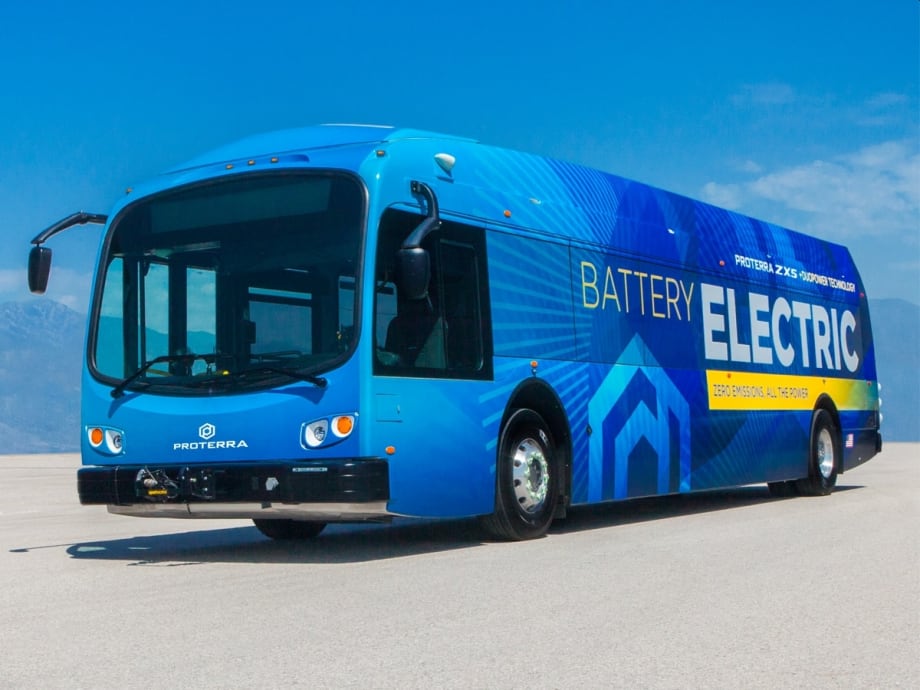
Proterra is a high-growth commercial electric vehicle technology provider with over a decade of production experience.
Proterra
Proterra Inc. will become publicly listed through a transaction with ArcLight Clean Transition Corp., a publicly traded special purpose acquisition company. Upon closing, Proterra’s common stock is expected to trade on the Nasdaq under the ticker symbol PTRA. The transaction represents an enterprise value of $1.6 billion for Proterra.
Proterra is a high-growth commercial electric vehicle technology provider with over a decade of production experience. The company has designed an end-to-end, flexible technology platform that delivers world-class performance and a low total cost of ownership to original equipment manufacturers (OEMs) and end customers. Proterra has three complementary businesses:
Proterra Powered: Delivering industry-leading battery systems and electrification solutions to commercial vehicle manufacturers.
Proterra Transit: Leading North America as the market’s #1 electric transit bus OEM.
Proterra Energy: Offering end-to-end turnkey charging and energy management solutions.
The company’s battery systems have been proven in more than 16 million service miles driven by its fleet of transit vehicles and validated through partnerships with world-class commercial vehicle OEMs, such as Freightliner Custom Chassis Corporation, Thomas Built Buses, Van Hool, Bustech, and Optimal-EV. To date, Proterra has produced and delivered more than 300 megawatt-hours of battery systems, more than 550 heavy-duty electric transit buses and installed 54 megawatts of charging systems.
Proterra operates manufacturing facilities in California and South Carolina, as well as a state-of-the-art R&D lab in Silicon Valley. The company recently announced the opening of a new battery production line co-located in its electric transit bus manufacturing facility in Los Angeles County. The battery production line was established within a year and demonstrates Proterra’s ability to bring its scalable and capital-efficient battery manufacturing process directly to commercial vehicle OEMs alongside their existing manufacturing.
Following the close of the transaction, Jack Allen, Proterra’s Chairman and CEO, will continue to lead the company, and Jake Erhard, President, CEO, and Director of ArcLight Clean Transition Corp., will join Proterra’s board.
“This transaction enables Proterra to take the next step towards our mission of advancing EV technology to deliver the world's best performing commercial vehicles,” said Jack Allen, chairman and CEO of Proterra. “In addition, it introduces a partner in ArcLight that has a shared focus on sustainability and renewable energy. We look forward to working closely with the ArcLight team as we create value for our shareholders and customers, scale our business to new levels and benefit the world around us.”
The transaction has been unanimously approved by the Boards of Directors of both Proterra and ArcLight Clean Transition Corp. It is expected to close in the first half of 2021, subject to the satisfaction of customary closing conditions, including the approval of ArcLight Clean Transition Corp.’s shareholders.
The transaction is expected to deliver approximately $648 million in cash at closing, including approximately $278 million of cash held in ArcLight Clean Transition Corp.’s trust account from its initial public offering in September 2020. The transaction is further supported by a $415 million PIPE at $10.00 per share from key investors, including strategic partners Daimler Trucks and Constellation, existing investors Franklin Templeton, Broadscale, 40 North and G2VP, as well as new investors such as Chamath Palihapitiya, Fidelity Management & Research Company LLC, funds and accounts managed by BlackRock, Neuberger Berman Funds and affiliates of ArcLight. Proterra’s existing shareholders have agreed to convert 100% of their ownership stakes into the new company, and are expected to own more than 60% percent of the pro forma company at close.
Originally posted on Metro
More Fuel Smarts

How Volvo Updated Its D13 for EPA 2027 [Watch]
Volvo’s updated D13 promises lower emissions without sacrificing performance or fuel economy. Take a closer look at what changed inside the engine in this HDT Spotlight video.
Read More →
Diesel Price Spike Shortens Payback for Natural Gas Trucks, Report Says
Energy Vision estimates fleets could recover the higher purchase price of an RNG-fueled Class 8 tractor in 1.3 to 2.8 years under current fuel-price scenarios.
Read More →
Calstart Becomes Catalyst Mobility, Reflecting Broader Focus
Calstart is now Catalyst Mobility, reflecting the nonprofit’s growing national role in clean transportation, including zero-emission trucks, infrastructure and incentive programs.
Read More →

Record Diesel Prices Squeeze Trucking Fleets
Average U.S. diesel prices have climbed to nearly $6 a gallon, surpassing the 2022 record as tight refinery capacity and Middle East disruptions keep fuel costs elevated.
Read More →
How Fuel Delivery Shapes Engine Performance
Fuel delivery depends on more than what happens at the injector. For fleet, maintenance and technical professionals, looking at the full path from pump to injector can provide useful context for understanding engine performance.
Read More →
East Coast Port Launches $45M Electric Truck Push
The Port Authority of New York and New Jersey announced millions in incentives for zero-emission drayage trucks, yard tractors, and new charging hubs near the port.
Read More →
California Bill Could Shed Light on Electric Truck Prices
Why do battery-electric Class 8 trucks remain so expensive? A California bill headed to Gov. Gavin Newsom would give fleets and state agencies more visibility into what manufacturers charge.
Read More →
Detroit Opens Orders for EPA 2027 Engines
Detroit isn’t starting from scratch to meet EPA 2027 diesel emissions standards. Its Gen 6 DD13 and DD15 engines keep much of today’s platform while updating the fuel and aftertreatment systems.
Read More →
Zero-Emission Truck Corridor Planned for West Coast
California, Oregon, Washington, British Columbia and Baja California are coordinating plans for truck charging and hydrogen fueling from Canada to Mexico.
Read More →
A Closer Look at Kenworth’s Electric T880E Vocational Truck [Video]
Learn more about Kenworth's T880E battery-electric vocational truck at the Paccar Technical Center, including its range, applications, upfitting considerations, and PTO options, in this HDT Spotlight video.
Read More →