




Related: UPS Sees Bright and Possibly Transformational Future for Electric Trucks
Proposed California Bill Aims to Ditch Diesel by 2050
A recent bill proposed by California State Senator Nancy Skinner (D-Berkeley) lays out an even more aggressive plan for emissions reduction in the state and puts the transportation sector squarely in its crosshairs.

Steven Martinez・Web Editor
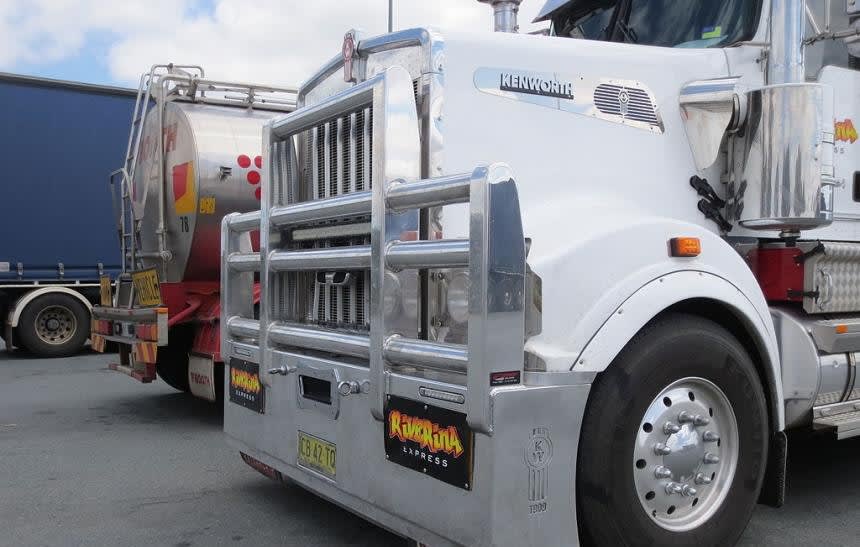
A recently proposed bill in California seeks a more aggressive track for diesel engine emissions reduction in medium- and heavy-duty trucks.
Credit:
Creative Commons
2 min to read
A recent bill proposed by California State Senator Nancy Skinner (D-Berkeley) lays out an even more aggressive plan for emissions reduction in the state and puts the transportation sector squarely in its crosshairs than previously introduced bills in the Golden State.
Senate Bill 44, also known as the Ditching Dirty Diesel bill, is designed to phase out, over time, the use of diesel-fueled medium- and heavy-duty trucks and buses in California. The bill would mandate that the California Air Resources Board, come up with a plan to reduce greenhouse gas emissions in commercial trucks by 40% within 10 years and 80% by 2050.
Sen. Skinner’s main concern with diesel emissions stems from its effects on the health of families and children who live near ports other areas with high concentrations of trucking activity. The pollution in these areas has been linked to an increase in respiratory problems, especially in children, such as asthma, chronic heart and lung disease and even cancer.
While diesel trucks make up 3% of the vehicles on California Roads, they produce 23% of the greenhouse gas emissions from the transportation sector, according to studies cited by the bill. Skinner represents a Bay Area district that includes the Port of Oakland and its surrounding communities.
The Bay Area ranks as the sixth worst region in the U.S. for short-term particulate pollution and is 10th overall for year-round pollution, according to a report from the American Lung Association.
“Tailpipe pollution not only damages our health, it’s a major source of greenhouse gas emissions,” said Skinner. “And the exhaust from diesel trucks in particular presents a pressing health crisis for families and children living near ports and trucking routes, such as West Oakland and Richmond.”
The SB44 also calls for setting aside a percentage of the state’s Greenhouse Gas Reduction Fund each year until 2025 to support he transition to cleaner commercial vehicles. CARB would also be required to identify regulation that could improve market acceptance of clean technologies, spur technology advancements and reduce technology costs. It would also also look into whether policies could be implemented that provide advantages to fleets that reduce emissions early.
“We need to continue to send strong policy signals and financial incentives to spur the transition away from dirty diesel,” said Skinner. “SB 44 is technology neutral, supporting all clean vehicle technologies. But the truth is we must transition to ZEVs to have a real shot at eliminating air pollution and halting climate change.”
More Fuel Smarts

New California Law Could Shed Light on Electric Truck Prices
Why do battery-electric Class 8 trucks remain so expensive? A California bill signed by Gov. Gavin Newsom would give fleets and state agencies more visibility into what manufacturers charge.
Read More →
How Volvo Updated Its D13 for EPA 2027 [Watch]
Volvo’s updated D13 promises lower emissions without sacrificing performance or fuel economy. Take a closer look at what changed inside the engine in this HDT Spotlight video.
Read More →
Diesel Price Spike Shortens Payback for Natural Gas Trucks, Report Says
Energy Vision estimates fleets could recover the higher purchase price of an RNG-fueled Class 8 tractor in 1.3 to 2.8 years under current fuel-price scenarios.
Read More →

Calstart Becomes Catalyst Mobility, Reflecting Broader Focus
Calstart is now Catalyst Mobility, reflecting the nonprofit’s growing national role in clean transportation, including zero-emission trucks, infrastructure and incentive programs.
Read More →
Record Diesel Prices Squeeze Trucking Fleets
Average U.S. diesel prices have climbed to nearly $6 a gallon, surpassing the 2022 record as tight refinery capacity and Middle East disruptions keep fuel costs elevated.
Read More →
Sponsored•September 9, 2026
How Fuel Delivery Shapes Engine Performance
Fuel delivery depends on more than what happens at the injector. For fleet, maintenance and technical professionals, looking at the full path from pump to injector can provide useful context for understanding engine performance.
Read More →
East Coast Port Launches $45M Electric Truck Push
The Port Authority of New York and New Jersey announced millions in incentives for zero-emission drayage trucks, yard tractors, and new charging hubs near the port.
Read More →
Detroit Opens Orders for EPA 2027 Engines
Detroit isn’t starting from scratch to meet EPA 2027 diesel emissions standards. Its Gen 6 DD13 and DD15 engines keep much of today’s platform while updating the fuel and aftertreatment systems.
Read More →
Zero-Emission Truck Corridor Planned for West Coast
California, Oregon, Washington, British Columbia and Baja California are coordinating plans for truck charging and hydrogen fueling from Canada to Mexico.
Read More →
A Closer Look at Kenworth’s Electric T880E Vocational Truck [Video]
Learn more about Kenworth's T880E battery-electric vocational truck at the Paccar Technical Center, including its range, applications, upfitting considerations, and PTO options, in this HDT Spotlight video.
Read More →