




CARB Clean Truck Check Compliance Begins Jan. 1
Starting January 2024, all trucks driving in California will need proof of compliance with CARB’s Clean Truck Check to continue operating in the state. Operating in California without registration in the compliance database could result in violations from CARB and/or the California Highway Patrol.
December 5, 2023

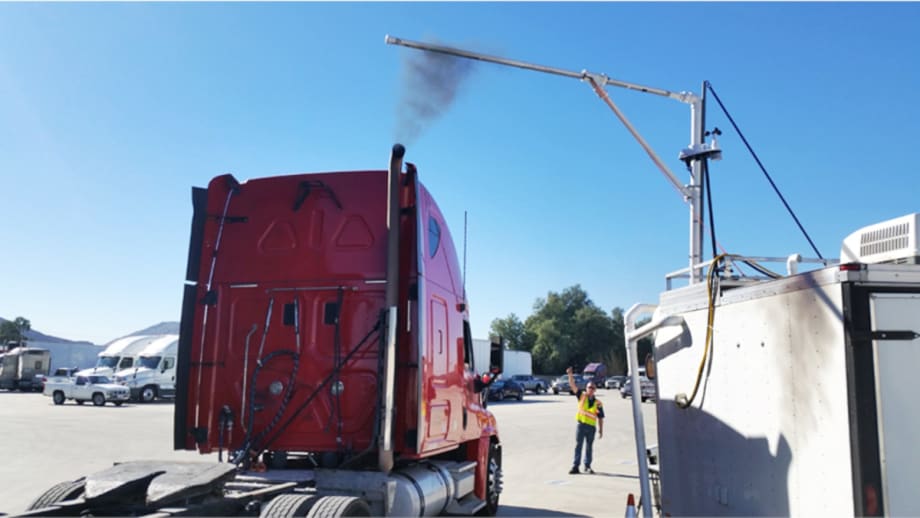
Remote Emissions Monitoring Devices monitor the exhaust emissions of passing heavy-duty vehicles and flag potential high emitters.
Photo: CARB
3 min to read
Beginning on January 1, 2024, all trucks operating in California will need proof of compliance with California Air Resources Board (CARB) regulations to continue operating in the state. Vehicles must be registered in the Clean Truck Check database by Dec. 31.
Clean Truck Check, formerly known as the Heavy-Duty Inspection and Maintenance Program, was approved by CARB in 2021. CARB said the program ensures heavy-duty vehicles operating in California are well-maintained and repaired quickly when needed to reduce emissions and improve public health statewide, especially in disadvantaged communities disproportionately impacted by air pollution.
It also provides a level playing field for the businesses that operate these vehicles as it applies to both in-state and out-of-state registered heavy-duty vehicles, according to CARB.
The program includes nearly all non-gasoline vehicles with a gross vehicle weight rating over 14,000 pounds that operate in California. This includes public vehicles, trucks, buses, personal vehicles, California-registered motorhomes, single-vehicle fleets, and vehicles registered outside of California (not including motorhomes).
Clean Truck Check is being implemented in three phases.
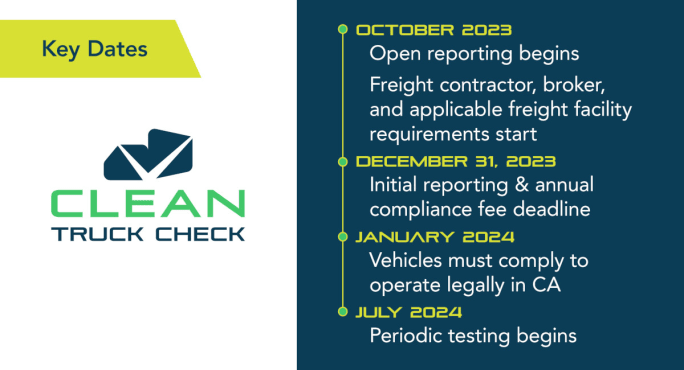
Clean Truck Check rolls out starting in 2023 and into 2024.
Source: CARB
Phase 1 of Clean Truck Check
This initial phase, which started Jan. 1, began with the deployment of Remote Emissions Monitoring Devices (REMD).
REMDs monitor the exhaust emissions of passing heavy-duty vehicles and flag potential high emitters that may receive a Notice to Submit to Testing (NST).
NST’s require vehicle owners to submit a passing compliance test to CARB after any necessary emissions-related repairs are made, within 30 days of receipt of the notice. Failure to comply and remedy emissions-related concerns could result in DMV registration holds and/or removal from the compliance database.
Phase 2 of Clean Truck Check
This phase, which started Oct. 1, requires vehicle owners who are subject to the program to enter their vehicles in CARB’s Clean Truck Check database and pay an initial annual compliance fee of $30 dollars per vehicle by December 31.
Phase 2 also includes freight contractor, broker, and applicable freight facility requirements for hiring compliant fleets, allowing access to the facility, and record keeping.
Starting January 2024, all trucks driving in California will need proof of compliance with these requirements to continue operating in the state. Operating in California without registration in the compliance database could result in violations from CARB and/or the California Highway Patrol.
Phase 3 of Clean Truck Check
Phase 3 of Clean Truck Check requires heavy-duty vehicle owners to conduct periodic emissions testing on their vehicles.
This is similar to California’s Smog Check program for cars, according to CARB.
Periodic testing begins in 2024 and applies to all compliance deadlines after July 1, 2024.
Compliant tests may be submitted as early as April 2024. Periodic testing initially will be required twice per year for nearly all vehicles in the program.
Agricultural vehicles and California-registered motorhomes are required to test once annually. Testing requirements vary based on whether the vehicle is equipped with onboard diagnostics (OBD).
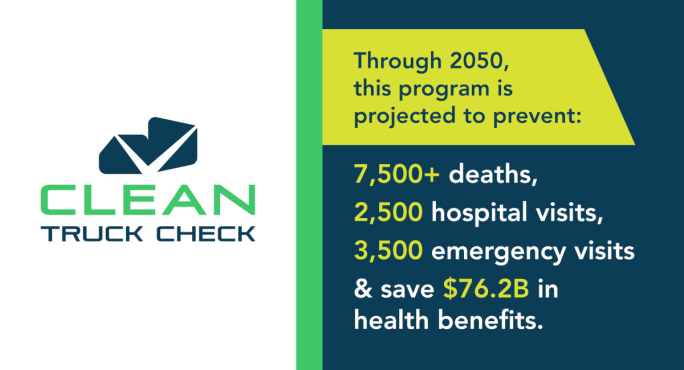
CARB reports Clean Truck Check will save more than 7,500 lives and prevent 2,500 hospital visits.
Source: CARB
For California-registered vehicles, the compliance testing deadlines are linked to each vehicle’s DMV registration expiration/renewal date.
For vehicles registered outside of California and for vehicles exempt from DMV registration requirements, compliance deadlines are based on the last number of a vehicle’s VIN.
Passing test results may be submitted up to 90 days before a compliance deadline. Testing should be performed in a timely manner to avoid penalties and possible DMV registration holds.
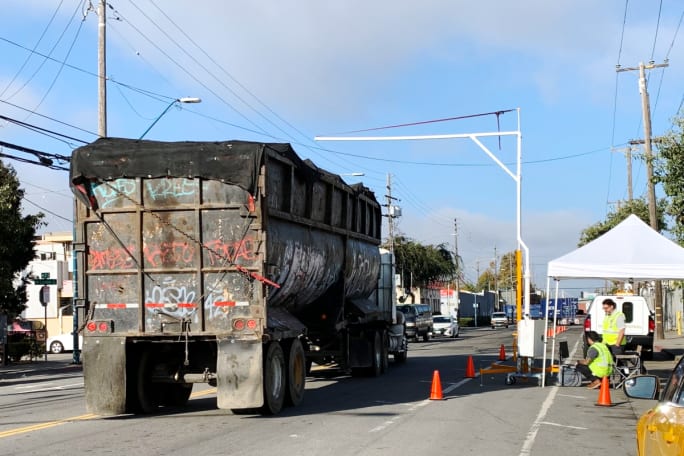
A truck passes an emissions monitoring station in California.
Photo: CARB
More Safety & Compliance

FMCSA Pauses Biennial-Update Enforcement Amid Motus Transition
Carriers whose updates were due on or after June 1 have more time, while FMCSA works to stabilize its new registration system and warns of phishing sites impersonating its new carrier registration system, Motus.
Read More →
ZF Expands Commercial Vehicle Push in North America
ZF is expanding its North American commercial-vehicle presence with new transmission applications, electrification, trailer technology and autonomous-driving systems.
Read More →
Truck Drivers Need More Than Another Alert
Fleets have more visibility into truck health, safety events, and driver activity than ever. The next challenge is turning all that information into useful guidance for the person who has to decide what to do next.
Read More →
Tesla Wants a Self-Driving Semi. Are Cameras Enough?
Could Tesla’s camera-only autonomous driving technology work on an 80,000-pound Semi? In this commentary, HDT's Deborah Lockridge takes a look at Tesla, Cybercab, and how autonomous trucks see the road.
Read More →
What DOT’s Automated Vehicle Strategy Means for Trucking
The U.S. Department of Transportation issued a new automated-vehicle strategy that outlines plans for driverless-truck regulations, cross-state freight corridors, and federal safety standards.
Read More →
NYC Expands Speed, Pedestrian Safety Tech Across Fleet
New York City is expanding intelligent speed assistance and pedestrian-alert systems across its municipal fleet, moving the technologies from pilot programs into vehicle procurement and retrofit requirements.
Read More →
FMCSA Removes 110 Truck Driver Training Schools from Certified ELDT List
Federal regulators also are targeting more than 160 additional training providers and launching a nationwide audit of third-party CDL skills testers as part of a broader crackdown on trucking fraud.
Read More →
Beyond DOT Compliance: What Makes a Trucking Fleet Truly Safe?
A trucking fleet can follow every rule and still make unsafe decisions. The real test comes when safety conflicts with freight, productivity, or cost.
Read More →
Hours of Service Pilot Programs: FMCSA Readies for 2027 Rollout
Two pilot programs could eventually reshape hours-of-service rules, giving truck drivers options to pause their 14-hour clock or use longer split sleeper rest periods.
Read More →
New Guide Offers Pet Safety Tips for Truck Drivers
Hundreds of thousands of pets travel in truck cabs. A new safety guide from Volvo Trucks and the Center for Pet Safety offers practical advice for truck drivers who bring dogs and cats along for the ride.
Read More →