




Port Trucking Group Unveils Plan to Reduce Congestion
The Harbor Truck Association has announced that it is supporting a new plan to reduce congestion at the Ports of Los Angeles and Long Beach.
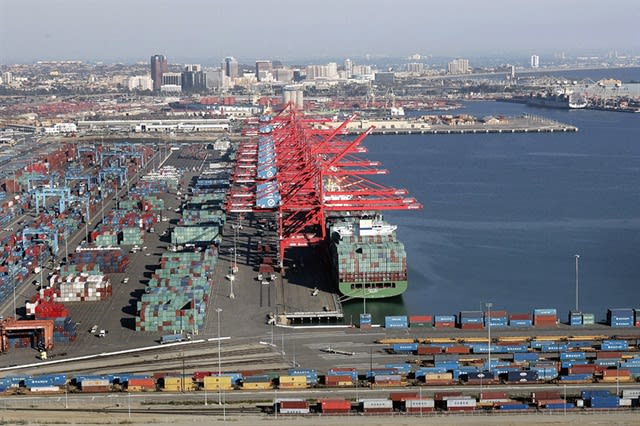
Photo via Port of Long Beach
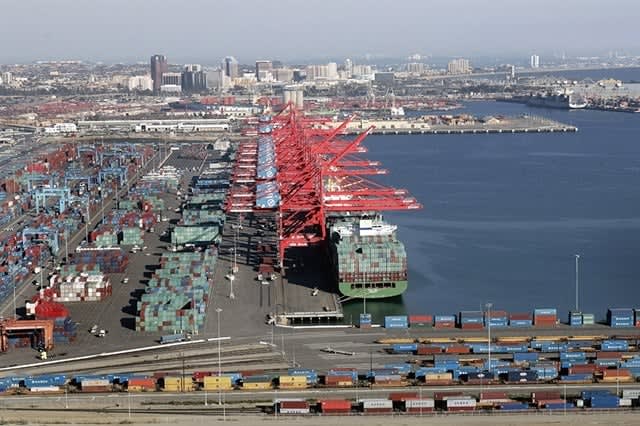
Photo via Port of Long Beach
The Harbor Truck Association has announced that it is supporting a new plan to reduce congestion at the Ports of Los Angeles and Long Beach, according to a report by the Long Beach Press-Telegram.
The HTA will be launching Trucker Chassis Connection, a system designed to hasten the process of finding the chassis truckers servicing the port need to haul cargo containers.
Truckers will use the Chassis Finder app to locate available chassis. Chassis availability has been blamed for much of the congestion that occurs around the ports.
Via a partnership between the HTA and Chassis Finder, an initial 200 chassis will be set aside at the Ports of Los Angeles and Long Beach for trucking companies working the ports. An additional 50 chassis will be available for the Port of Oakland.
HTA member companies will be able to make use of the pool of chassis by June 1.
The app shows available chassis by location, date, quantity and type and allows users to quickly lease the equipment they want. While 200 chassis is a small number to start, the group will increase it based on demand.
In another move to improve efficiency, the ports have taken steps toward automating several of the processes, according to a report by Bloomberg. By 2016, the two ports plan to implement remote-controlled cranes to service arriving ships and driverless trucks to carry cargo to the sorting yard.
The Ports of Los Angeles and Long Beach gained international attention earlier this year for a work strike that caused millions of dollars’ worth of delays to incoming cargo at the harbor. The stoppage was caused by a labor dispute by the Pacific Maritime Association and the Longshoremen union.
The two groups eventually worked out a tentative deal ending the strike and recently voted to ratify a new five-year contract.
The new deal features an enhanced arbitration system designed to support waterfront stability, addressing the widespread impact the strike had on West Coast port business.
“The disruptions that occurred during negotiations, and the inconvenience and hardship created by them, were regrettable,” said Jim McKenna, PMA President and CEO. “We look forward to building upon the incredible advantages West Coast ports offer and winning back the trust and confidence of the shipping community.”
More Fleet Management

Color Match Smarter: Tools That Restore & Perform
For fleet managers and collision repair professionals keeping heavy-duty trucks on the road, getting the color right the first time isn't just about appearance — it's about efficiency, turnaround time, and bottom-line results. Discover how today's digital color tools are transforming the repair process from guesswork to precision.
Read More →
FMCSA Pauses Biennial-Update Enforcement Amid Motus Transition
Carriers whose updates were due on or after June 1 have more time, while FMCSA works to stabilize its new registration system and warns of phishing sites impersonating its new carrier registration system, Motus.
Read More →
2026 Blueprint for Countering Smarter Supply Chain Theft
Cargo theft is no longer just the cost of doing business. It's a multi-billion-dollar criminal enterprise exploiting vulnerabilities across your fleet, drivers, and supply chain.
Read More →


How Telematics Improves Visibility, Control, and Performance in Refrigerated Fleets
Explore how telematics help refrigerated fleets improve visibility, uptime, efficiency, compliance, and cargo protection across connected cold chain operations.
Read More →
What the U.S.-Canada Trade War Means for Trucking
Escalating U.S.-Canada tariffs could disrupt cross-border freight, reduce truck volumes, raise costs, and create new uncertainty for carriers on both sides of the border.
Read More →
What Are Trucking’s Top Concerns for 2026?
The American Transportation Research Institute wants to know what's worrying trucking fleet managers, drivers, and other stakeholders in its annual Industry Issues survey.
Read More →
American Trucking Associations Looks for a New Leader
ATA President and CEO Chris Spear abruptly left his job at the association on August 21, at a pivotal time for the trucking industry.
Read More →
Public Wi-Fi Cybersecurity Risks: How Truck Drivers and Fleets Can Protect Their Data
Public Wi-Fi can expose truck drivers and fleets to credential theft, malware, and other cyber threats. Here’s how to reduce the risk on the road.
Read More →
For Nicky Cupp, Fleet Innovation Starts With Frustration
HDT Truck Fleet Innovator Nicky Cupp turns everyday pain points at Fraley & Schilling into opportunities for better technology and smarter processes.
Read More →
Adam Buttgenbach’s Approach to Electric Trucks: Start With Where They Fit
HDT Truck Fleet Innovator Adam Buttgenbach helped PepsiCo build one of North America’s largest EV fleets by focusing on where electric trucks make operational sense.
Read More →