




Port Truckers Picket As Far South As Mexico Border
Port truck drivers from four trucking companies continued picketing at the Ports of Los Angeles and Long Beach, disrupting cargo operations across Southern California as far south as the border.

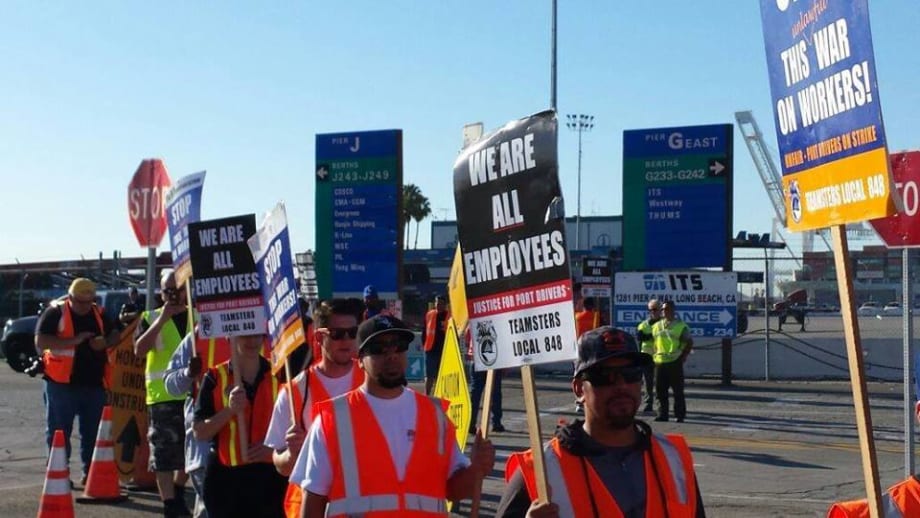
Photo via Justice for Port Drivers
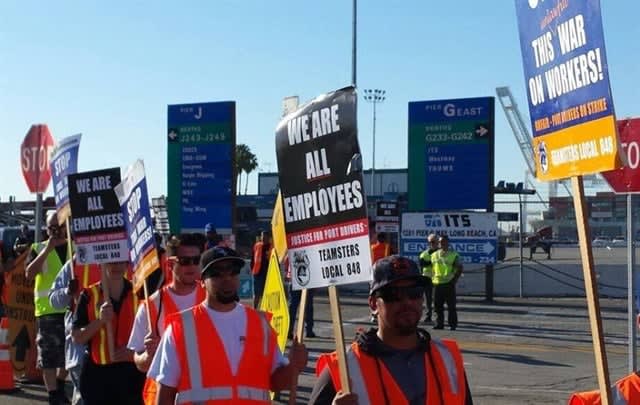
Photo via Justice for Port Drivers
Port truck drivers from four trucking companies continued picketing at the Ports of Los Angeles and Long Beach, disrupting cargo operations across Southern California. The drivers allege that they are being misclassified as independent contractors.
Drivers were stationed at port marine terminals waiting to picket as company vehicles arrived. However, few port terminal operators allowed trucks from the affected companies to pick up and drop off containers, mitigating the strike’s effect on port activity.
The Port of Los Angeles, through its Twitter account, downplayed any disruption from the strike, Tweeting, “Trucking protests are directed at 4 (out of 800) companies that serve this complex. Cargo continues to move through the #PortofLA unimpeded.”
Drivers at Intermodal Bridge Transport, Pacific 9 Transportation, Pacer Cartage and Harbor Rail Transport put up picket lines at trucking company headquarters and truck yards that continued through Monday night into Tuesday.
With terminals refusing to allow trucks to pick up or drop off cargo at the ports, retail clients of the four trucking companies took the brunt of the distruption.
The strike was not limited to the South Bay of Los Angeles and spanned as far south as Toyota’s Otay Mesa facility just north of the Mexico border, which is serviced by trucks from Pacer Cartage.
The drivers believe that they are misclassified as independent contractors and are victims of wage theft as a result, according to the union group Justice for Port Drivers. As Independent contractors, the drivers claim they are subject to companies making pay deductions for costs and are not truly independent of the company they lease the truck from.
The Harbor Trucking Association, which represents many of the local trucking companies servicing the ports, contends that the actions of the striking truckers “do not represent the sentiments of the overwhelming majority of owner-operators serving the Ports of Los Angeles and Long Beach.”
“The majority of owner-operators in the port prefer to remain independent contractors,” said Weston LaBar, HTA executive director in a release. “They have a greater opportunity to make a decent income and they have greater flexibility over the hours in which they work.”
More Drivers

Truck Drivers Need More Than Another Alert
Fleets have more visibility into truck health, safety events, and driver activity than ever. The next challenge is turning all that information into useful guidance for the person who has to decide what to do next.
Read More →
FMCSA Removes 110 Truck Driver Training Schools from Certified ELDT List
Federal regulators also are targeting more than 160 additional training providers and launching a nationwide audit of third-party CDL skills testers as part of a broader crackdown on trucking fraud.
Read More →
Hours of Service Pilot Programs: FMCSA Readies for 2027 Rollout
Two pilot programs could eventually reshape hours-of-service rules, giving truck drivers options to pause their 14-hour clock or use longer split sleeper rest periods.
Read More →
Medical Cards, English Proficiency Reshape Roadcheck Violations
Medical-card violations jumped to the top of the driver out-of-service list during CVSA’s 2026 International Roadcheck, while English-language proficiency violations appeared among the leading violations for the first time.
Read More →
Driver Trust Can Make or Break the Success of Fleet Safety Technology
New Teletrac Navman research suggests that onboarding, transparency about driver data, and positive feedback can play a significant role in how commercial drivers respond to safety and coaching technology.
Read More →
EEOC Sues KLLM Over Alleged Sex Discrimination in Driver Training
KLLM is facing a federal sex-discrimination lawsuit over policies the EEOC alleges put female truck driver trainees at a disadvantage.
Read More →
FMCSA Moves to Codify English Language Requirements for Commercial Drivers
By changing regulations on English-language proficiency requirements for commercial drivers, rather than relying on a guidance memo, the FMCSA said future administrations won't be able to walk back the Trump administration's stricter enforcement with just a memo.
Read More →
Drivers Put Western Star Trucks to the Test at Star Nation Experience
Watch to get an inside look at the Western Star trucks, technology, and community behind the Star Nation Experience 2026!
Read More →
Trump Administration Looks to Put More Veterans Behind the Wheel
The Freedom Haulers program pulls together existing and expanded programs at several federal agencies to recruit veterans to drive commercial heavy-duty trucks and cut the red tape for them to get a CDL, training, and employment.
Read More →
Putting Mack’s Command Steer to the Test
A test drive of Mack’s Command Steer active steering system evaluates how it can make truck driving easier and less tiring.
Read More →