




Port Bottlenecks Trigger Federal Investigation
Severe bottlenecks at a number of U.S. ocean ports have prompted the Federal Maritime Commission to look into whether ocean lines’ detention, demurrage, and container policies are making the situation worse.

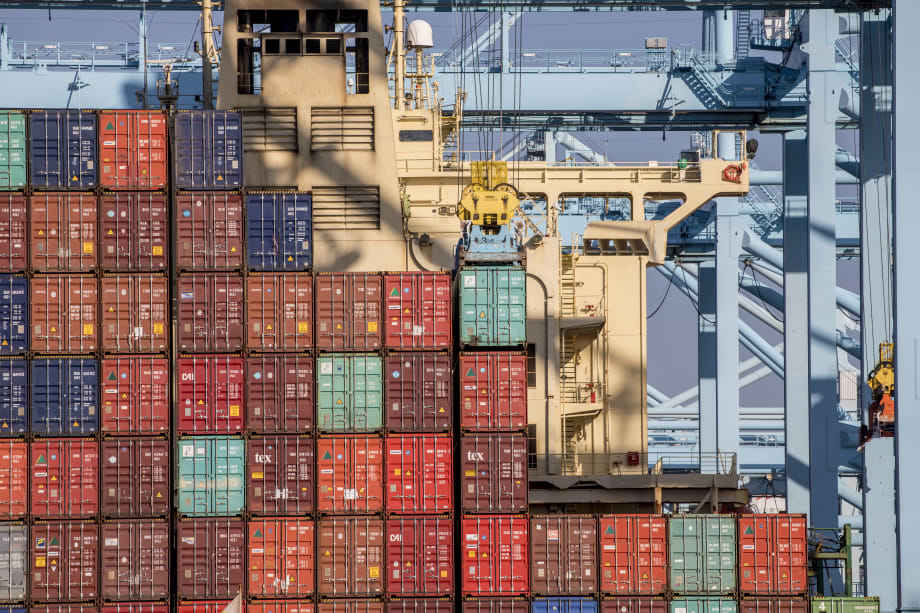
The Port of Los Angeles says it's taking steps to address container bottlenecks.
Photo: Port of Los Angeles
Severe bottlenecks at a number of U.S. ocean ports have prompted the Federal Maritime Commission to look into whether ocean lines’ detention, demurrage, and container policies are making the situation worse.
A trade imbalance has pushed freight rates on China-to-U.S. business to record highs, so container lines rush to get containers turned back around to Asia to reload. That has left fewer containers headed inland, reports the Wall Street Journal, shutting out U.S. exporters of agricultural products.
The Port of Los Angeles set an all-time monthly record container volume in October of 980,729 TEUs (twenty-foot-equivalent containers.) The ports of Los Angeles and Long Beach handled nearly 620,000 empty outbound containers in October, over 35% more than they saw a year ago.
In early November, the Harbor Trucking Association and the California Trucking Association released a statement that said cargo flow at the Southern California ports were “nearing a complete gridlock due to a lack of dual-transactions and the chassis shortage” and asked for relief from detention and demurrage charges. (In a dual transaction, a truck brings a container, either returning an empty or dropping an export load, and picks up a container (either an import or an empty for export load) in one trip.)
The Journal of Commerce reports that carriers say they’re working with truckers to address issues contributing to congestion, such as restrictions by carriers on the return of empty containers to marine terminals, elevated truck turn times, a severe shortage of chassis, and a lack of effort by carriers to promote dual transactions for truckers.
However, JOC reported, carriers are resisting requests to suspend detention and demurrage charges. Without the charges, carriers say, shippers would have no incentive to remove imported containers from the terminals, which would only make the congestion problem worse.
The HTA and nearly 50 other organizations representing truckers, shippers, and intermediaries submitted a letter to the Federal Maritime Commission, asking it to suspend detention and demurrage charges in the San Pedro Bay port complex.
In response, the commission said it would investigate whether shipping company policies related to detention and demurrage, container return, and container availability were violating federal regulations and making the congestion worse.
“The time has come to resolve the most serious impediments to port performance,” said Maritime Commissioner Rebecca Dye in a press release. “The commission is concerned that certain practices of ocean carriers and their marine terminals may be amplifying the negative effect of bottlenecks at these ports and may be contrary to provisions in the Shipping Act of 1984. The potentially unreasonable practices of carriers and marine terminals regarding container return, export containers, and demurrage and detention charges in the Ports of Los Angeles, Long Beach, and New York/New Jersey present a serious risk to the ability of the United States to handle trade growth.”
HTA CEO Weston LaBar praised the commission’s decision, saying, “unreasonable detention and demurrage charges have been an issue since the creation of the ocean alliances. Despite raising these concerns and asking for more equitable business practices from ocean carriers, the problem has only escalated in each of the last six years, culminating this year with well over $100 million in fees charged to our members and their customers.”
The Port of Los Angeles is also trying to help. It announced the launch of a free “Return Signal” technology platform, designed to help trucking companies know where and when they can return empty containers, enhancing the probability of dual transactions.
Port staff was also due to propose two new programs for cargo terminals to the LA Harbor Commission. A turn-time incentive would reward terminals for getting trucks in and out faster, and a dual-transaction incentive would reward terminals for making sure trucks enter the gate with a container and also leave with one.
More Fleet Management

How Telematics Improves Visibility, Control, and Performance in Refrigerated Fleets
Explore how telematics help refrigerated fleets improve visibility, uptime, efficiency, compliance, and cargo protection across connected cold chain operations.
Read More →
What the U.S.-Canada Trade War Means for Trucking
Escalating U.S.-Canada tariffs could disrupt cross-border freight, reduce truck volumes, raise costs, and create new uncertainty for carriers on both sides of the border.
Read More →
What Are Trucking’s Top Concerns for 2026?
The American Transportation Research Institute wants to know what's worrying trucking fleet managers, drivers, and other stakeholders in its annual Industry Issues survey.
Read More →

American Trucking Associations Looks for a New Leader
ATA President and CEO Chris Spear abruptly left his job at the association on August 21, at a pivotal time for the trucking industry.
Read More →
Public Wi-Fi Cybersecurity Risks: How Truck Drivers and Fleets Can Protect Their Data
Public Wi-Fi can expose truck drivers and fleets to credential theft, malware, and other cyber threats. Here’s how to reduce the risk on the road.
Read More →
For Nicky Cupp, Fleet Innovation Starts With Frustration
HDT Truck Fleet Innovator Nicky Cupp turns everyday pain points at Fraley & Schilling into opportunities for better technology and smarter processes.
Read More →
Adam Buttgenbach’s Approach to Electric Trucks: Start With Where They Fit
HDT Truck Fleet Innovator Adam Buttgenbach helped PepsiCo build one of North America’s largest EV fleets by focusing on where electric trucks make operational sense.
Read More →
Deen Albert: Let Automation Do the Math, People Make the Decisions
HDT Truck Fleet Innovator Deen Albert makes sure people are still at the heart of operations at Grand Island Express, even while adopting artificial intelligence tools. AI-assisted dispatch helped boost revenue 25% with the same number of trucks.
Read More →
Trimble’s New AI Agent Takes Aim at Fleet Back-Office Busywork
Arc Agent works across Trimble TMS products to automate repetitive tasks such as freight orders, maintenance, invoices, fuel costs and more.
Read More →
How HDT’s 2026 Truck Fleet Innovators Are Rethinking Fleet Operations
Meet five trucking leaders who are challenging assumptions, solving operational problems, and putting innovative ideas to work.
Read More →