




Penske Installing Collision Warning Systems
Penske Logistics is now installing collision warning system equipment throughout its tractor fleet
Penske Logistics is now installing collision warning system equipment throughout its tractor fleet.
The fleet-wide installation follows a successful pilot program that evaluated the Eaton VORAD EVT-300 CWS on tractors Penske operates for Whirlpool Corp.
"We feel so strongly about the benefits of the EVT-300, we now include it as standard equipment on all new tractor orders," said Penske Logistics Vice President of Safety Paul Penatzer. "In addition to installing the CWS on all new tractors, we also plan to retrofit the EVT-300 on many of the tractors in our existing fleet by the end of this year," a $2 million investment.
The Eaton VORAD EVT-300 uses a high-frequency radar system to transmit signals from the front and side of the truck, monitoring up to 20 vehicles ahead and in the blind spot area on the right side. When a potentially hazardous situation is detected, a display unit on the dashboard emits a series of visual and audible alerts warning the driver.
In its pilot program with Whirlpool, Penske installed the system on half of Penske's Whirlpool fleet. Pilot locations realized an 81 percent decrease in costs due to accidents that can be prevented by a collision warning system, and a 44 percent reduction in costs for all auto liability accidents. (Auto liability costs consist of financial losses due to legal liability for damage to other vehicles and accident-related injuries.)
More Safety & Compliance

FMCSA Moves to Codify English Language Requirements for Commercial Drivers
By changing regulations on English-language proficiency requirements for commercial drivers, rather than relying on a guidance memo, the FMCSA said future administrations won't be able to walk back the Trump administration's stricter enforcement with just a memo.
Read More →
Trump Administration Expands Homeland Security's Role in Trucking Enforcement
The administration's latest trucking crackdown goes beyond roadside inspections, expanding Homeland Security's role in commercial vehicle enforcement and investigations involving CDL training schools.
Read More →
Paccar Recalls 2027 Trucks Built This Summer for Possible Electrical Problem
The nearly 6,000 Kenworth and Peterbilt trucks in the recall could potentially lose engine power, among other things.
Read More →
Brake Safety Week to Focus on Drums and Rotors
Commercial vehicle inspectors will be focusing on brakes during CVSA's Brake Safety Week, August 23-29.
Read More →
Trump Administration Looks to Put More Veterans Behind the Wheel
The Freedom Haulers program pulls together existing and expanded programs at several federal agencies to recruit veterans to drive commercial heavy-duty trucks and cut the red tape for them to get a CDL, training, and employment.
Read More →
$604 Million Verdict Tests Broker Liability After Supreme Court Ruling
C.H. Robinson plans to appeal after a Texas jury found it bore the largest share of responsibility for a fatal 2021 crash, in a case that follows the Supreme Court's Montgomery decision allowing negligent hiring claims against freight brokers.
Read More →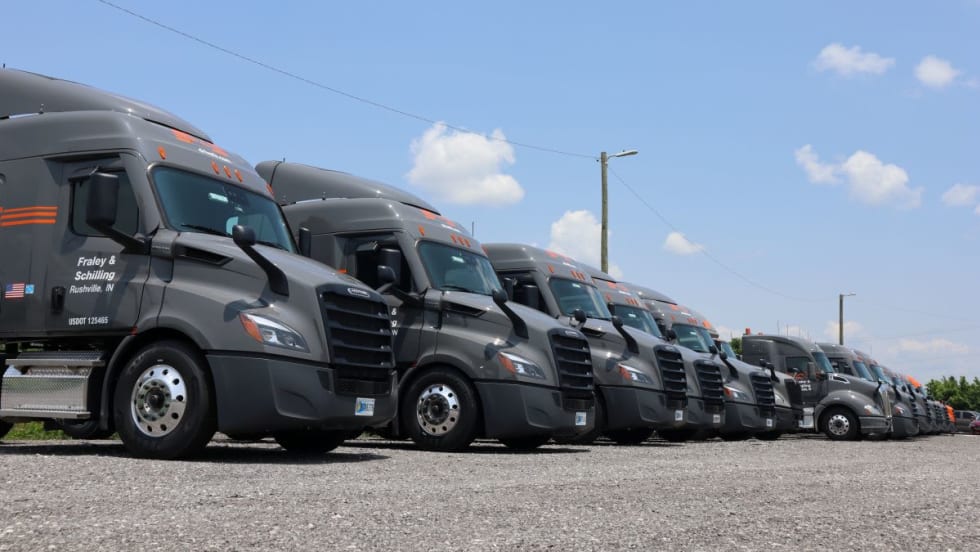
How Fraley & Schilling Improved Logbook Compliance by Over 50%
Fraley & Schilling needed a way to close a compliance workflow gap in its ELD system without adding more work from driver training, reminders, and back-office follow-ups. It found the answer in a custom driver app.
Read More →
Farewell, CDL: Why I'm Giving Up My Commercial Driver's License
After more than 20 years as a CDL holder, HDT Executive Editor Jack Roberts is letting his commercial license expire. Not because he wants to — but because trucking's nuclear verdict crisis has made the risks of public-road test drives too great for editors, manufacturers, and everyone involved.
Read More →
Enhance Fleet Performance with High-Efficiency Auxiliary Power Units
Drive sustainable cost savings while increasing driver comfort during short- and long-haul logistics operations.
Read More →
Wabash Trailers Recalled for Improperly Installed Underride Guards
More than 900 Wabash dry van trailers may not comply with the Federal Motor Vehicle Safety Standard for rear impact guards.
Read More →