




Oregon Seeks EPA Funding For Truck Replacement Program
The Oregon Department of Environmental Quality is looking for local fleets and owner-operators to participate in a possible truck replacement program funded by the U.S. Environmental Protection Agency. The program will pay for up to half the cost of a new truck, provided the old one is scrapped.

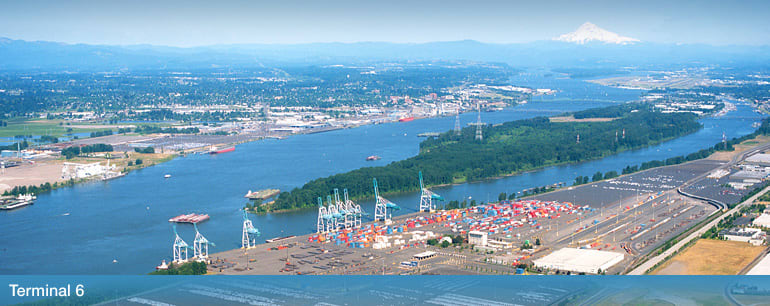
Photo via Port of Portland
Photo via Port of Portland
The Oregon Department of Environmental Quality is looking for local fleets and owner-operators to participate in a possible truck replacement program to improve the air quality at ports, rail and intermodal facilities in the region.
The program offers to pay for half the cost of a replacement truck in order to remove trucks older than model year 2010 from the road. With funding authorized by the Diesel Emissions Reduction Act, the U.S. Environmental Protection Agency is providing a grant of up to $2 million for any states that can demonstrate enough interest and need.
“The EPA is willing to provide up to half the cost of buying a new truck, provided the old truck is scrapped,” explained Kevin Downing, the Clean Diesel Program Coordinator for the Oregon DEQ. “What the EPA is doing is buying air quality, but we’re buying trucks.”
The latest and most significant emissions standards first took effect in 2007 model year engines. By 2010, new engines met these clean burning diesel standards removing many of particulates and NOx from diesel exhaust.
“Ultimately, with the 2010 model year engines, we now have the cleanest-burning diesel engines in the world operating in the United States,” said Downing.
While over time, fleets and truck owners will eventually replace older vehicles, accelerating the process can have a positive effect on health. The Portland Air Toxics study found that with only normal fleet turnover, that by 2017 Portland’s residents would still be facing an excess cancer risk from diesel exhaust.
“What this grant is really about is providing an incentive for people to replace a truck sooner than what they had planned,” said Downing. “We get an air quality benefit from accelerated turnover to newer and lower-emitting trucks.”
The Truck Replacement Program, if granted to Oregon from the EPA, is open to fleets and owner-operators using a diesel-powered drayage truck that makes at least 150 trips per year into a port, rail or intermodal facility. Interest in the program has been positive so far, says Downing.
“We probably have 50 companies that have expressed an interest in the grant,” said Downing. “We have to see how many trucks they offer and the cost of the trucks and how many we can fit under the EPA funding limit.”
The Oregon DEQ has to submit its application to the EPA by Dec. 11, which means that time is limited for the organization to make determinations about interest and funding. Once it receives the applications, the EPA will process the requests and grant funding by April 2015.
Oregon is one of the more trade-dependent states, and Downing believes that successfully securing the funding for the program is essential to keeping Oregon not just a productive freight movement region, but a clean one.
“Getting this grant will help us make sure that freight is moved well but also with lower environmental impacts,” said Downing. “We have a special interest in making sure truck owners are aware of it and that they can qualify.”
If you are interested in the program and would like more details, contact Kevin Downing at the Oregon Department of Environmental Quality by email at downing.kevin@deq.state.or.us.
More Fuel Smarts

How Volvo Updated Its D13 for EPA 2027 [Watch]
Volvo’s updated D13 promises lower emissions without sacrificing performance or fuel economy. Take a closer look at what changed inside the engine in this HDT Spotlight video.
Read More →
Diesel Price Spike Shortens Payback for Natural Gas Trucks, Report Says
Energy Vision estimates fleets could recover the higher purchase price of an RNG-fueled Class 8 tractor in 1.3 to 2.8 years under current fuel-price scenarios.
Read More →
Calstart Becomes Catalyst Mobility, Reflecting Broader Focus
Calstart is now Catalyst Mobility, reflecting the nonprofit’s growing national role in clean transportation, including zero-emission trucks, infrastructure and incentive programs.
Read More →

Record Diesel Prices Squeeze Trucking Fleets
Average U.S. diesel prices have climbed to nearly $6 a gallon, surpassing the 2022 record as tight refinery capacity and Middle East disruptions keep fuel costs elevated.
Read More →
How Fuel Delivery Shapes Engine Performance
Fuel delivery depends on more than what happens at the injector. For fleet, maintenance and technical professionals, looking at the full path from pump to injector can provide useful context for understanding engine performance.
Read More →
East Coast Port Launches $45M Electric Truck Push
The Port Authority of New York and New Jersey announced millions in incentives for zero-emission drayage trucks, yard tractors, and new charging hubs near the port.
Read More →
California Bill Could Shed Light on Electric Truck Prices
Why do battery-electric Class 8 trucks remain so expensive? A California bill headed to Gov. Gavin Newsom would give fleets and state agencies more visibility into what manufacturers charge.
Read More →
Detroit Opens Orders for EPA 2027 Engines
Detroit isn’t starting from scratch to meet EPA 2027 diesel emissions standards. Its Gen 6 DD13 and DD15 engines keep much of today’s platform while updating the fuel and aftertreatment systems.
Read More →
Zero-Emission Truck Corridor Planned for West Coast
California, Oregon, Washington, British Columbia and Baja California are coordinating plans for truck charging and hydrogen fueling from Canada to Mexico.
Read More →
A Closer Look at Kenworth’s Electric T880E Vocational Truck [Video]
Learn more about Kenworth's T880E battery-electric vocational truck at the Paccar Technical Center, including its range, applications, upfitting considerations, and PTO options, in this HDT Spotlight video.
Read More →