




Optym Launches TMS for Small, Midsized Fleets
Optym recently launched Axele, a transportation management software for small and midsized carriers in the full truckload industry.

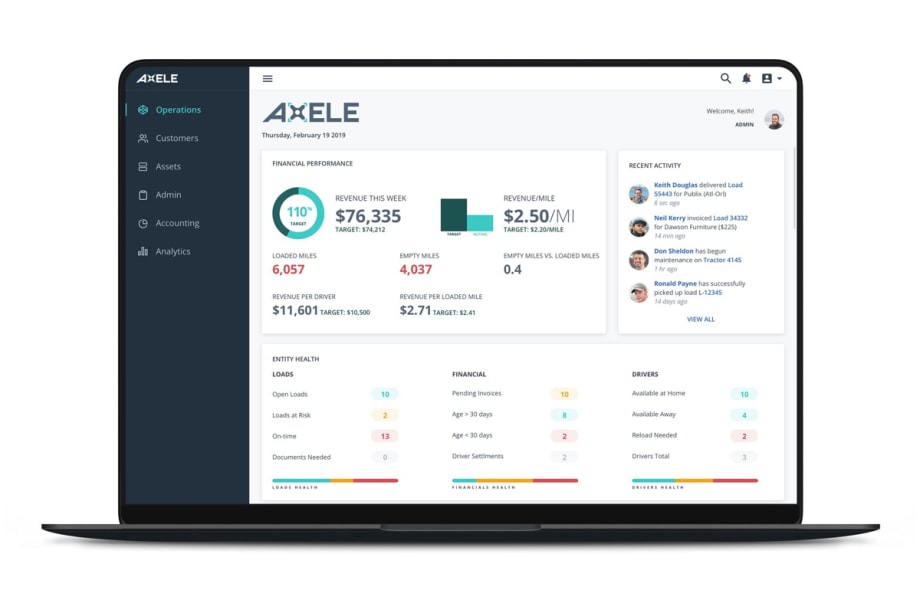
Image: Optym
Optym recently launched Axele, a transportation management software for small and midsized carriers in the full truckload industry. According to the company, the software’s predictive analytics automates functions such as load planning, matching drivers to loads, and customer communications in an effort to increase revenues and profitability.
"Small and mid-sized firms don't have the staff or the budget for costly TMS solutions that are also difficult to install and maintain. But they have a real need for intelligent solutions that will help them operate more efficiently and make better, more profitable decisions that are based on data," said Vic Keller, CEO of Optym.
Drivers are also given a mobile app for to improve communication between themselves, the back office, and customers. Specifically designed for small and midsized fleets, the system installs in a day and comes with a 30-day free trial.
Axele allows dispatchers at smaller FTL carriers to be more efficient and profitable by automatically searching loadboards to find the most profitable loads for their company, shippers, and drivers. Carriers can also easily connect to ELDs, market rates, maps, and their internal accounting systems.
"In the trucking business, it's really easy to lose money if you don't have the right TMS to manage your business," said John Ganiev, owner of Dream Transportation. "I can open up Axele and figure out exactly what is going on in my business by just looking at the dashboard. We also find it very useful regarding compliance."
The information is displayed in a Live Dispatch Board, allowing carriers to track and manage all their assets, including drivers, tractors, trailers, and loads, in real time. The portal also allows for the monitoring of drivers' schedules and notifies planners and dispatchers of driver availability and location.
More Fleet Management

Kodiak Lines Up Fleets for Driverless Trucking
An agreement for 75 trucks, a new Texas freight lane, and progress on safety validation move Kodiak closer to its planned driverless highway launch.
Read More →
ITS Logistics Settles Religious Harassment Case
The Nevada-based logistics firm agreed to pay more than $396,000 to settle a religious harassment charge involving an employee's Jewish identity.
Read More →
Your Trucks Are Busy. That Doesn’t Mean They’re Winning.
High utilization doesn’t always mean strong margins. Looking beyond the current load can help fleets make better dispatch decisions and get more value from each truck’s time.
Read More →
Why This Trucking Recovery Is Different
Freight demand remains sluggish, but rising costs and tougher enforcement have taken enough capacity out of the market to change the outlook for motor carriers.
Read More →
Platform Science Adds Dispatch and Safety Tools
Four additions to PS Fleet help fleets monitor loads, manage driver coaching, share truck locations and adjust video system settings.
Read More →
PrePass Intelligence Mines Fleet Bypass, Toll and Safety Data
PrePass Intelligence helps fleets measure bypass savings, flag potential toll overcharges, and spot suspicious transactions by combining data from separate systems.
Read More →
Motive Adds AI Agents for Fleet Operations
New tools automate follow-up on fleet data, from maintenance work orders to driver alerts, with two-way voice conversations planned for later this year.
Read More →
Can You Beat Our Trucking Trivia Challenge?
Test your truck knowledge with 19 trivia questions from Heavy Duty Trucking Exchange. Can you keep up with the fleet pros?
Read More →
BeyondTrucks Adds Rules Checks to Dispatch
New Compatibility Engine checks driver qualifications, equipment requirements and fleet policies before loads are dispatched.
Read More →
Diesel Prices Hijack Trucking’s Worry List
ATRI’s annual survey finds cautious optimism about freight, but diesel costs, litigation, and insurance continue to squeeze fleets. Drivers have different priorities on several issues.
Read More →