




Sept. 28 – After investigating a 1997 crash that killed eight people, the National Transportation Safety Board has made several recommendations on traction control, onboard recorders and simulator training.
On Feb. 12, 1997, a Consolidated Freightways doubles truck with empty trailers was traveling northbound on U.S. Route 41 near Slinger, WI. The driver lost control on patchy ice and crossed over the median into the southbound lanes. A flatbed truck loaded with lumber collided with the doubles truck, lost control and crossed over into the northbound lanes. A northbound passenger van underrode the flatbed, killing eight of the nine van occupants.
The NTSB investigated and decided that the probable cause of the accident was the truck driver drove too fast for the conditions. The lack of seat belt use in the van also contributed to the deaths.
The board sent letters recommending actions to help reduce this type of accident in the future to a number of trucking-related groups, including the American Trucking Assns., the Owner-Operator Independent Drivers Assn., the National Highway Traffic Safety Administration and the Teamsters.
The most disturbing recommendation to many in the trucking industry was the use of onboard recorders. In a letter sent to the ATA, OOIDA, the National Private Truck Council and the Independent Truckers and Drivers Assn., the NTSB asked these groups to “advise your members to equip their commercial vehicle fleets with automated and tamper-proof onboard recording devices, such as tachographs or computerized recorders, to identify information concerning both driver and vehicle operating characteristics.”
The onboard recorder recommendation left many in the industry scratching their heads.
“From our perspective,” says OOIDA’s Todd Spencer, “there’s no correlation between an onboard recorder and any perceived safety benefit in this accident, or most accidents. When the people that make onboard recorders market them to motor carriers, they market them as productivity improvers, not safety devices. And these units are relatively expensive for our little guys to purchase, without any corresponding improvement in safety.”
Similarly, ATA spokesman David Barnes points out that NTSB for years has wanted on-board recorders for use in identifying truckers who exceed hours of service regulations, but that wasn’t an issue in this particular case. “The NTSB stated the truck speed at the time was not readily available, and cite it as a reason for wanting onboard recorders. But the police report found that the estimated speed was 43-58 mph. It’s not exactly rocket science to determine how fast a vehicle was going at the time of an accident.”
Less controversial were NTSB’s recommendations that ATA work with federal agencies to “encourage the development and use of simulator-based training for heavy truck operators” and to do lab and fleet testing on adding traction control devices to antilock braking systems. (Traction control devices are already available as an ABS option.)
Barnes points out that his association and the trucking industry already have been working on research of both simulator training and traction control devices.
You can find the entire 80-page report in Adobe Acrobat format on NTSB’s web site at http://www.ntsb.gov/publictn/1998/HAR9801.pdf.
NTSB Recommends On-Board Recorders, Simulators
Sept. 28 – After investigating a 1997 crash that killed eight people, the National Transportation Safety Board has made several recommendations on traction control, onboard recorders and simulator training
More Safety & Compliance
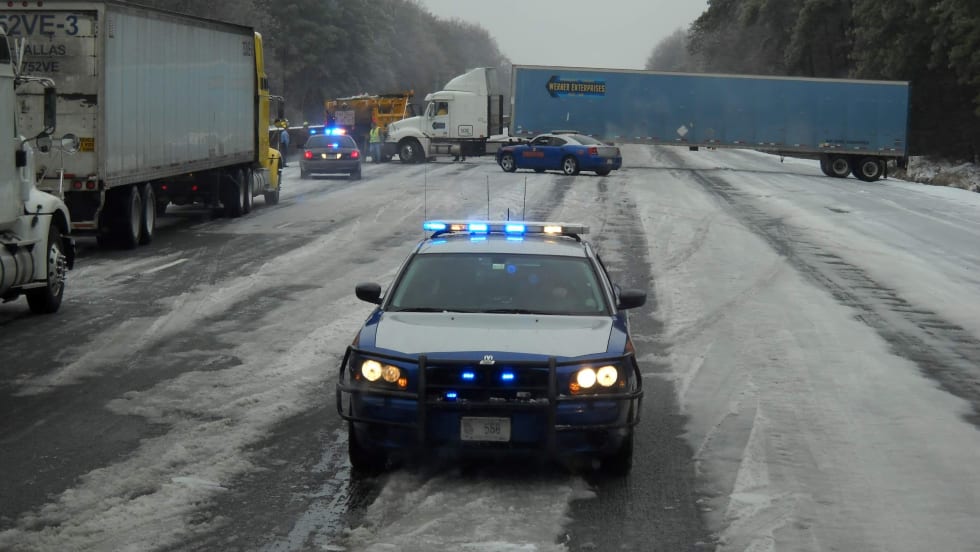
Avoiding Winter Pileups: Don’t Become the Next Link in the Crash-Chain
Winter roadway “pileups” aren’t one crash — they’re a chain reaction. Here’s what triggers them, how truck drivers can spot the danger early, and what to do if you're suddenly trapped in the mess.
Read More →
FMCSA’s Motus System Is Coming. What Fleets Need to Know Now
The long-awaited registration system promises a single portal — and tighter fraud controls.
Read More →
Nominations Open for HDT Truck Fleet Innovators 2026
Heavy Duty Trucking is searching for forward-looking leaders at trucking fleets as nominations for HDT’s Truck Fleet Innovators 2026. Deadline is May 15.
Read More →
Freightliner Expands Detroit Assurance with New Intersection and Turning Safety Tech
Detroit’s next-generation ABA6 safety system adds cross-traffic detection and enhanced side guard assist with left-turn protection, targeting high-risk urban scenarios.
Read More →
'Beyond Compliance,' Regulations, Driver Coaching on ATRI’s 2026 Research List
The American Transportation Research Institute will examine driver coaching, regulatory impacts — including the "Beyond Compliance" concept —and weather disruptions that shape trucking operations.
Read More →
FMCSA Revamps DataQs to Improve Fairness, Speed of Reviews
New requirements add firm deadlines and independent review steps, addressing long-standing complaints about inconsistent rulings and slow response times.
Read More →
FMCSA Extends Paper Medical Card Exemption … Again
Five states still aren't ready to accept commercial driver medical exam information directly from the medical examiner's registry.
Read More →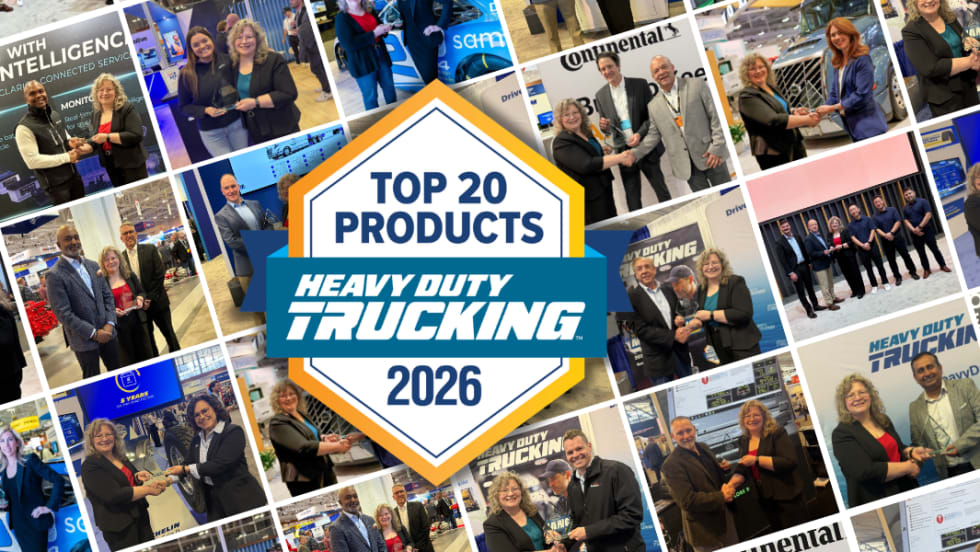
HDT Honors the Best New Products of 2025 at TMC [Photos]
Heavy Duty Trucking's Top 20 Products awards recognize the best new products and technologies. Check out the award presentations at the 2026 Technology & Maintenance Council annual meeting.
Read More →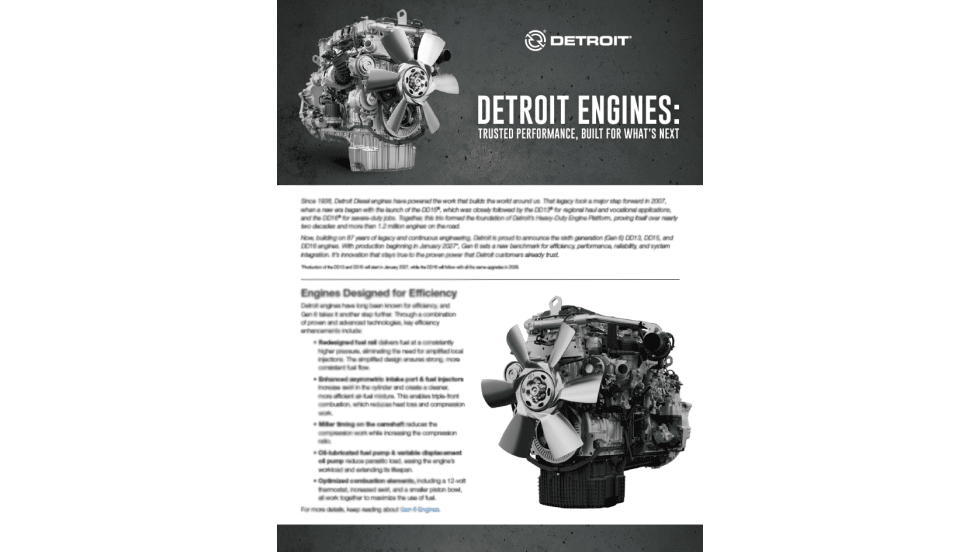
Detroit Engines: Trusted Performance, Built for What's Next
The Detroit® Gen 6 engine platform proves that real progress doesn’t require a complete redesign. Built on 20 years of trusted technology, these engines are designed for efficiency, stronger performance, and greater reliability than before. And they do it all while complying with 2027 EPA standards on every mile.
Read More →
Aperia Expands Halo Platform with Steer-Tire Inflation System, Fifth-Wheel Integration
Aperia Technologies introduced a new automatic tire inflation system for steer axles and a partnership with Fontaine Fifth Wheel to integrate coupling status into its Halo Connect platform.
Read More →