




NTSB Recommends 10-Year Driving Record, Use of Safety Technology Following Bus Crash
The National Transportation Safety Board called for states to provide a 10-year driving history on prospective employees of motor carriers, along with onboard safety monitoring and speed limiting systems in commercial vehicles, as part of its report on a 2011 bus crash in New York, N.Y
The National Transportation Safety Board called for states to provide a 10-year driving history on prospective employees of motor carriers, along with onboard safety monitoring and speed limiting systems in commercial vehicles, as part of its report on a 2011 bus crash in New York, N.Y.
Fifteen passengers were killed and 17 injured on March 12, 2011, when a motorcoach traveling southbound on Interstate 95 left the roadway, struck a guardrail and turned over onto its side, followed by a collision with an overhead vertical highway signpost that ripped the roof from the bus.
"This crash, one of three fatal U.S. bus crashes in rapid succession last year, is one of the deadliest bus accidents the NTSB has ever investigated," said NTSB Chairman Deborah A. P. Hersman.
The board concluded that the driver was impaired by fatigue due to sleep deprivation, poor sleep quality, and circadian factors. His lack evasive braking or corrective steering as the bus drifted off the roadway was consistent with fatigue-induced performance impairment.
An examination of the driver's work schedule, sleep times and cell phone use, revealed that his opportunity for sleep in the 72 hours prior to the crash would have been limited to short periods of three hours or less resulting in what the NTSB described as "acute sleep loss and cumulative sleep debt."
By providing a 10-year driving history on prospective employees, the board said, states could better assist motor carriers in identifying problem commercial drivers and reduce the number of commercial motor vehicle accidents and fatalities.
Current federal regulations requiring a motor carrier to inquire into an applicant's driving history for the most recent three years "are insufficient to make an informed hiring decision and result in the motor carrier not having access to sufficient safety-related information prior to hiring drivers," the board said.
The NTSB also pointed to several technologies that could have prevented or lessened the crash:
* Had the motorcoach been equipped with in-vehicle technologies such as a lane departure warning system or drowsy driver warning system, the agency says, the driver would have been alerted and had the opportunity to stop driving before the accident occurred.
* If the company, World Wide Travel, used an onboard safety monitoring system to track the driver's performance, company management would have had the opportunity to detect his unsafe behavior and use that information to remediate the behavior or remove him from his position.
• The use of in-vehicle technologies to prevent drivers from exceeding the speed limit would be beneficial in reducing both the instances and severity of accidents involving heavy vehicles. The NTSB determined that the motorcoach, which had reached speeds as high as 78 mph in the 60 seconds prior to the crash, was traveling at least 64 mph in the 50 mph speed zone for at least 10 seconds before it struck the guardrail. Investigators said if the motorcoach been traveling at the speed limit, it might not have overturned.
The motorcoach operator was cited as contributing to the accident because of its lax safety oversight of the driver, which stemmed from what the NTSB called "a corporate culture that fostered indifference to passenger safety." Shortly after the crash, World Wide Travel was placed out of service by the Federal Motor Carrier Safety Administration. Most of the officials, supervisory personnel and dispatchers continued to work for its sister company, Great Escapes, which is currently operating.
The NTSB does not have any rulemaking power on its own. It investigates accidents and makes recommendations to appropriate government agencies on ways to prevent similar crashes in the future.
As a result of its 15-month-long investigation, the NTSB made a total of 16 safety recommendations to the Federal Carrier Motor Carrier Safety Administration, the National Highway Traffic Safety Administration, the Federal Highway Administration, the American Association of State Highway Transportation Officials, and motorcoach associations.
To read the NTSB's summary report, click here.
More Safety & Compliance
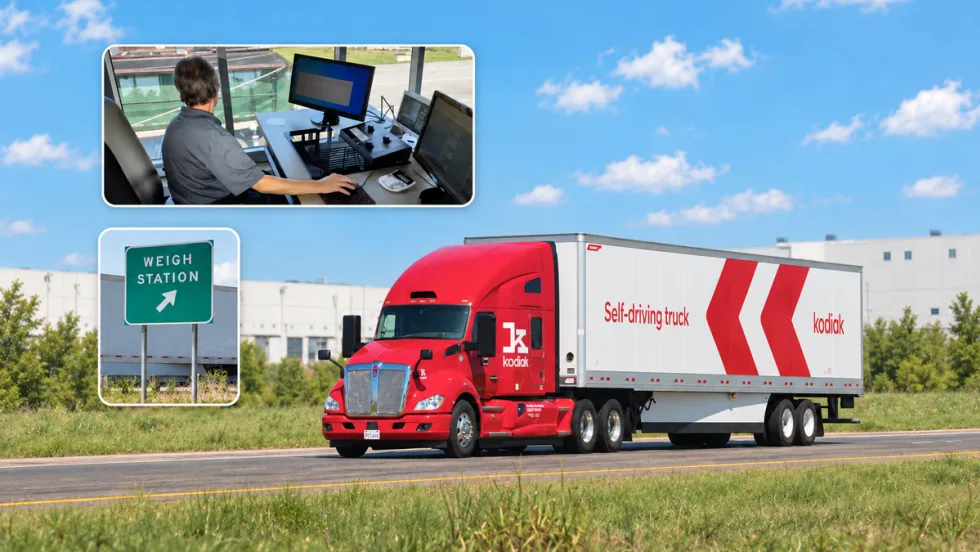
PrePass, Kodiak Connect Driverless Trucks to Roadside Enforcement
The system will allow enforcement agencies to verify Enhanced Inspection information and decide whether Kodiak’s autonomous trucks can bypass roadside screening sites.
Read More →
From One Generation to the Next: How Mentorship Builds Safer Truck Drivers
After three decades in trucking, Harold Perry shares what he's learned about driver safety, mentorship, and helping the next generation build confidence behind the wheel.
Read More →
FMCSA Pauses Biennial-Update Enforcement Amid Motus Transition
Carriers whose updates were due on or after June 1 have more time, while FMCSA works to stabilize its new registration system and warns of phishing sites impersonating its new carrier registration system, Motus.
Read More →
ZF Expands Commercial Vehicle Push in North America
ZF is expanding its North American commercial-vehicle presence with new transmission applications, electrification, trailer technology and autonomous-driving systems.
Read More →
Truck Drivers Need More Than Another Alert
Fleets have more visibility into truck health, safety events, and driver activity than ever. The next challenge is turning all that information into useful guidance for the person who has to decide what to do next.
Read More →
Tesla Wants a Self-Driving Semi. Are Cameras Enough?
Could Tesla’s camera-only autonomous driving technology work on an 80,000-pound Semi? In this commentary, HDT's Deborah Lockridge takes a look at Tesla, Cybercab, and how autonomous trucks see the road.
Read More →
What DOT’s Automated Vehicle Strategy Means for Trucking
The U.S. Department of Transportation issued a new automated-vehicle strategy that outlines plans for driverless-truck regulations, cross-state freight corridors, and federal safety standards.
Read More →
NYC Expands Speed, Pedestrian Safety Tech Across Fleet
New York City is expanding intelligent speed assistance and pedestrian-alert systems across its municipal fleet, moving the technologies from pilot programs into vehicle procurement and retrofit requirements.
Read More →
FMCSA Removes 110 Truck Driver Training Schools from Certified ELDT List
Federal regulators also are targeting more than 160 additional training providers and launching a nationwide audit of third-party CDL skills testers as part of a broader crackdown on trucking fraud.
Read More →
Beyond DOT Compliance: What Makes a Trucking Fleet Truly Safe?
A trucking fleet can follow every rule and still make unsafe decisions. The real test comes when safety conflicts with freight, productivity, or cost.
Read More →