




Few would disagree that Frank Bedell should not have been behind the wheel of the charter bus last Mother's Day when it crashed outside of New Orleans, killing 22 people.
Bedell had serious heart and kidney problems, and had been fired twice for positive drug tests and denied a third job for another positive test. Yet he held a valid commercial driver medical certification and commercial driver's license. At a National Transportation Safety Board hearing yesterday in New Orleans, it became disturbingly apparent how easy it is for a truck or bus driver like Bedell to slip through the cracks in the commercial driver oversight system.
Witness testimony revealed that unlike the FAA's program for commercial pilots, medical certification for commercial truck and bus drivers can be approved by any doctor, chiropractor, nurse practitioner or physician's assistant. There is no special training required. There is no review process of the examination. Exams are often superficial at best, often done by doctors who really have no grasp of the special demands and responsibilities a commercial driver faces. And if a doctor refuses to certify a driver with a medical problem, the driver may "shop around" until he finds one who will sign the medical card after an exam consisting of little more than a handshake.
"There have been cases where drivers have been incredulous that I asked them to disrobe and put on a gown, because that had never happened to them before," testified Dr. Natalie Hartenbaum, an occupational physician with OccuMedix in Maple Glen, PA.
There are two initiatives under way to improve the situation, said Sandy Zywokarte, the nurse in charge of the medical certification program at the Federal Motor Carrier Safety Administration. The first is a final rule that will revise the medical exam form and the guidance materials. The second is a notice of proposed rulemaking that will propose linking the medical certification process with the CDL process, expected later this year. Another possible solution that arose frequently included a central registry and testing program to certify DOT medical examiners.
Another concern addressed was the fact that there is no central tracking process for failed drug test results. In the case of Frank Bedell, he simply did not list the companies where he had been fired for positive drug tests on his employment application at Custom Bus Charters, the company he was working for at the time of the crash. And if a driver is refused a job for a positive drug test, there's no way to track that. Issues of driver privacy have been a stumbling block in this area, according to hearing testimony.
The CDL program itself was also reviewed. Witnesses testified that the program has attained many of its goals, but there is room for improvement. The recent legislation that established the new Motor Carrier Safety Administration also tightened up some loopholes in the program and gave the new administration authority it had previously lacked.
For instance, says FMCSA's Bob Redmond, in the past, drivers who had their license suspended for a violation in their passenger car could be issued a hardship license that would enable them to keep driving a truck. "Now if a driver is disqualified from operating a motor vehicle they'll be disqualified from operating any vehicle during that time, period."
Tomorrow's hearing will delve into the CDL program in greater detail. Topics to be covered include states' abilities to detect unfit drivers or drivers with multiple violations; CDL suspension and revocation processes in the states; where the CDL program is working and what needs to be improved; and a look at the commercial licensing programs in Europe and Australia.
This is the fourth and final hearing in the NTSB's investigation of commercial vehicle safety. The previous hearings were held on truck safety, technology, and NAFTA issues. The NTSB will review the findings from these hearings and make recommendations to governments, associations and industry on how to improve truck and bus safety.
NTSB Hearing: Holes In Medical Certification Program
Few would disagree that Frank Bedell should not have been behind the wheel of the charter bus last Mother's Day when it crashed outside of New Orleans, killing 22 people
More Safety & Compliance

Deadline Extended for HDT Truck Fleet Innovators Nominations
Heavy Duty Trucking has extended the deadline for nominations for its Truck Fleet Innovators awards. The deadline has been extended to May 22.
Read More →
Supreme Court Ruling Puts Freight Broker Vetting Practices in Spotlight
The unanimous SCOTUS ruling in the closely watched Montgomery v. Caribe case allows state negligence claims against freight brokers that hire unsafe motor carriers, raising new liability and vetting concerns among brokers.
Read More →
The Truck Safety Tech K&B Transportation Says Is Making a Difference [Watch]
Can technology help prevent truck crashes? In this HDT Talks Trucking Short Takes episode, K&B Transportation explains how it’s using cameras, speed management tools, cellphone-blocking technology, and other systems to improve safety and reduce risk across its fleet.
Read More →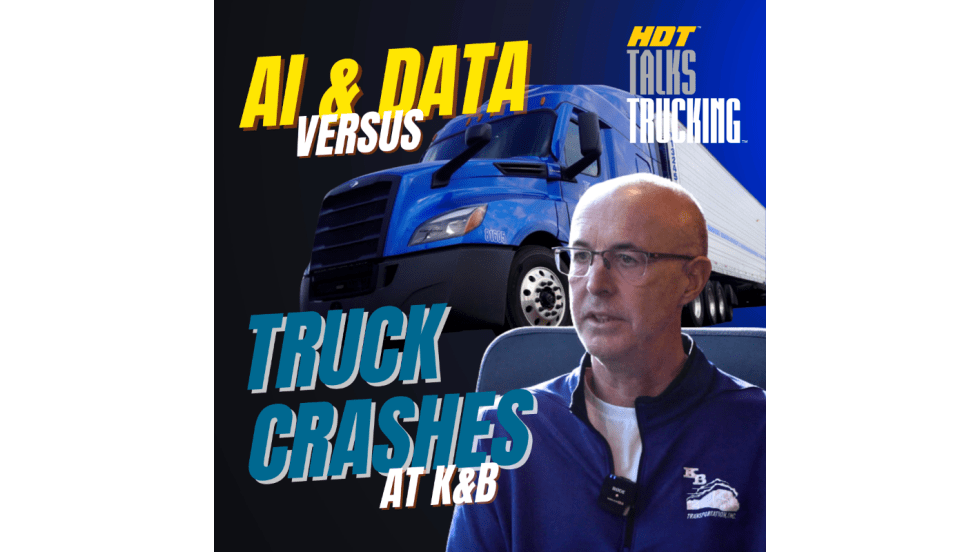
Listen: Inside Modern Fleet Safety: AI, Cameras & Speed Control at K&B Transportation
Fleet safety is evolving fast—and technology is at the center of it. Learn how a former commercial vehicle enforcement officer turned director of safety at K&B Transportation is embracing real-world safety technology.
Read More →
FMCSA’s Motus System Is Coming. What Fleets Need to Know Now
FMCSA's long-awaited registration system promises a single portal — and tighter fraud controls. And there are steps you need to take by May 14.
Read More →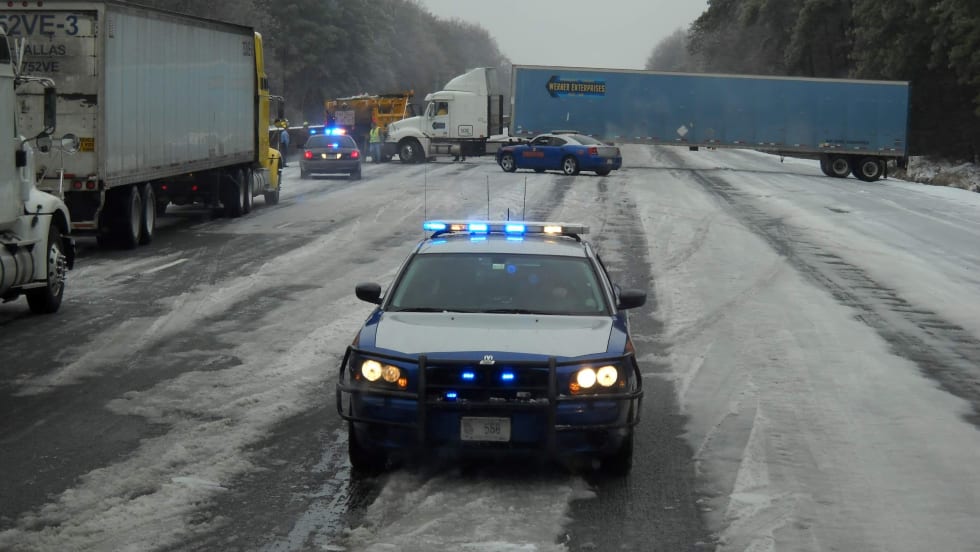
Avoiding Winter Pileups: Don’t Become the Next Link in the Crash-Chain
Winter roadway “pileups” aren’t one crash — they’re a chain reaction. Here’s what triggers them, how truck drivers can spot the danger early, and what to do if you're suddenly trapped in the mess.
Read More →
Freightliner Expands Detroit Assurance with New Intersection and Turning Safety Tech
Detroit’s next-generation ABA6 safety system adds cross-traffic detection and enhanced side guard assist with left-turn protection, targeting high-risk urban scenarios.
Read More →
'Beyond Compliance,' Regulations, Driver Coaching on ATRI’s 2026 Research List
The American Transportation Research Institute will examine driver coaching, regulatory impacts — including the "Beyond Compliance" concept —and weather disruptions that shape trucking operations.
Read More →
FMCSA Revamps DataQs to Improve Fairness, Speed of Reviews
New requirements add firm deadlines and independent review steps, addressing long-standing complaints about inconsistent rulings and slow response times.
Read More →
FMCSA Extends Paper Medical Card Exemption … Again
Five states still aren't ready to accept commercial driver medical exam information directly from the medical examiner's registry.
Read More →