




At the urging of an owner-operator, the National Highway Traffic Safety Administration has decided to take a closer look at a recall of Volvo trucks.
The news comes as the agency published details about its decision to grant only parts of one association's petition to investigate other alleged problems in Volvo heavy trucks.
A year ago, Volvo Trucks North America announced a voluntary recall of more than 1,500 VN 770 model trucks relating to the weight rating on the certification label and the distribution of the weight on the front axle of the truck. According to complaints from owners, the label doesn't accurately reflect the actual front gross axle weight, leading to overloading problems and overweight tickets. Volvo said it would replace the label, replace front axle components, and replace or relocate fuel tanks to address the problem. (See "Volvo Addresses Front Axle Complaints," 4/2/2001.)
But North Dakota owner-operator Nick Barber, who petitioned NHTSA about the problem in the first place, wasn't satisfied by the recall. He asked the agency to look more closely at the problem, believing there were more trucks affected, including VN 610s and 660s. (The vehicle population of 1989-2001 VN models, according to NHTSA documents, is nearly 80,000.) Barber also said the problem is a safety issue, not simply a non-compliance issue.
Last month, Barber received notification that the agency had decided to grant Barber's request and open an audit of the recall.
The audit was announced in the Federal Register this week, along with details about NHTSA's previously announced investigation of other Volvo front axle complaints as a result of a petition by the Owner Operator Independent Drivers Assn.
In the Federal Register, the agency explains why it granted parts of OOIDA's petition and denied others. It notes that the OOIDA petition "is extremely broad," alleging multiple defects on more than 30 models of Volvo trucks produced over a span of 12 model years. Many of those problems, NHTSA said, were not directly safety related.
NHTSA granted the petition to open an investigation into alleged steering defects on 1998 through 2000 VN trucks; and alleged front axle component failures related to steer axle U-bolts on 1998 through 2000 VN series trucks.
The agency decided not to address problems alleged by OOIDA in the areas of premature front tire wear, wheel alignment problems, problems with axle parts, suspension problems, transmission and clutch problems, engine and electrical problems.
Volvo has welcomed the NHTSA investigation, saying it wants to put the matter to rest. (See "Volvo Responds To NHTSA Investigation," 1/21/2002.)
NHTSA Looks At Volvo Recall
At the urging of an owner-operator, the National Highway Traffic Safety Administration has decided to take a closer look at a recall of Volvo trucks. The news comes as the agency published details about its decision to grant only parts of one association's petition to investigate other alleged problems in Volvo heavy trucks
More Safety & Compliance
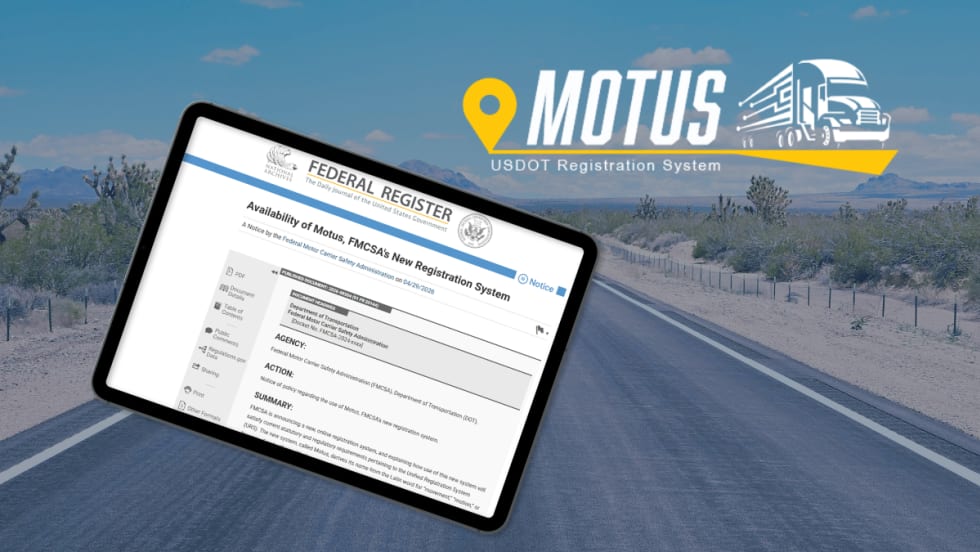
FMCSA’s Motus System Is Coming. What Fleets Need to Know Now
FMCSA's long-awaited registration system promises a single portal — and tighter fraud controls. And there are steps you need to take by May 14.
Read More →
Avoiding Winter Pileups: Don’t Become the Next Link in the Crash-Chain
Winter roadway “pileups” aren’t one crash — they’re a chain reaction. Here’s what triggers them, how truck drivers can spot the danger early, and what to do if you're suddenly trapped in the mess.
Read More →
Nominations Open for HDT Truck Fleet Innovators 2026
Heavy Duty Trucking is searching for forward-looking leaders at trucking fleets as nominations for HDT’s Truck Fleet Innovators 2026. Deadline is May 15.
Read More →
Freightliner Expands Detroit Assurance with New Intersection and Turning Safety Tech
Detroit’s next-generation ABA6 safety system adds cross-traffic detection and enhanced side guard assist with left-turn protection, targeting high-risk urban scenarios.
Read More →
'Beyond Compliance,' Regulations, Driver Coaching on ATRI’s 2026 Research List
The American Transportation Research Institute will examine driver coaching, regulatory impacts — including the "Beyond Compliance" concept —and weather disruptions that shape trucking operations.
Read More →
FMCSA Revamps DataQs to Improve Fairness, Speed of Reviews
New requirements add firm deadlines and independent review steps, addressing long-standing complaints about inconsistent rulings and slow response times.
Read More →
FMCSA Extends Paper Medical Card Exemption … Again
Five states still aren't ready to accept commercial driver medical exam information directly from the medical examiner's registry.
Read More →
HDT Honors the Best New Products of 2025 at TMC [Photos]
Heavy Duty Trucking's Top 20 Products awards recognize the best new products and technologies. Check out the award presentations at the 2026 Technology & Maintenance Council annual meeting.
Read More →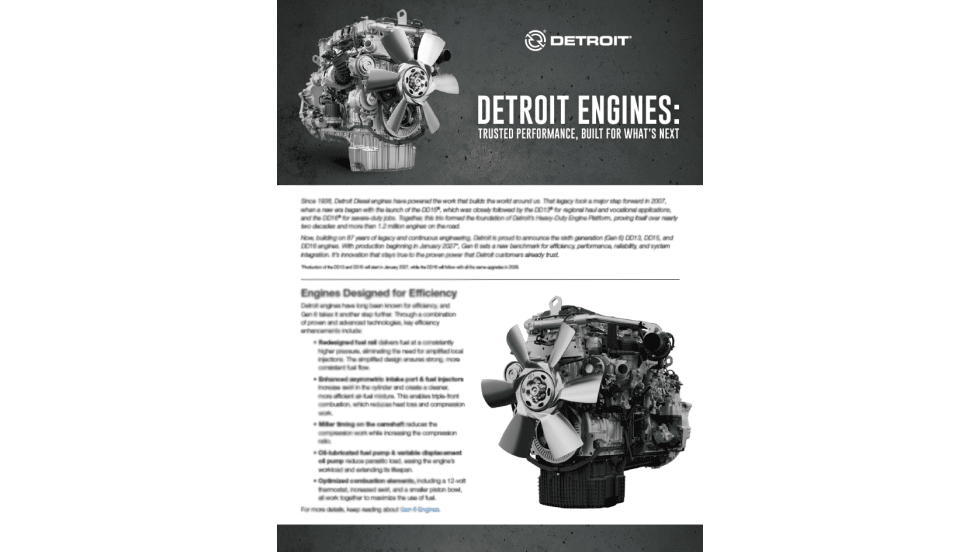
Detroit Engines: Trusted Performance, Built for What's Next
The Detroit® Gen 6 engine platform proves that real progress doesn’t require a complete redesign. Built on 20 years of trusted technology, these engines are designed for efficiency, stronger performance, and greater reliability than before. And they do it all while complying with 2027 EPA standards on every mile.
Read More →
Aperia Expands Halo Platform with Steer-Tire Inflation System, Fifth-Wheel Integration
Aperia Technologies introduced a new automatic tire inflation system for steer axles and a partnership with Fontaine Fifth Wheel to integrate coupling status into its Halo Connect platform.
Read More →