





More chassis news: Stoughton To Expand Intermodal Chassis Production
‘Next Generation’ Regional Chassis Pool Coming to Southeast Ports
A joint effort by three Southeast Atlantic ports will bring a new intermodal chassis pool model to the region starting in October 2023, helping to deal with the container trade growth in the region.
March 1, 2022
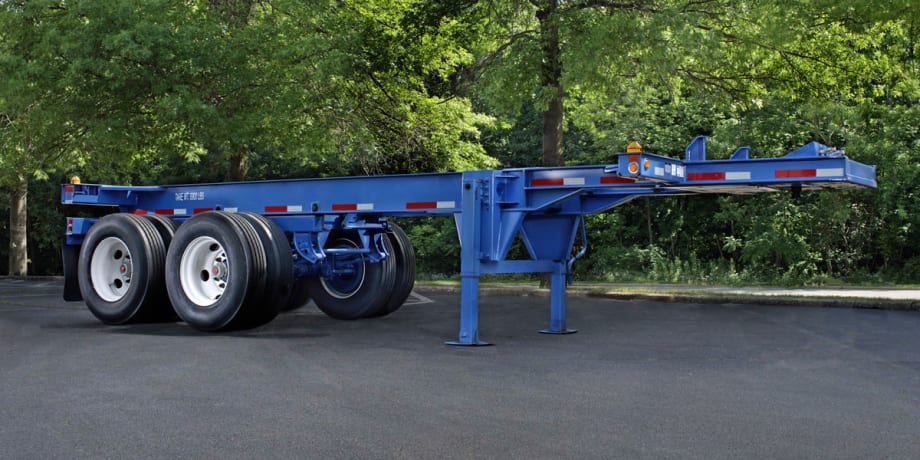
The new chassis pool will bring modern, higher-tech intermodal chassis to Southeast Atlantic port operations.
Photo: CCM
2 min to read
A joint effort by three Southeast Atlantic ports will bring a new intermodal chassis pool model to the region starting in October 2023, helping to deal with the container trade growth in the region.
The Ocean Carrier Equipment Management Association, Georgia Ports Authority, Jacksonville Port Authority, North Carolina State Ports Authority, and Consolidated Chassis Management signed a memorandum of understanding to establish a new South Atlantic Chassis Pool.
The deal finalizes a plan announced in July 2021 to help add intermodal freight capacity at a time when supply chains are dealing with port backups and container shortages.
While the ports and ocean carriers have operated for several years under the SACP 2.0 concept, the next-generation port/carrier effort, dubbed “SACP 3.0,” will introduce new, high-technology intermodal chassis to handle the international container trade to and from major South Atlantic ports and key inland intermodal hubs.
The pool will offer 60,000 chassis to truckers, beneficial cargo owners, ocean carriers and other port users. The SACP will transition from the current multi-contributor chassis pool to a single provider utility type pool. Chassis rates will be made available to pool users through a publicly available tariff. The pool will continue to be owned by a subsidiary of OCEMA and managed by CCM, but subject to forward-looking operating parameters agreed with the ports.

SACP 3.0 will introduce new, high-technology intermodal chassis to handle the international container trade to and from major South Atlantic ports and key inland intermodal hubs.
Source: CCM
“Chassis are a vital link in the supply chain, and we are committed to ensuring our customers continue to have access to a modern and dependable chassis supply,” said Jaxport CEO Eric Green. “The enhanced SACP 3.0 is responsive to swings in chassis demand, providing cargo customers throughout the Southeast with a reliable chassis supply to meet their evolving needs.”
The SACP 3.0 is designed to infuse the pool with new-high quality chassis by placing the responsibility for procuring assets with a single provider, CCM, according to a news release, which noted, “the single provider model takes the best qualities of both the current gray pool and proprietary models and combines them to offer a safe, reliable, cost efficient, and scalable premium service.”
The SACP will continue to be the largest fully interoperable chassis pool in the U.S., with more than 75 locations in the states of Alabama, Florida, Georgia, North Carolina, and South Carolina.
The South Carolina Ports Authority, however, is leaving the regional pool and starting its own. In January, it received its first shipment of chassis for the SC Ports-owned and operated "SMART" chassis fleet. Dorsey Intermodal launched a massive capacity increase following an agreement to supply more than 5,000 new chassis for the South Carolina Ports Authority.
More Fleet Management

Sponsored•September 16, 2026
Color Match Smarter: Tools That Restore & Perform
For fleet managers and collision repair professionals keeping heavy-duty trucks on the road, getting the color right the first time isn't just about appearance — it's about efficiency, turnaround time, and bottom-line results. Discover how today's digital color tools are transforming the repair process from guesswork to precision.
Read More →
FMCSA Pauses Biennial-Update Enforcement Amid Motus Transition
Carriers whose updates were due on or after June 1 have more time, while FMCSA works to stabilize its new registration system and warns of phishing sites impersonating its new carrier registration system, Motus.
Read More →
Sponsored•September 14, 2026
2026 Blueprint for Countering Smarter Supply Chain Theft
Cargo theft is no longer just the cost of doing business. It's a multi-billion-dollar criminal enterprise exploiting vulnerabilities across your fleet, drivers, and supply chain.
Read More →


Sponsored•September 1, 2026
How Telematics Improves Visibility, Control, and Performance in Refrigerated Fleets
Explore how telematics help refrigerated fleets improve visibility, uptime, efficiency, compliance, and cargo protection across connected cold chain operations.
Read More →
What the U.S.-Canada Trade War Means for Trucking
Escalating U.S.-Canada tariffs could disrupt cross-border freight, reduce truck volumes, raise costs, and create new uncertainty for carriers on both sides of the border.
Read More →
What Are Trucking’s Top Concerns for 2026?
The American Transportation Research Institute wants to know what's worrying trucking fleet managers, drivers, and other stakeholders in its annual Industry Issues survey.
Read More →
American Trucking Associations Looks for a New Leader
ATA President and CEO Chris Spear abruptly left his job at the association on August 21, at a pivotal time for the trucking industry.
Read More →
Public Wi-Fi Cybersecurity Risks: How Truck Drivers and Fleets Can Protect Their Data
Public Wi-Fi can expose truck drivers and fleets to credential theft, malware, and other cyber threats. Here’s how to reduce the risk on the road.
Read More →
For Nicky Cupp, Fleet Innovation Starts With Frustration
HDT Truck Fleet Innovator Nicky Cupp turns everyday pain points at Fraley & Schilling into opportunities for better technology and smarter processes.
Read More →
Adam Buttgenbach’s Approach to Electric Trucks: Start With Where They Fit
HDT Truck Fleet Innovator Adam Buttgenbach helped PepsiCo build one of North America’s largest EV fleets by focusing on where electric trucks make operational sense.
Read More →