




New York Program Awards $18M For Electric Truck Deployments
Volvo Trucks North America and Calstart received funding from the New York Clean Transportation Prizes program, which was created to enhance clean transportation, improve mobility options and reduce emissions.

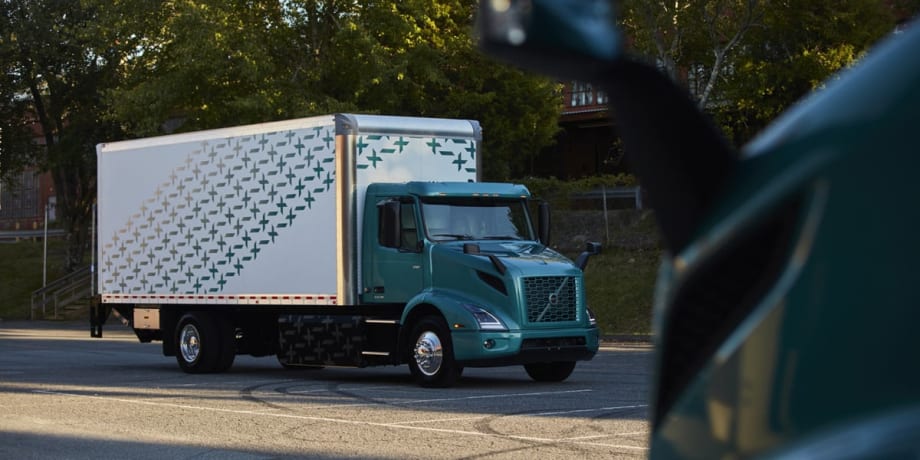
Volvo Trucks North America will deploy eight Volvo VNR Electric trucks with two Bronx-based community groups as part of a $10 million award.
Photo: VTNA
New York Gov. Kathy Hochul announced ten grand prize awards as part of the $85 million New York Clean Transportation Prizes program to enhance clean transportation, improve mobility options, and reduce emissions.
The selected prizes include $18 million for trucking-related projects, including:
Freight electrification-as-a-service led by Calstart
One reason truck fleets have been slow to transition away from diesel-fueled vehicles is the upfront cost associated with electrification. Calstart’s Freight Electrification-as-a-Service for Transformation (FEaST) will spread out the cost of electrification for fleets to achieve an affordable way of electrifying truck fleets in cities. Additionally, FEaST will establish a workforce partnership that includes paid training for the next generation of electric truck and charger technicians. By packaging together vehicles, charging infrastructure, utility interconnection, energy management and maintenance, this initiative offers fleets a bundled opportunity to embrace electric trucks and unlock adoption at a scale that is needed to delink the freight transportation industry from the worsening of health and environmental effects on vulnerable New York communities.
FEaST will include the deployment of 14 electric trucks.
FEaST will include ten Class 8 electric trucks deployed by Anheuser-Busch from its Hunts Point depot in the Bronx, New York, with trucks and chargers financed by Zeem Solutions.
Additionally, FEaST also features four Class 8 Freightliner eCascadia trucks leased by Daimler Trucks Financial Services to NFI Industries for its operations in lower New York from its distribution center in Wurtsboro.
Daimler will finance the trucks and Ideanomics will provide Charging-as-a-Service, inclusive of charger financing, installation, and energy management to offer a new, fully turnkey lease product for truck electrification.
The Daimler/NFI truck deployment will also guarantee the residual value of the electric trucks and make financing more affordable.
Both deployments will be supported with a “reliability-as-a-service” package offered by ChargerHelp to ensure that depot fast chargers stay online and keep the trucks on the road close to 100% of the time.
In addition, FEaST will offer paid training and job placement assistance for up to 440 individuals to become technicians for electric trucks and chargers. The Consortium for Worker Education will administer the truck technician training program in conjunction with Bronx Community College; BlocPower will administer the EV charger technician training program in conjunction with ChargerHelp.
CALSTART will also collaborate with partners including Green City Force, Empire Clean Cities, and the Trucking Association of New York to ensure that the approach and findings from FEaST are shared with relevant audiences, including small truck fleets, prospective trainees, and e-mobility employers, to maximize replication potential of FEaST’s innovative financing and workforce solutions.
Volvo deploying electric trucks in South Bronx
Volvo Trucks North America will deploy eight Volvo VNR Electric trucks with two Bronx-based community groups as part of a $10 million award. The Bronx is Breathing: Reimagining a Cleaner Hunts Point plan was one of three award winners in the program’s Clean Neighborhoods Challenge, with the goal of spurring local economic development, creating new job opportunities, and reducing air pollution in underserved communities.
“Volvo Trucks recognizes that the higher upfront costs of acquiring battery-electric trucks and installing charging infrastructure can be a barrier to adoption for some organizations, particularly smaller fleets and independent-owner operators,” said VTNA President Peter Voorhoeve in a press release. “Through the Bronx is Breathing: Reimagining a Cleaner Hunts Point project, our team will create a replicable, scalable, and sustainable strategy for developing freight-focused public charging hubs and new battery-electric fleet deployment models in underserved communities across the U.S, helping to reduce emissions in frontline communities while also creating new job opportunities.”
The goal of the project is to launch a supportive ecosystem for zero-tailpipe emission freight in the state’s busiest trucking destination, the Hunts Point peninsula in the South Bronx. As home to the nation’s largest wholesale food hub, nine waste transfer facilities, several large recycling yards, and a wastewater treatment plant, the Hunts Point peninsula sees 15,000 truck trips each workday — a continual source of noise and air pollution that negatively impacts its residential community of nearly 13,000.
To support battery-electric truck adoption, the Bronx is Breathing: Reimagining a Cleaner Hunts Point project includes:
Development of a public, multi-user freight charging hub at a former 3.2-acre brownfield site in the Hunts Point Food Distribution Center, which will support the Volvo VNR Electric trucks deployed through the project. The Mack LR Electric is one of nine trucks that Volvo will provide to various organizations in Hunts Point. The LR Electric will be operated by Royal Waste, a New York City-based company that provides sustainable waste reduction strategies and recycling programs. The truck will reside at the planned Recharge Hub, to be built and run by partner Shell Recharge Solutions.
Deployment of four Class 7 Volvo VNR Electric trucks with electric transport refrigeration units to City Harvest, a local food rescue organization, which will provide true zero-tailpipe emissions deliveries in a refrigerated fleet while addressing food insecurity in the Bronx.
Deployment of four Class 7 Volvo VNR Electric trucks to the Electric Truckers Cooperative, the “first-in-the-nation" worker-owned cooperative for zero-tailpipe emission freight, which will be utilized in a "vehicle-as-a-service'' model to overcome historic barriers to clean technology adoption by undercapitalized South Bronx fleets and independent owner-operators.
"Improving access to clean mobility options, electrifying trucks and buses, and supporting projects that reduce air pollution modernizes the way residents and visitors access community services, recreation, and work opportunities while creating jobs, improving health, and reducing the impacts of climate change,” Hochul said in a press release.
The awards were administered by the New York State Energy and Research Development Authority, in partnership with the New York State Department of Public Service and the New York State Department of Environmental Conservation.
This announcement supports the New York’s Climate Leadership and Community Protection Act goals of reducing greenhouse gas emissions by 85% by 2050 and that at least 35%, with a goal of 40%, of the benefits of clean energy investments be directed to disadvantaged communities.
More Fuel Smarts

How Volvo Updated Its D13 for EPA 2027 [Watch]
Volvo’s updated D13 promises lower emissions without sacrificing performance or fuel economy. Take a closer look at what changed inside the engine in this HDT Spotlight video.
Read More →
Diesel Price Spike Shortens Payback for Natural Gas Trucks, Report Says
Energy Vision estimates fleets could recover the higher purchase price of an RNG-fueled Class 8 tractor in 1.3 to 2.8 years under current fuel-price scenarios.
Read More →
Calstart Becomes Catalyst Mobility, Reflecting Broader Focus
Calstart is now Catalyst Mobility, reflecting the nonprofit’s growing national role in clean transportation, including zero-emission trucks, infrastructure and incentive programs.
Read More →

Record Diesel Prices Squeeze Trucking Fleets
Average U.S. diesel prices have climbed to nearly $6 a gallon, surpassing the 2022 record as tight refinery capacity and Middle East disruptions keep fuel costs elevated.
Read More →
How Fuel Delivery Shapes Engine Performance
Fuel delivery depends on more than what happens at the injector. For fleet, maintenance and technical professionals, looking at the full path from pump to injector can provide useful context for understanding engine performance.
Read More →
East Coast Port Launches $45M Electric Truck Push
The Port Authority of New York and New Jersey announced millions in incentives for zero-emission drayage trucks, yard tractors, and new charging hubs near the port.
Read More →
California Bill Could Shed Light on Electric Truck Prices
Why do battery-electric Class 8 trucks remain so expensive? A California bill headed to Gov. Gavin Newsom would give fleets and state agencies more visibility into what manufacturers charge.
Read More →
Detroit Opens Orders for EPA 2027 Engines
Detroit isn’t starting from scratch to meet EPA 2027 diesel emissions standards. Its Gen 6 DD13 and DD15 engines keep much of today’s platform while updating the fuel and aftertreatment systems.
Read More →
Zero-Emission Truck Corridor Planned for West Coast
California, Oregon, Washington, British Columbia and Baja California are coordinating plans for truck charging and hydrogen fueling from Canada to Mexico.
Read More →
A Closer Look at Kenworth’s Electric T880E Vocational Truck [Video]
Learn more about Kenworth's T880E battery-electric vocational truck at the Paccar Technical Center, including its range, applications, upfitting considerations, and PTO options, in this HDT Spotlight video.
Read More →