




Related: Port Strike Highlights Pay, Emissions Regulation Struggles
New Legislation Introduced to Fight Driver Abuses at Ports
Rep. Grace Napolitano (D-CA) and Rep. Jerry Nadler (D-NY) introduced two separate bills on Capitol Hill that are aimed at addressing labor and environmental issues at our nation’s ports.

Steven Martinez・Web Editor
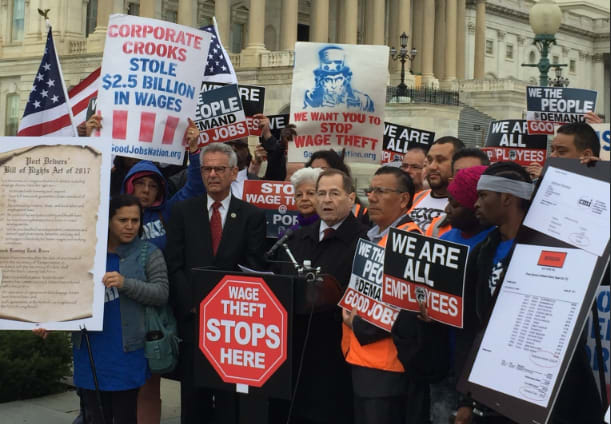
Photo via Rep. Jerry Nadler (D-NY) Twitter
3 min to read
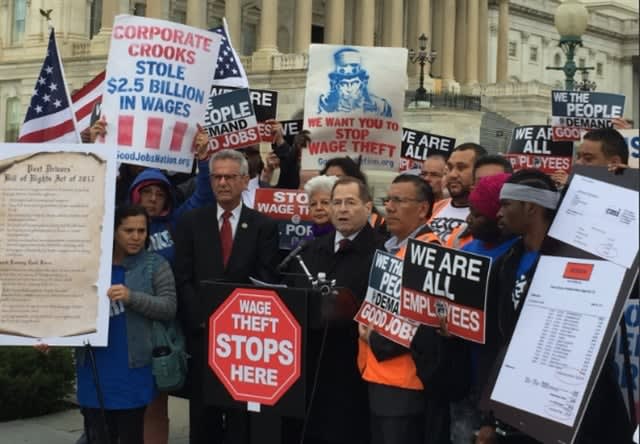
Photo via Rep. Jerry Nadler (D-NY) Twitter
Rep. Grace Napolitano (D-CA) and Rep. Jerry Nadler (D-NY) introduced two separate bills on Capitol Hill Thursday that are aimed at addressing labor and environmental issues at our nation’s ports.
At a gathering in front of the capitol building with truckers and representatives from the Teamsters union, the two members of Congress announced the Port Drivers Bill of Rights and the Clean Ports Act. The Port Drivers Bill of Rights would create a federal task force to investigate and provide recommendations on the prevalence and use of abusive independent-contractor lease agreements and low wages in the port trucking industry.
“Hundreds of port truck drivers are being forced into working as independent operators as a way for their employer to pay them below minimum wage and deny them benefits,” said Rep. Napolitano. “It is unthinkable that companies can continue to get away with this scheme to underpay hard working truck drivers.”
Napolitano cited a driver receiving $150 per day in wages but needing to pay $140 per day to lease a truck from the company that he or she is contracted to work for, effectively bringing home well less than the minimum wage. Back in June, a USA Today report exposed some abuses within the independent contractor port trucking world, comparing some of the drivers' work situations to a kind of indentured servitude.
Port trucking companies and associations have called this report into question and said that it was an attempt by labor unions to organize port workers. After that report came out, a Harbor Trucking Association representative told HDT that USA Today had cherry picked cases for their extremeness and that they were not representative of the typical port truck driver’s situation.
In response to this latest legislation, HTA Executive Director Weston LaBar challenged the assertions of policymakers and urged them to meet with companies and those within the industry to hear their side of the story.
“The vast majority of drivers prefer to be independent due to the flexibility it offers and the ability to make more money. Studies have shown that the independent drivers make more money on average than employee drivers,” said LaBar. “Hopefully, the folks that are leading these efforts will sit down with stakeholders other than organized labor and take the opportunity to understand all the challenges our industry faces. We don’t need politicians deciding how people operate their businesses.”
The Clean Ports Act was also introduced today, dealing the issues of poor air quality in the areas that surround major port complexes. The legislation would require cities to have more control over emissions regulation at local ports.
"In the current inefficient port industry, drivers are often forced to idle for hours at marine terminals in trucks spewing filth into the air," said Rep. Nadler. "The ports need the ability to clean up harbor communities with the ability to hold the retailers, not the drivers, accountable for necessary changes that would clean the air.
“President Trump regularly touts his affinity and sympathy for hard-working Americans who have been treated unfairly,” Nadler added. “There should be no mistaking the hardships faced by port truck drivers and those living near port areas.”
More Drivers

Truck Drivers Need More Than Another Alert
Fleets have more visibility into truck health, safety events, and driver activity than ever. The next challenge is turning all that information into useful guidance for the person who has to decide what to do next.
Read More →
FMCSA Removes 110 Truck Driver Training Schools from Certified ELDT List
Federal regulators also are targeting more than 160 additional training providers and launching a nationwide audit of third-party CDL skills testers as part of a broader crackdown on trucking fraud.
Read More →
Hours of Service Pilot Programs: FMCSA Readies for 2027 Rollout
Two pilot programs could eventually reshape hours-of-service rules, giving truck drivers options to pause their 14-hour clock or use longer split sleeper rest periods.
Read More →
Medical Cards, English Proficiency Reshape Roadcheck Violations
Medical-card violations jumped to the top of the driver out-of-service list during CVSA’s 2026 International Roadcheck, while English-language proficiency violations appeared among the leading violations for the first time.
Read More →
Driver Trust Can Make or Break the Success of Fleet Safety Technology
New Teletrac Navman research suggests that onboarding, transparency about driver data, and positive feedback can play a significant role in how commercial drivers respond to safety and coaching technology.
Read More →
EEOC Sues KLLM Over Alleged Sex Discrimination in Driver Training
KLLM is facing a federal sex-discrimination lawsuit over policies the EEOC alleges put female truck driver trainees at a disadvantage.
Read More →
FMCSA Moves to Codify English Language Requirements for Commercial Drivers
By changing regulations on English-language proficiency requirements for commercial drivers, rather than relying on a guidance memo, the FMCSA said future administrations won't be able to walk back the Trump administration's stricter enforcement with just a memo.
Read More →
Drivers Put Western Star Trucks to the Test at Star Nation Experience
Watch to get an inside look at the Western Star trucks, technology, and community behind the Star Nation Experience 2026!
Read More →
Trump Administration Looks to Put More Veterans Behind the Wheel
The Freedom Haulers program pulls together existing and expanded programs at several federal agencies to recruit veterans to drive commercial heavy-duty trucks and cut the red tape for them to get a CDL, training, and employment.
Read More →
Putting Mack’s Command Steer to the Test
A test drive of Mack’s Command Steer active steering system evaluates how it can make truck driving easier and less tiring.
Read More →