




New Law May Impact Border Fleets
After declining steadily in recent years, trucking rates at the U.S.-Mexico border are expected to stabilize or even increase because of a law that took effect on Jan. 1.
After declining steadily in recent years, trucking rates at the U.S.-Mexico border are expected to stabilize or even increase because of a law that took effect on Jan. 1.
The law could also lead to a serious shortage of drivers and equipment in high-volume trucking lanes between Mexican assembly plants, or maquiladoras, and destinations in the U.S., according to the Journal of Commerce.
Section 219 of the U.S. Motor Carrier Safety Improvement Act of 1999 makes it illegal for Mexican carriers to lease their equipment and drivers to U.S. trucking companies for use beyond the commercial trucking zones along the border.
The practice became popular after U.S.-Mexican trade exploded with passage of the North American Free Trade Agreement in December 1992. More than 300 Mexican carriers now lease equipment or drivers to U.S. trucking companies that operate outside the 20-mile commercial border zone in California, Armando Freire, president of Dimex Freight Systems in San Diego told the Journal of Commerce.
This practice led to a steady deterioration of rates, said Freire, who also is chairman of the International Border Policy Subcommittee of the California Trucking Association.
The California Trucking Association worked with the American Trucking Associations to promote passage of the legislation. The bill took effect on Jan. 1, but local authorities have delayed enforcement until at least mid- February.
"We have a moratorium to allow those companies involved in complicated leases to get out of them,'' said Manny Padilla, chief of the Enforcement Services Division of the California Highway Patrol.
Padilla said that in California, the moratorium will last until Feb. 19, and may be extended.
Some fleets fear enforcement of the legislation will aggravate the driver and equipment shortage in California. It will do so directly by forcing U.S. carriers to dissolve their leases with Mexican companies, and indirectly by having a "chilling effect'' on Mexican nationals who are operating
legally in the state, said Greg Stefflre, a Long Beach attorney and fleet owner.
"If you think we have a capacity problem now, 37 percent of all drivers in California have Hispanic names,'' he said.
The two-way trade between the United States and Mexico grew from $5 billion when Nafta took effect seven years ago to $19.5 billion last year. Commercial vehicles last year made about 4 million cross-border trips.
Although business is booming, competition among trucking companies in the U. S.-Mexico trade is intensifying. According to a Nov. 4, 1999, report by the Office of the U.S. Inspector General, some 8,400 Mexico-based motor carriers have authority to operate in the
U.S. About 98 percent of those are restricted to commercial zones that extend from three to 20 miles from the border.
More Equipment

PlusAI Going Public to Fund Autonomous Truck Launch
A SPAC deal could provide PlusAI with up to $300 million as it works toward a 2027 commercial launch of factory-built autonomous trucks.
Read More →
NHTSA Moves to Rewrite Truck Fuel-Economy Rules
The National Highway Traffic Safety Administration says it lacks authority to regulate medium- and heavy-duty truck engines separately from complete vehicles, but the existing standards have not yet been eliminated.
Read More →
Detroit Opens Orders for EPA 2027 Engines
Detroit isn’t starting from scratch to meet EPA 2027 diesel emissions standards. Its Gen 6 DD13 and DD15 engines keep much of today’s platform while updating the fuel and aftertreatment systems.
Read More →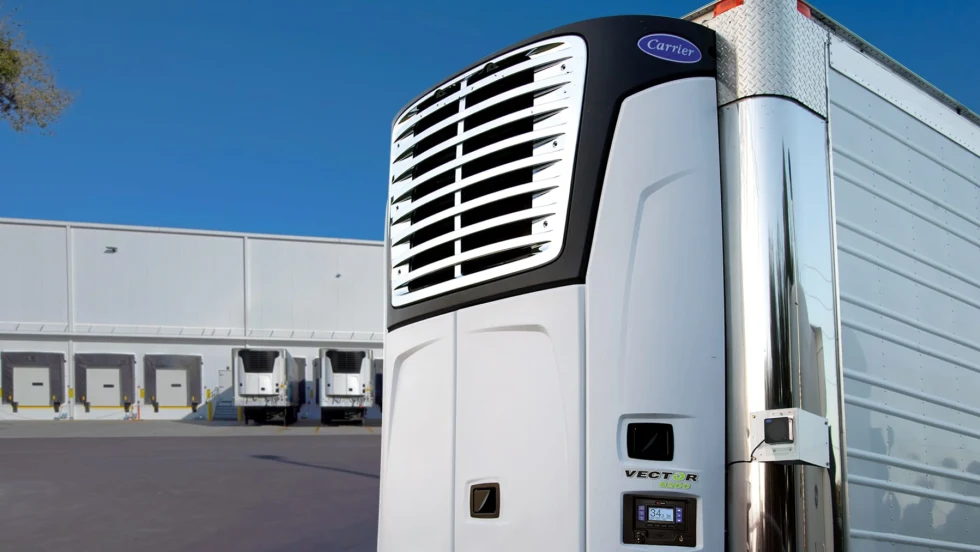
Carrier Transicold Adds All-Electric TRU for Stationary Cold Storage
Carrier Transicold’s new Vector 8200 all-electric transport refrigeration unit gives fleets a diesel-free option for temporary refrigerated and frozen trailer storage.
Read More →
A Closer Look at Kenworth’s Electric T880E Vocational Truck [Video]
Learn more about Kenworth's T880E battery-electric vocational truck at the Paccar Technical Center, including its range, applications, upfitting considerations, and PTO options, in this HDT Spotlight video.
Read More →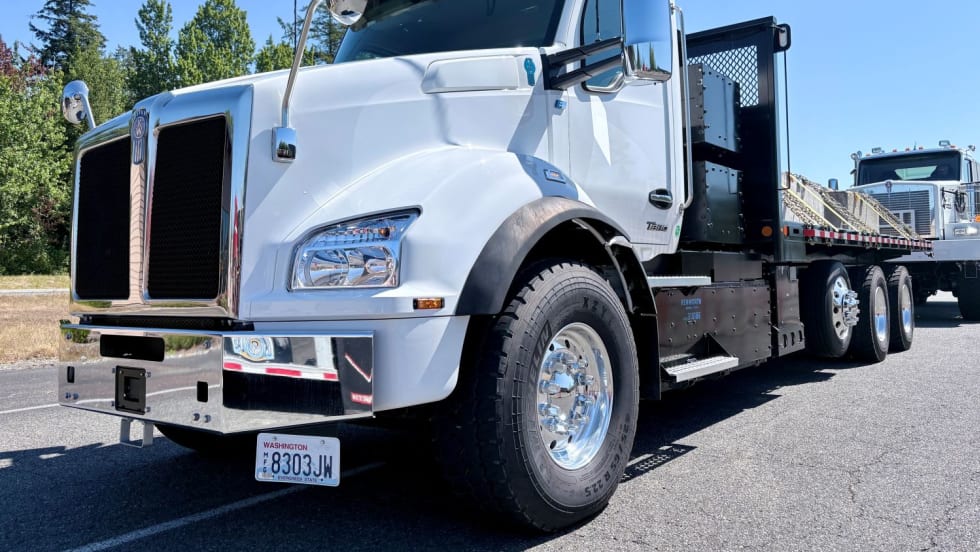
Kenworth T880E Brings EV Power to Vocational Trucks
A closer look at the Kenworth T880E’s range, charging, powertrain and upfit options — and where fleets are showing the most interest.
Read More →
What the U.S.-Canada Trade War Means for Trucking
Escalating U.S.-Canada tariffs could disrupt cross-border freight, reduce truck volumes, raise costs, and create new uncertainty for carriers on both sides of the border.
Read More →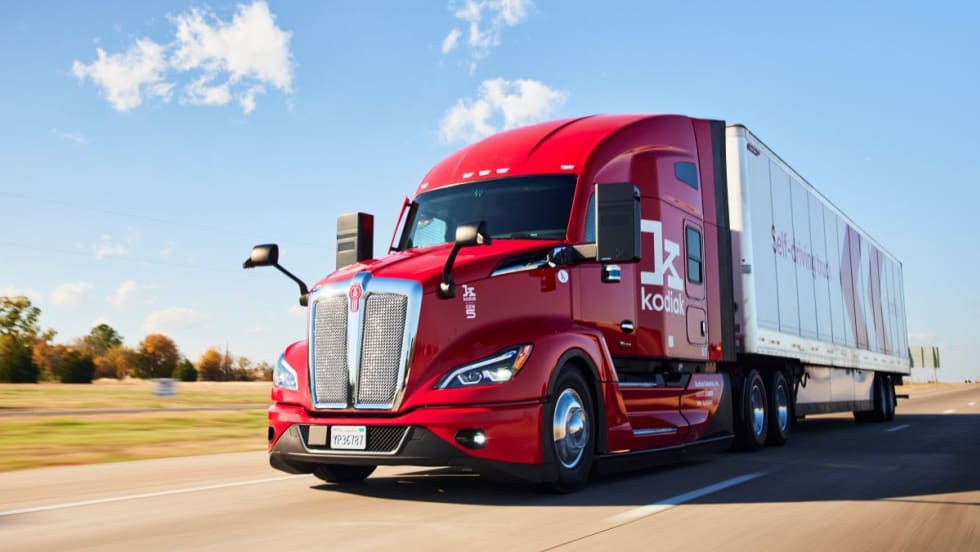
Autonomous Truck Testing Moves Ahead in California as Teamsters Challenge Rules
California has begun permitting heavy-duty autonomous truck testing, with Aurora and Kodiak among the first to receive approval, as the Teamsters sue the DMV over the new regulations.
Read More →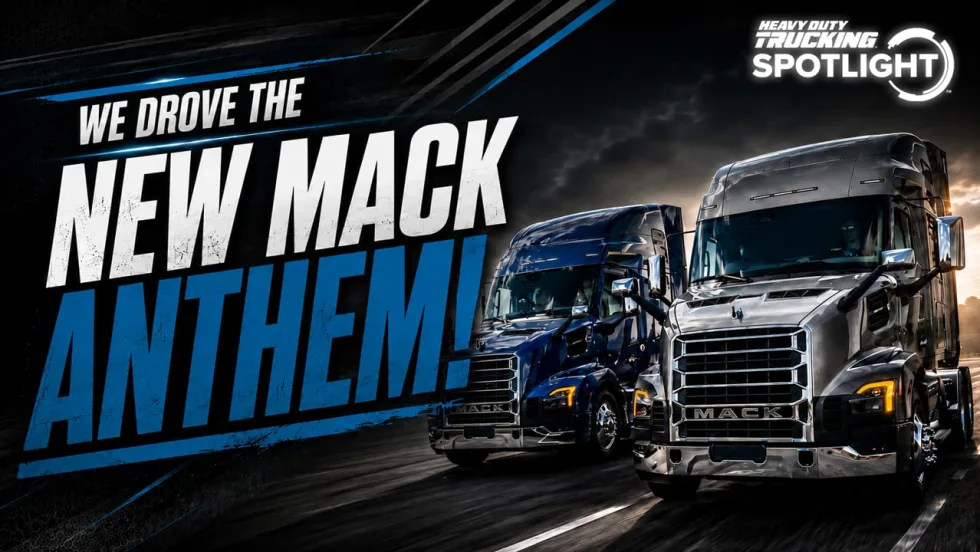
Behind the Wheel of the New Mack Anthem [Video]
HDT takes the new Mack Anthem around Mack’s Pennsylvania test track to see how its driver-focused design, technology, visibility and handling perform from behind the wheel.
Read More →
DTNA Plans New U.S. Truck Plant as Manufacturing Footprint Shifts
Daimler Truck North America is evaluating sites for a new assembly plant expected to open in 2029 while winding down operations at its longtime Portland manufacturing facility.
Read More →