




Natural Gas Future Has Potential, Report Says
A recently released natural gas analysis from TIAX LLC predicts the opportunity for the compressed-natural-gas fueling market will grow steadily over the next few years
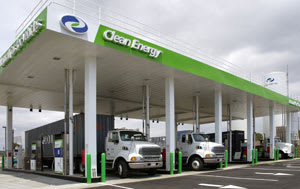
Today, approximately 1,000 CNG stations in the U.S. compete with approximately 120,000 retail gasoline locations. That is a Ratio of one CNG station for every 120 retail gasoline stations.
A recently released natural gas analysis from TIAX LLC predicts the opportunity for the compressed-natural-gas fueling market will grow steadily over the next few years.
This assessment was sponsored by America's Natural Gas Alliance with the support of participating American Gas Association companies. Its main objective was to identify the best ways to increase the use of natural gas vehicles in the U.S. and Canada. The TIAX team says it conducted a thorough and independent assessment of the NGV market.
The report highlighted the following as the greatest market opportunities for natural gas infrastructure expansion in the future: (CNG is compressed natural gas, LNG is liquified natural gas):
- CNG market potential for large commercial (not government) fleets
- LNG and CNG market potential for freight haulers and particularly ports
- Taking advantage of/marketing the emissions benefits of CNG. CNG equipment providers believe that with growing concern for environment and carbon footprint, natural gas has an opportunity to excel
- Promoting the domestic advantage of CNG versus imported oil
- Competitiveness of natural gas price against rising gasoline/diesel prices
- Working with LDCs and gas producers to build critical mass with fueling infrastructure investment
Today, approximately 1,000 CNG stations in the U.S. compete with approximately 120,000 retail gasoline locations. That is a ratio of one CNG station for every 120 retail gasoline stations.
Liquefied natural gas
The analysis also covered liquefied natural gas, saying that it has the economic potential to be successful in select vehicle market segments.
Regional and line-haul trucking applications, through the investment in public fueling stations, are the largest and possibly most prosperous market segment for LNG, according to the report.
Almost all LNG vehicle applications to date have been return-to-base trucks and transit buses, primarily because their fueling infrastructure is much simpler to implement than that for line-haul trucks.
Return-to-base fleets have the benefit of constructing onsite stations that meet
their specific needs, but these stations do not help in developing a nationwide distribution infrastructure. Over the road line-haul trucks, which are the largest fuel volume market segment, require public access LNG stations along major routes (e.g., at existing truck stops).
Future success of LNG heavy-duty line-haul market penetration hinges on ensuring that fueling stations are located along future trucking routes. This was the original intent of the Interstate Clean Transportation Corridor, conceptualized in the late 1990s but not actually implemented. Such strategic investments along heavily used corridors may be the beginning of a complete nationwide LNG fueling network. Based on a 10,000 gallon per day station capacity, a 100,000 gallon per day liquefaction plant can serve 10 stations.
Incentives that last at least five to 10 years without need for renewal could establish the market conditions that allow for sustained growth, the analysis says. LNG vehicles and liquefaction and retail facilities require substantial capital investments, and until sufficient fuel throughput and adequate fueling station availability are in place, a level playing field among vehicle incentives is necessary to give security to infrastructure and vehicle investments.
To read Tiax's natural gas analysis in its entirety, click here.
More Drivers

Hours of Service Pilot Programs: FMCSA Readies for 2027 Rollout
Two pilot programs could eventually reshape hours-of-service rules, giving truck drivers options to pause their 14-hour clock or use longer split sleeper rest periods.
Read More →
Medical Cards, English Proficiency Reshape Roadcheck Violations
Medical-card violations jumped to the top of the driver out-of-service list during CVSA’s 2026 International Roadcheck, while English-language proficiency violations appeared among the leading violations for the first time.
Read More →
Driver Trust Can Make or Break the Success of Fleet Safety Technology
New Teletrac Navman research suggests that onboarding, transparency about driver data, and positive feedback can play a significant role in how commercial drivers respond to safety and coaching technology.
Read More →
EEOC Sues KLLM Over Alleged Sex Discrimination in Driver Training
KLLM is facing a federal sex-discrimination lawsuit over policies the EEOC alleges put female truck driver trainees at a disadvantage.
Read More →
FMCSA Moves to Codify English Language Requirements for Commercial Drivers
By changing regulations on English-language proficiency requirements for commercial drivers, rather than relying on a guidance memo, the FMCSA said future administrations won't be able to walk back the Trump administration's stricter enforcement with just a memo.
Read More →
Drivers Put Western Star Trucks to the Test at Star Nation Experience
Watch to get an inside look at the Western Star trucks, technology, and community behind the Star Nation Experience 2026!
Read More →
Trump Administration Looks to Put More Veterans Behind the Wheel
The Freedom Haulers program pulls together existing and expanded programs at several federal agencies to recruit veterans to drive commercial heavy-duty trucks and cut the red tape for them to get a CDL, training, and employment.
Read More →
Putting Mack’s Command Steer to the Test
A test drive of Mack’s Command Steer active steering system evaluates how it can make truck driving easier and less tiring.
Read More →
Competition Heating Up for Truck Drivers
New report reveals rising driver hiring costs, the return of sign-on bonuses, growing AI advantages, and the operational factors shaping driver retention.
Read More →
How Fraley & Schilling Improved Logbook Compliance by Over 50%
Fraley & Schilling needed a way to close a compliance workflow gap in its ELD system without adding more work from driver training, reminders, and back-office follow-ups. It found the answer in a custom driver app.
Read More →