




National Safety Council Calls for Nationwide Ban on Cell Phone Use While Driving
The National Safety Council is pushing to stop the use of cell phones while driving
The National Safety Council is pushing to stop the use of cell phones while driving.
The group issued a release calling on motorists to stop using cell phones and messaging devices while driving, and is urging businesses to enact policies prohibiting it and governors and legislators in all 50 states and the District of Columbia to pass laws banning the behavior.
"Studies show that driving while talking on a cell phone is extremely dangerous and puts drivers at a four times greater risk of a crash," said Janet Froetscher, president and CEO of the NSC. "Driving drunk is also dangerous and against the law. When our friends have been drinking, we take the car keys away. It's time to take the cell phone away."
The NSC cites a study from the Harvard Center of Risk Analysis, which estimates that cell phone use while driving contributes to 6 percent of crashes, which equates to 636,000 crashes, 330,000 injuries, 12,000 serious injuries and 2,600 deaths each year. The study also put the annual financial toll of cell phone-related crashes at $43 billion.
Talking on a cell phone may be less distracting than some other activities people may engage in while driving, but the use of cell phones and texting devices is much more pervasive, making it more dangerous overall, Froetscher said. The NSC also points to studies from researchers at the University of Utah that show that hands-free devices do not make cell phone calls while driving safe. Another study demonstrates that talking to passengers, as opposed to talking on a cell phone, actually makes adult drivers safer, because passengers help alert drivers to potential driving risks.
"When you're on a call, even if both hands are on the wheel, your head is in the call, and not on your driving," Froetscher said. "Unlike the passenger sitting next to you, the person on the other end of the call is oblivious to your driving conditions. The passenger provides another pair of eyes on the road."
A significant amount of vehicular cell phone use is done on the job. Many businesses have already acknowledged the injuries and costs associated with this behavior by adopting policies that ban cell phone use by employees on the roads. Among NSC member businesses that responded to a survey, 45 percent said they have company policies prohibiting on-road cell phone use. Of those, 85 percent said the policies make no difference in business productivity.
Froetscher has sent letters to all governors and state legislative leaders, encouraging them to adopt statewide bans. She acknowledged that achieving and enforcing bans in all states will be a challenge, but she said the NSC has successfully faced similar challenges in the past, such as seatbelt enforcement.
The NSC will take a three-fold approach to leading change: advocating legislation; educating the public and businesses about the risk of cell phone use while driving; and supplementing distracted driving content in its training of 1.5 million people annually in defensive driving.
A fact sheet, data resources and other information concerning cell phone use while driving are available on the NSC website, at distracteddriving.nsc.org.
The National Safety Council (NSC) is a nonprofit, nongovernmental public service organization dedicated to protecting life and promoting health in the United States. Located in Itasca, Illinois, the NSC is a membership organization, founded in 1913 and given a congressional charter in 1953. Members include more than 51,000 businesses, labor organizations, schools, public agencies, private groups and individuals. The NSC's mission is to "educate and influence people to prevent accidental injury and death," and its vision is "making our world safer."
More Safety & Compliance
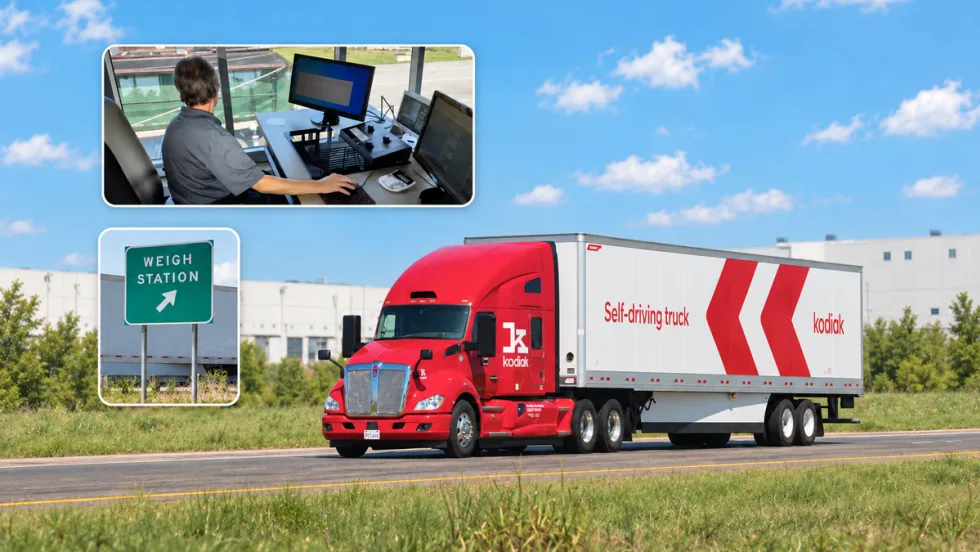
PrePass, Kodiak Connect Driverless Trucks to Roadside Enforcement
The system will allow enforcement agencies to verify Enhanced Inspection information and decide whether Kodiak’s autonomous trucks can bypass roadside screening sites.
Read More →
From One Generation to the Next: How Mentorship Builds Safer Truck Drivers
After three decades in trucking, Harold Perry shares what he's learned about driver safety, mentorship, and helping the next generation build confidence behind the wheel.
Read More →
FMCSA Pauses Biennial-Update Enforcement Amid Motus Transition
Carriers whose updates were due on or after June 1 have more time, while FMCSA works to stabilize its new registration system and warns of phishing sites impersonating its new carrier registration system, Motus.
Read More →
ZF Expands Commercial Vehicle Push in North America
ZF is expanding its North American commercial-vehicle presence with new transmission applications, electrification, trailer technology and autonomous-driving systems.
Read More →
Truck Drivers Need More Than Another Alert
Fleets have more visibility into truck health, safety events, and driver activity than ever. The next challenge is turning all that information into useful guidance for the person who has to decide what to do next.
Read More →
Tesla Wants a Self-Driving Semi. Are Cameras Enough?
Could Tesla’s camera-only autonomous driving technology work on an 80,000-pound Semi? In this commentary, HDT's Deborah Lockridge takes a look at Tesla, Cybercab, and how autonomous trucks see the road.
Read More →
What DOT’s Automated Vehicle Strategy Means for Trucking
The U.S. Department of Transportation issued a new automated-vehicle strategy that outlines plans for driverless-truck regulations, cross-state freight corridors, and federal safety standards.
Read More →
NYC Expands Speed, Pedestrian Safety Tech Across Fleet
New York City is expanding intelligent speed assistance and pedestrian-alert systems across its municipal fleet, moving the technologies from pilot programs into vehicle procurement and retrofit requirements.
Read More →
FMCSA Removes 110 Truck Driver Training Schools from Certified ELDT List
Federal regulators also are targeting more than 160 additional training providers and launching a nationwide audit of third-party CDL skills testers as part of a broader crackdown on trucking fraud.
Read More →
Beyond DOT Compliance: What Makes a Trucking Fleet Truly Safe?
A trucking fleet can follow every rule and still make unsafe decisions. The real test comes when safety conflicts with freight, productivity, or cost.
Read More →