




A jury verdict against Mack Trucks calls for the engine company to pay $50 million to a woman whose son died while driving a Mack five years ago.
Mary Witherspoon sued Mack in 1997, two years after her son Tonnie died while hauling a load of logs in rural Alabama. He lost control of his rig, which jackknifed and caught fire. Tonnie was trapped inside.
Witherspoon claimed her son would have lived had Mack installed an "inertia switch" similar to those used to activate air bags and seat belts during a crash. The switch could have stopped electrical arcs in the power system when the truck rolled over, preventing the fire, according to the suit.
Witherspoon's lawyer, Robert Cunningham Jr. of Mobile, AL, said Mack "never studied or researched this device. In fact, the electrical systems of trucks are still the same since the 1960s."
Newport Executive Editor Jim Winsor describes the device as a "pendulum" that reacts to vertical and horizontal motion. He says he's never seen one used in a heavy duty truck.
Other industry experts say truck makers do not use the switches because they are unreliable. The National Highway Traffic Safety Administration in 1975 asked truck makers for feedback about a proposal to require companies to install the switch, but the response prompted NHTSA to kill the proposal.
The Clarke County, AL, jury took less than an hour last week to return their verdict after hearing testimony from would-be rescuers about how Tonnie was burned alive.
Mack lawyers expressed sympathy for the family and said they are evaluating their options. An appeal is expected.
Mother Wins $50 Million Verdict Against Mack
A jury verdict against Mack Trucks calls for the engine company to pay $50 million to a woman whose son died while driving a Mack five years ago
More Safety & Compliance

Deadline Extended for HDT Truck Fleet Innovators Nominations
Heavy Duty Trucking has extended the deadline for nominations for its Truck Fleet Innovators awards. The deadline has been extended to May 22.
Read More →
Supreme Court Ruling Puts Freight Broker Vetting Practices in Spotlight
The unanimous SCOTUS ruling in the closely watched Montgomery v. Caribe case allows state negligence claims against freight brokers that hire unsafe motor carriers, raising new liability and vetting concerns among brokers.
Read More →
The Truck Safety Tech K&B Transportation Says Is Making a Difference [Watch]
Can technology help prevent truck crashes? In this HDT Talks Trucking Short Takes episode, K&B Transportation explains how it’s using cameras, speed management tools, cellphone-blocking technology, and other systems to improve safety and reduce risk across its fleet.
Read More →
Listen: Inside Modern Fleet Safety: AI, Cameras & Speed Control at K&B Transportation
Fleet safety is evolving fast—and technology is at the center of it. Learn how a former commercial vehicle enforcement officer turned director of safety at K&B Transportation is embracing real-world safety technology.
Read More →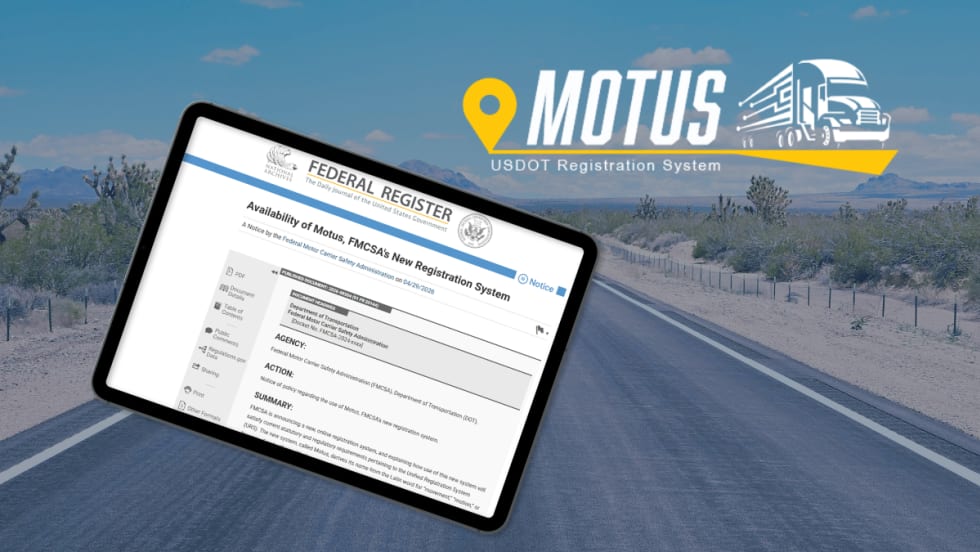
FMCSA’s Motus System Is Coming. What Fleets Need to Know Now
FMCSA's long-awaited registration system promises a single portal — and tighter fraud controls. And there are steps you need to take by May 14.
Read More →
Avoiding Winter Pileups: Don’t Become the Next Link in the Crash-Chain
Winter roadway “pileups” aren’t one crash — they’re a chain reaction. Here’s what triggers them, how truck drivers can spot the danger early, and what to do if you're suddenly trapped in the mess.
Read More →
Freightliner Expands Detroit Assurance with New Intersection and Turning Safety Tech
Detroit’s next-generation ABA6 safety system adds cross-traffic detection and enhanced side guard assist with left-turn protection, targeting high-risk urban scenarios.
Read More →
'Beyond Compliance,' Regulations, Driver Coaching on ATRI’s 2026 Research List
The American Transportation Research Institute will examine driver coaching, regulatory impacts — including the "Beyond Compliance" concept —and weather disruptions that shape trucking operations.
Read More →
FMCSA Revamps DataQs to Improve Fairness, Speed of Reviews
New requirements add firm deadlines and independent review steps, addressing long-standing complaints about inconsistent rulings and slow response times.
Read More →
FMCSA Extends Paper Medical Card Exemption … Again
Five states still aren't ready to accept commercial driver medical exam information directly from the medical examiner's registry.
Read More →