




McQuaid Calls for ‘Appropriate’ Safety Performance Standard
It’s time to change the way the federal government measures truck safety, a trucking industry leader told Congress last week
It’s time to change the way the federal government measures truck safety, a trucking industry leader told Congress last week.
John McQuaid, president and CEO of the National Private Truck Council, said trucking’s safety performance should be judged by the actual number of fatalities rather than by the rate of fatal crashes per million miles of travel.
The crash rate is improving because mileage is growing – but the number of deaths is on the rise. “Excusing the rise in fatalities due to ‘more miles traveled’ is absolutely inappropriate,” McQuaid told members of the House Ground Transportation Subcommittee, which held a hearing last Thursday, March 25. Changing the Office of Motor Carriers and Highway Safety’s focus from the crash rate to actual fatalities will challenge the agency and the trucking industry to constantly raise their safety performance, he said.
McQuaid was on a panel testifying on truck safety enforcement by the Office of Motor Carrier and Highway Safety. In calling for this change, he was endorsing a recommendation made at an earlier hearing by DOT Inspector General Kenneth Mead.
To improve safety, McQuaid suggested increasing enforcement focus on the drivers most likely to get into accidents – a selection that can to some extent be predicted by company crash rates – and better communication among law enforcement and employers on driver performance.
Another suggestion came from Rita Bontz, president of the Independent Truckers and Drivers Assn. She said that applicants for operating authority should be required to submit a detailed safety plan along with their request for authority. “The lack of a pre-qualification program is one of the most conspicuous limitations in ensuring carrier safety fitness,” she said.
Witnesses at the hearing sounded a recurring theme: OMCHS needs to put more emphasis on enforcement, but it should not abandon its role as safety educator.
Timothy Lynch, president and CEO of the Motor Freight Carriers Assn., representing the unionized LTL sector, stressed the need for tougher enforcement.
Inspector General Mead’s audit of OMCHS shows that the agency is not enforcing the rules, said Lynch. Fleets that obey the rules take offense when scofflaws go free. “It is incomprehensible that a motor carrier is permitted to operate in defiance of the federal mandate for a drug and alcohol testing program. If carriers are operating without complying with drug and alcohol testing programs or repeatedly falsifying driver logbooks, they should be shut down.”
Lynch and others stressed, though, that OMCHS should continue providing guidance and support to fleets that want to learn how to improve their safety.
More Safety & Compliance
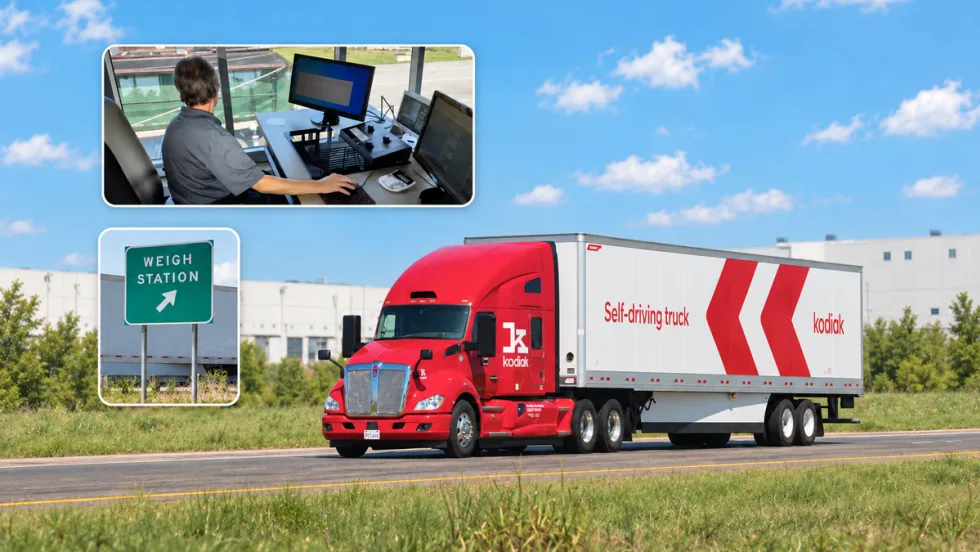
PrePass, Kodiak Connect Driverless Trucks to Roadside Enforcement
The system will allow enforcement agencies to verify Enhanced Inspection information and decide whether Kodiak’s autonomous trucks can bypass roadside screening sites.
Read More →
From One Generation to the Next: How Mentorship Builds Safer Truck Drivers
After three decades in trucking, Harold Perry shares what he's learned about driver safety, mentorship, and helping the next generation build confidence behind the wheel.
Read More →
FMCSA Pauses Biennial-Update Enforcement Amid Motus Transition
Carriers whose updates were due on or after June 1 have more time, while FMCSA works to stabilize its new registration system and warns of phishing sites impersonating its new carrier registration system, Motus.
Read More →
ZF Expands Commercial Vehicle Push in North America
ZF is expanding its North American commercial-vehicle presence with new transmission applications, electrification, trailer technology and autonomous-driving systems.
Read More →
Truck Drivers Need More Than Another Alert
Fleets have more visibility into truck health, safety events, and driver activity than ever. The next challenge is turning all that information into useful guidance for the person who has to decide what to do next.
Read More →
Tesla Wants a Self-Driving Semi. Are Cameras Enough?
Could Tesla’s camera-only autonomous driving technology work on an 80,000-pound Semi? In this commentary, HDT's Deborah Lockridge takes a look at Tesla, Cybercab, and how autonomous trucks see the road.
Read More →
What DOT’s Automated Vehicle Strategy Means for Trucking
The U.S. Department of Transportation issued a new automated-vehicle strategy that outlines plans for driverless-truck regulations, cross-state freight corridors, and federal safety standards.
Read More →
NYC Expands Speed, Pedestrian Safety Tech Across Fleet
New York City is expanding intelligent speed assistance and pedestrian-alert systems across its municipal fleet, moving the technologies from pilot programs into vehicle procurement and retrofit requirements.
Read More →
FMCSA Removes 110 Truck Driver Training Schools from Certified ELDT List
Federal regulators also are targeting more than 160 additional training providers and launching a nationwide audit of third-party CDL skills testers as part of a broader crackdown on trucking fraud.
Read More →
Beyond DOT Compliance: What Makes a Trucking Fleet Truly Safe?
A trucking fleet can follow every rule and still make unsafe decisions. The real test comes when safety conflicts with freight, productivity, or cost.
Read More →