




Mack Ups Fuel Efficiency with Super Econodyne Direct Option
Mack Trucks has introduced Super Econodyne Direct, a new fuel-saving option that combines the Super Econodyne engine rating with a direct-drive version of its mDrive automated manual transmission.
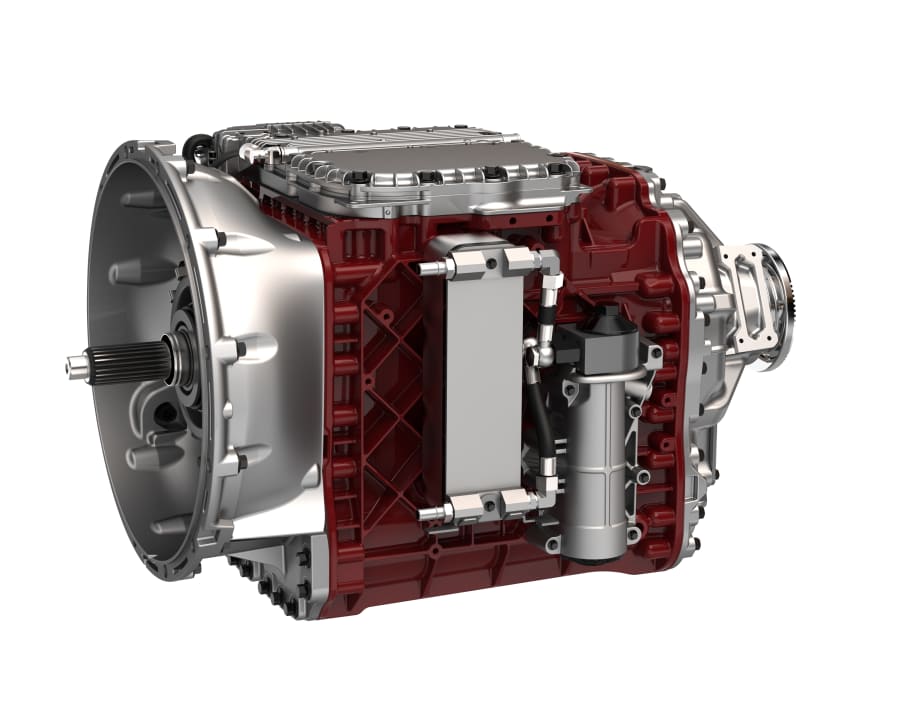
Mack Trucks’ Super Econodyne Direct is a new fuel-saving option that combines Mack’s Super Econodyne rating with a direct drive version of the Mack mDrive automated manual transmission to boost fuel efficiency. Photo: Mack Trucks
Mack Trucks’ Super Econodyne Direct is a new fuel-saving option that combines Mack’s Super Econodyne rating with a direct drive version of the Mack mDrive automated manual transmission to boost fuel efficiency.Photo: Mack Trucks
LOUISVILLE, KENTUCKY-- Mack Trucks introduced Super Econodyne Direct, a new fuel-saving option that combines the Super Econodyne engine rating with a direct-drive version of its mDrive automated manual transmission. here at the Mid-America Trucking Show.
“Our Super Econodyne rating was previously only available with the overdrive version of the mDrive, but the recent release of numerically lower rear axle ratios allows us to use the direct drive variant,” said Scott Barraclough, Mack technology product manager. “The result is up to 1% better fuel efficiency on top of the 3% Super Econodyne already delivered on its own.”
Despite having a higher top gear ratio, the direct drive mDrive is more efficient because it features reduced parasitic losses. This results from torque not transmitted to the direct drive mDrive’s countershaft while in top gear. Instead, the transmission's input and output shafts are essentially locked together, according to Mack.
Super Econodyne Direct is best suited for applications of 80,000 pounds GCW or less where drivers remain in top gear for a large percentage of the time. It also works best on mostly flat terrain and when drivers remain mostly in constant speed.
Mack’s Super Econodyne rating fully integrates Mack MP engines and the Mack mDrive to deliver fuel savings. The integrated powertrain enables lower engine cruise RPM to save fuel, without impacting power or performance. Super Econodyne-rated Mack engines cruise at approximately 1,150 rpm, a reduction of 200-300 rpm from a typical highway cruise rpm, which results in up to 3% improved fuel efficiency.
Super Econodyne ratings are available for the 11-liter Mack MP7 and 13-liter MP8 engines.
Mack also announced that its 2017 MP8 engine with turbo compounding is now available for order. The turbo compounding system gives the engine an improved operating range and holds the top gear when cresting a hill, even with the engine rpm decreasing.
Available exclusively with Mack’s Super Econodyne downspeeding package, the MP8 with turbo compounding converts wasted energy from the exhaust into mechanical energy that is fed back to the engine. The system adds up to 50 additional horsepower, improving fuel efficiency by up to 8.8%, according to Mack. The additional power generated by the turbo compounding system allows the engine to maintain full torque as low as 900 rpm.
More Equipment

How Volvo Updated Its D13 for EPA 2027 [Watch]
Volvo’s updated D13 promises lower emissions without sacrificing performance or fuel economy. Take a closer look at what changed inside the engine in this HDT Spotlight video.
Read More →
Michelin Tire Improves Efficiency and Durability for Regional Fleets
The Michelin X Multi Energy D2 is a regional haul drive tire engineered to help fleets improve fuel efficiency, durability and traction in demanding stop-and-go operations.
Read More →
ZF Expands Commercial Vehicle Push in North America
ZF is expanding its North American commercial-vehicle presence with new transmission applications, electrification, trailer technology and autonomous-driving systems.
Read More →
Tesla Wants a Self-Driving Semi. Are Cameras Enough?
Could Tesla’s camera-only autonomous driving technology work on an 80,000-pound Semi? In this commentary, HDT's Deborah Lockridge takes a look at Tesla, Cybercab, and how autonomous trucks see the road.
Read More →
Kodiak: Driverless Long-Haul Truck Launch on Track for 2026
Kodiak AI says its driverless long-haul safety case is 93% complete and it remains on track to begin commercial operations by year-end 2026.
Read More →
What DOT’s Automated Vehicle Strategy Means for Trucking
The U.S. Department of Transportation issued a new automated-vehicle strategy that outlines plans for driverless-truck regulations, cross-state freight corridors, and federal safety standards.
Read More →
East Coast Port Launches $45M Electric Truck Push
The Port Authority of New York and New Jersey announced millions in incentives for zero-emission drayage trucks, yard tractors, and new charging hubs near the port.
Read More →
PlusAI Going Public to Fund Autonomous Truck Launch
A SPAC deal could provide PlusAI with up to $300 million as it works toward a 2027 commercial launch of factory-built autonomous trucks.
Read More →
NHTSA Moves to Rewrite Truck Fuel-Economy Rules
The National Highway Traffic Safety Administration says it lacks authority to regulate medium- and heavy-duty truck engines separately from complete vehicles, but the existing standards have not yet been eliminated.
Read More →
Detroit Opens Orders for EPA 2027 Engines
Detroit isn’t starting from scratch to meet EPA 2027 diesel emissions standards. Its Gen 6 DD13 and DD15 engines keep much of today’s platform while updating the fuel and aftertreatment systems.
Read More →