




Related: Super Trucks - Pie in the Sky, or Pathway to Super Fuel Savings?
Kenworth Joins SuperTruck II Project
Kenworth has announced that it will participate in the Department of Energy’s SuperTruck II program, collaborating closely with the Paccar Technical Center and DAF Trucks, a subsidiary of Paccar, to develop fuel efficient technologies.
by Staff
September 11, 2017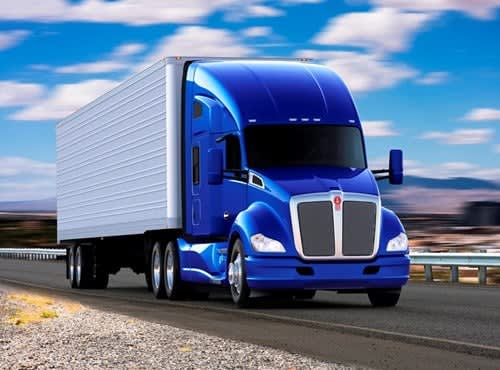
Kenworth T680 with 76-inch sleeper. Photo: Kenworth
2 min to read
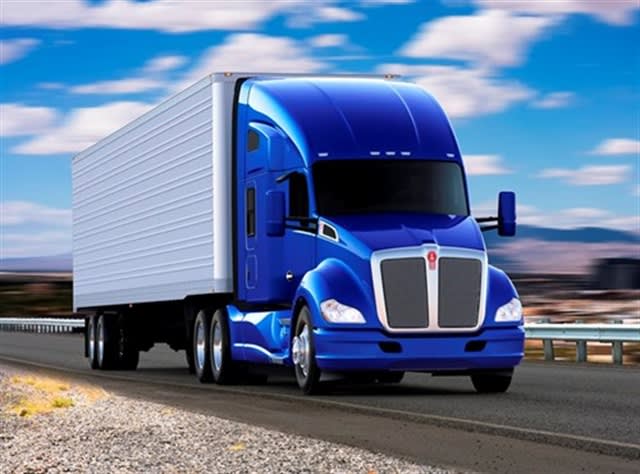
Kenworth T680 with 76-inch sleeper.Photo: Kenworth
Kenworth has announced that it will participate in the Department of Energy’s SuperTruck II program, collaborating closely with the Paccar Technical Center and DAF Trucks, a subsidiary of Paccar, to develop fuel efficient technologies.
The company’s focus is on developing advancements in Class 8 truck aerodynamics, engine, and powertrain efficiencies with $8 million in year-one funding, provided by the Vehicle Technologies Office of the DOE. Other participants include Eaton, National Renewable Energy Laboratory, Mississippi State University, and AVL.
The project will center around Kenworth’s flagship on-highway model T680 with the 76-inch sleeper and the fuel-efficient Paccar MX engine. The project’s target goals include the demonstration of greater than 100% improvement in freight efficiency over 2009 equivalent product and achieving 55% in engine brake thermal efficiency.
“The U.S. DOE SuperTruck II project is an excellent opportunity for Kenworth, the Paccar Technical Center, and DAF engineers, along with our partners, to explore significant modifications to aerodynamic design, while also developing key ways to further enhance the efficiency of the Paccar MX engine and Paccar powertrain,” said Mike Dozier, Kenworth general manager and Paccar vice president. “This is an important program that can produce real-world results to benefit fleets and truck operators with even greater reductions in fuel usage and emissions in the future.”
Paccar joins teams from Cummins, Daimler Trucks North America, Navistar, and Volvo, in the SuperTruck II program, working to develop innovative technologies designed to more than double the freight efficiency of Class 8 trucks. Up to $12 million in additional funding could be awarded for the Kenworth T680 and Paccar MX engine project over the next three years, subject to annual appropriations by Congress.
Kenworth sister company Peterbilt participated in the original SuperTruck program in a joint effort with Cummins, which debuted its vehicle in 2014, achieving 10.7 miles per gallon.
More Fuel Smarts

Wex Adds Cardless Fuel Payments for Over-the-Road Customers
A new fuel card feature for Wex customers offers convenience and security.
Read More →
New California Law Could Shed Light on Electric Truck Prices
Why do battery-electric Class 8 trucks remain so expensive? A California bill signed by Gov. Gavin Newsom would give fleets and state agencies more visibility into what manufacturers charge.
Read More →
How Volvo Updated Its D13 for EPA 2027 [Watch]
Volvo’s updated D13 promises lower emissions without sacrificing performance or fuel economy. Take a closer look at what changed inside the engine in this HDT Spotlight video.
Read More →

Diesel Price Spike Shortens Payback for Natural Gas Trucks, Report Says
Energy Vision estimates fleets could recover the higher purchase price of an RNG-fueled Class 8 tractor in 1.3 to 2.8 years under current fuel-price scenarios.
Read More →
Calstart Becomes Catalyst Mobility, Reflecting Broader Focus
Calstart is now Catalyst Mobility, reflecting the nonprofit’s growing national role in clean transportation, including zero-emission trucks, infrastructure and incentive programs.
Read More →
Record Diesel Prices Squeeze Trucking Fleets
Average U.S. diesel prices have climbed to nearly $6 a gallon, surpassing the 2022 record as tight refinery capacity and Middle East disruptions keep fuel costs elevated.
Read More →
Sponsored•September 9, 2026
How Fuel Delivery Shapes Engine Performance
Fuel delivery depends on more than what happens at the injector. For fleet, maintenance and technical professionals, looking at the full path from pump to injector can provide useful context for understanding engine performance.
Read More →
East Coast Port Launches $45M Electric Truck Push
The Port Authority of New York and New Jersey announced millions in incentives for zero-emission drayage trucks, yard tractors, and new charging hubs near the port.
Read More →
Detroit Opens Orders for EPA 2027 Engines
Detroit isn’t starting from scratch to meet EPA 2027 diesel emissions standards. Its Gen 6 DD13 and DD15 engines keep much of today’s platform while updating the fuel and aftertreatment systems.
Read More →
Zero-Emission Truck Corridor Planned for West Coast
California, Oregon, Washington, British Columbia and Baja California are coordinating plans for truck charging and hydrogen fueling from Canada to Mexico.
Read More →