




Industry Challenges Continuing, Kenworth GM Says
Along with the glut of used trucks, the heavy truck industry has an excess of more than 50,000 new Class 8s, double the annual average excess of about 25,000. However, as factories reduce their build rates and increase their shutdown times, that excess is decreasing
Along with the glut of used trucks, the heavy truck industry has an excess of more than 50,000 new Class 8s, double the annual average excess of about 25,000. However, as factories reduce their build rates and increase their shutdown times, that excess is decreasing.
Also helping is declining factory orders and more sales of trucks out of inventory.
That was the word Paccar vice president/Kenworth general manager Ed Caudill delivered to attendees of Kenworth's Used Truck Managers Meeting, held late last week in San Diego. He predicted that Class 8 retail sales in the U.S. and Canada should total 220,000-240,000 for this year, well down from 1999's 293,000.
Caudill expects that market to soften to about 180,000 units in 2001, then grow to 210,000 the following year, with the push on sales prompted by new U.S. EPA diesel emission standards set to take effect in October 2002. Looking further out, Caudill forecasted sales of 200,000 in 2003 and 230,000 in 2004.
The medium duty truck market (excluding Class 5, school buses and stripped down chassis) will remain strong, he said. His projections for retail sales in the U.S. and Canada: 142,000 this year, 139,000 in 2001, 152,000 in 2002, 150,000 in 2003 and 155,000 in 2004. Some 149,000 units were retailed last year.
Caudill foresees more consolidation among Class 8 manufacturers and suppliers, as well as more vertical integration. Over the next several years, he feels some suppliers will exit the marketplace, while others will be absorbed by manufacturers or become contract manufacturers.
One of the things driving this situation, maintained Caudill, is a movement by truck users to get away from ownership and into finance or operating leases, "where they get a truck and run it for a set time period at a guaranteed cost and then give it back. Many of the large fleets have taken advantage of the marketing strategies of some of the OEMs to get them into buybacks or tradebacks with a guaranteed residual," he explained.
"With the used truck downturn, many fleets realized it wasn't advantageous to own equipment because they had to trade them at a loss. And Wall Street is not rewarding trucking companies for having trucks on their balance sheets."
This situation will likely help drive OEM integration, Caudill said. Since truck users aren't going to own the truck, their main concern will be fuel economy and lowest operating costs, rather than specs, and they will be satisfied with whatever the OEM specs.
Looking at the markets segments, Caudill feels the for-hire segment will be flat, while less-than-truckload, private fleets and vocational markets will grow. "The owner-operator market will decline because this group has been significantly impacted by the rising fuel costs, increasing insurance and operating expenses, the rising cost of technology and declining used truck values," he noted. "The medium duty market will also grow in response to the increased movement of freight in small amounts."
"The glut in used trucks will continue, with no relief in site," he said.
Citing MacKay & Co. studies, Caudill told meeting participants that with the number of 1997 trades coming back this year, there will be some 270,000 used Class 8s, about 60,000 more than the market can absorb. Next year, adding in the 1998 trades, used Class 8s will grow to 300,000, with an excess of 90,000 units. Figuring the record build in 1999 and that year's trades, for 2002, the numbers will increase to 310,000 and 100,000 excess.
"Seems like every cycle when the used truck market gets really slow, some novel approaches to dealing with the problem surface," Caudill said. By way of example, he recalled that back in the early 1980s, Ryder, Ruan and Roadway tried remanufacturing used trucks, "and each discovered the same thing: The economics didn't work."
In an initiative to reconfigure its used AeroCab sleeper tractors into the day cabs that are popular in the current market, Kenworth has developed an AeroCab Conversion Kit, available through Paccar Parts.
More Fleet Management
Is Your Parts Procurement Process Reactive or Proactive?
Ready to revamp your parts procurement process? Learn how now with “Strategic Parts Purchasing: A Process Checklist”
Read More →
What Trucking Events are Happening in 2026?
Looking for trucking-related conventions, expos, and other events? Heavy Duty Trucking has developed this list of national and larger regional trucking shows and events.
Read More →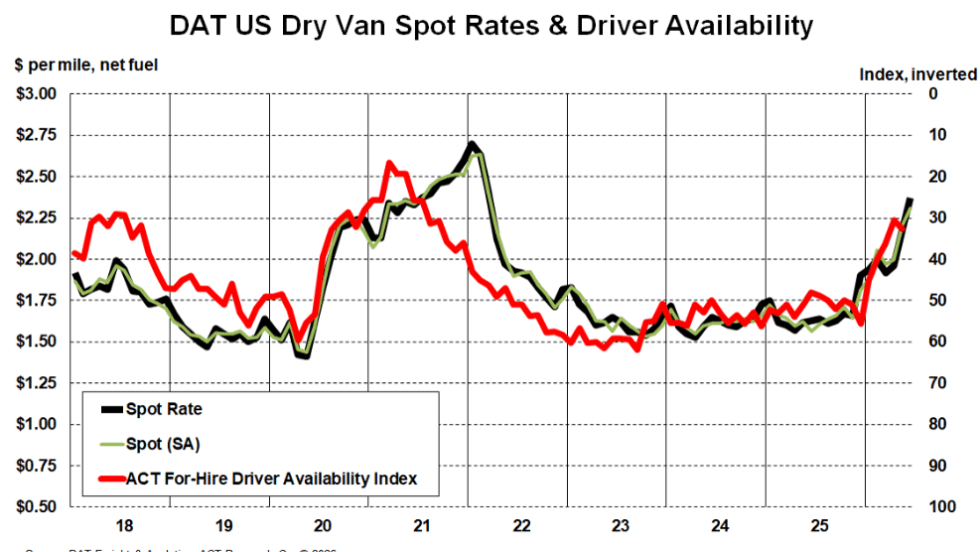
Truckload Rates Keep Rising as Tight Capacity Fuels Freight Market Recovery
Spot and contract rates continued climbing in May and June, not because freight demand is surging, but because fewer trucks and drivers are available.
Read More →
What Geotab's New AI Connector Means for Fleets
Fleets can now ask their usual AI assistants questions about maintenance, safety, fuel use, and vehicle performance, using their live Geotab data, and take action on the answers without leaving their preferred AI tool.
Read More →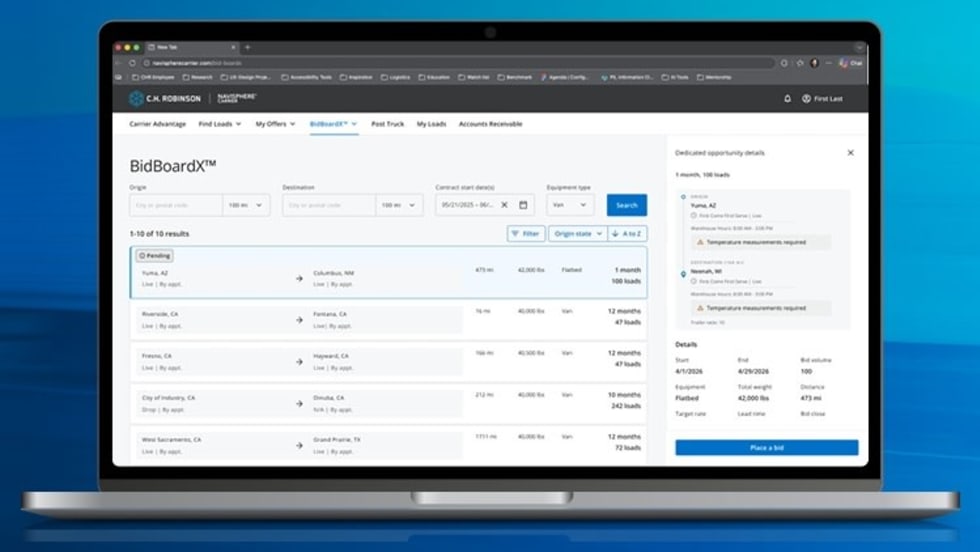
New C.H. Robinson Tool Opens Door to More Predictable Freight
BidBoardX lets carriers search, bid on, and secure committed freight opportunities through a single digital marketplace.
Read More →
New York City's Microhub Project is Delivering Results
Trucking, last-mile delivery companies, and environmental advocates like what they are seeing so far with New York's microhub program.
Read More →
Why Truck Detention Keeps Costing Fleets Time and Money
A 2024 ATRI study found detention affects nearly 40% of truckload stops and costs the industry more than $15 billion annually. Despite the toll on drivers, fleets, and supply chains, the problem remains stubbornly persistent.
Read More →
Time is Running Out to Apply for Exclusive HDT Event
Heavy Duty Trucking Exchange brings fleet managers and suppliers together for the deeper conversations that lead to ideas, partnerships, and solutions. Time is running out to apply for the September event.
Read More →
Amazon Launches Less-Than-Truckload Freight Offering for All Businesses
This launch is the latest addition to Amazon Supply Chain Services, a portfolio of supply chain capabilities from Amazon, including freight, distribution, fulfillment, and parcel shipping.
Read More →
Import Cargo Volume to See Year-Over-Year Gain Again in June, Then Remain Below 2025 Levels Into Fall
After July, the report predicts a weakening in import volume as consumer uncertainty remains high and the impact of increasing inflation takes its toll.
Read More →