




Indiana State Police Citing High Number of 'Hot' Reefer Trucks this Summer
Indiana State Police have cited a high number of small reefer trucks transporting food at unsafe and illegal temperatures, according to a report by Channel 13 in Indianapolis, an NBC affiliate
Indiana State Police have cited a high number of small reefer trucks transporting food at unsafe and illegal temperatures, according to a report by Channel 13 in Indianapolis, an NBC affiliate.
State police said thousands of food trucks pass through the state every day, and the vast majority are in compliance with Indiana regulations, which mandate a maximum transportation temperature of 41 degrees.
However, state troopers have found trucks in violation of the health code nearly every day. Some of the trucks have malfunctioning refrigeration units. Others have no reefers at all.
So far, troopers working with state health inspectors say they have condemned and destroyed tens of thousands of pounds of unsafe food. In at least one case, raw chicken, eggs and vegetables were tested at 67 degrees, well above safe levels.
According to reports, all of the violators were coming from nearby Chicago, and many were from Chinese food suppliers.
One such supplier, DW Trading Co., was shut down by the U.S. Food and Drug Administration after the company's warehouse was investigated following a truck violation. An official report stated the warehouse was contaminated with insects, bird droppings, cockroaches and what appeared to be mice.
Reasons behind the truck violations are not totally clear. Poor maintenance habits are likely a factor, but some fear that companies are trying to save on fuel costs by shutting down reefer units on the highway. They hope that re-starting the units prior to delivery can bring the food back down to acceptable temperatures.
At this point, trucks found in violation appear to be only medium-duty straight trucks, and not Class 8 over-the-road vehicles. It is unclear whether or not the problem is confined to the northern Indiana region.
Following the rash of violations, Indiana State Police contacted the Commercial Vehicle Safety Alliance to help with enforcement. CVSA now wants to know if other jurisdictions are conducting similar food safety enforcement patrols.
CVSA Executive Director Steven Keppler expressed his support for the Indiana State Police. He called their operation "innovative" in getting the Indiana Department of Health involved, which does not by itself have the authority to stop and inspect vehicles.
See the WTHR report here.
More Safety & Compliance
A Camera Isn't a Safety Program. Here's What Brokers Are Screening for Now
Footage alone may not be enough to pass broker vetting processes. Here's what counts as a defensible safety program now.
Read More →
Marijuana and Trucking’s Drug-Testing Dilemma
Marijuana is getting stronger, laws are changing, and drug tests still can’t reliably establish impairment. What does that mean for truck drivers and the fleets that employ them?
Read More →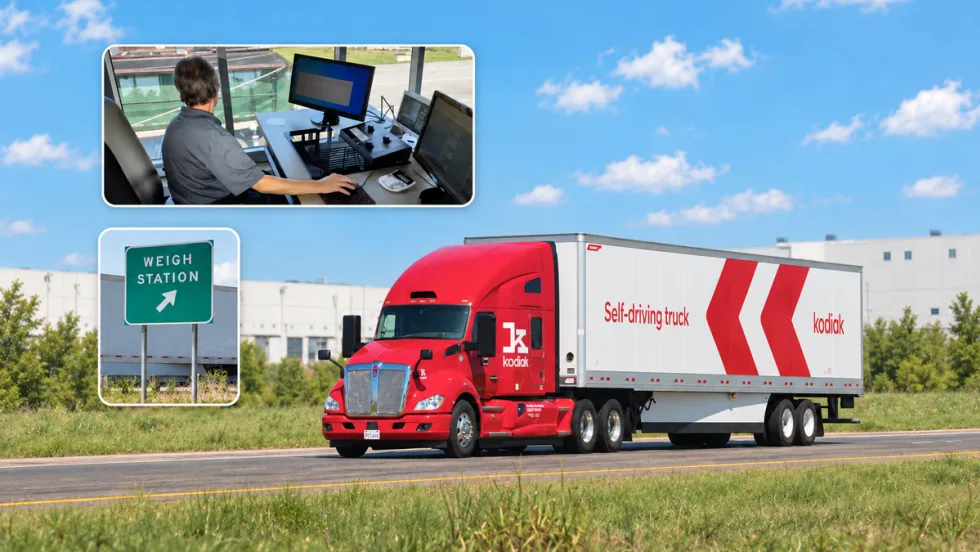
PrePass, Kodiak Connect Driverless Trucks to Roadside Enforcement
The system will allow enforcement agencies to verify Enhanced Inspection information and decide whether Kodiak’s autonomous trucks can bypass roadside screening sites.
Read More →

From One Generation to the Next: How Mentorship Builds Safer Truck Drivers
After three decades in trucking, Harold Perry shares what he's learned about driver safety, mentorship, and helping the next generation build confidence behind the wheel.
Read More →
FMCSA Pauses Biennial-Update Enforcement Amid Motus Transition
Carriers whose updates were due on or after June 1 have more time, while FMCSA works to stabilize its new registration system and warns of phishing sites impersonating its new carrier registration system, Motus.
Read More →
ZF Expands Commercial Vehicle Push in North America
ZF is expanding its North American commercial-vehicle presence with new transmission applications, electrification, trailer technology and autonomous-driving systems.
Read More →
Truck Drivers Need More Than Another Alert
Fleets have more visibility into truck health, safety events, and driver activity than ever. The next challenge is turning all that information into useful guidance for the person who has to decide what to do next.
Read More →
Tesla Wants a Self-Driving Semi. Are Cameras Enough?
Could Tesla’s camera-only autonomous driving technology work on an 80,000-pound Semi? In this commentary, HDT's Deborah Lockridge takes a look at Tesla, Cybercab, and how autonomous trucks see the road.
Read More →
What DOT’s Automated Vehicle Strategy Means for Trucking
The U.S. Department of Transportation issued a new automated-vehicle strategy that outlines plans for driverless-truck regulations, cross-state freight corridors, and federal safety standards.
Read More →
NYC Expands Speed, Pedestrian Safety Tech Across Fleet
New York City is expanding intelligent speed assistance and pedestrian-alert systems across its municipal fleet, moving the technologies from pilot programs into vehicle procurement and retrofit requirements.
Read More →