




House Bill Would Advance Clean Vehicle Technologies
A bill that would earmark funds for research and development of alternative fuels and advanced vehicle technologies as well as create truck-specific programs within the Department of Energy has been introduced in the House.

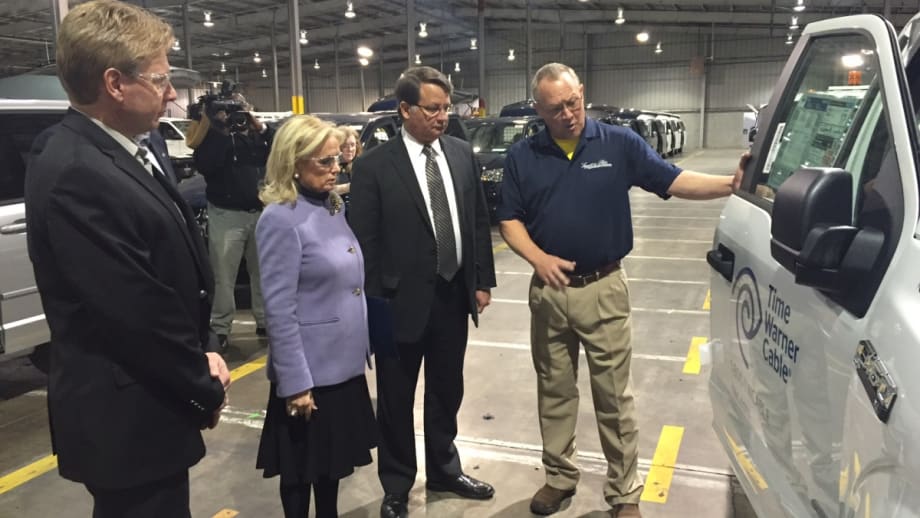
Rep. Debbie Dingell and Sen. Gary Peters touring Leggett and Platt Commercial Vehicle Products plant in Taylor, Mich. Photo: debbiedingell.house.gov

A bill that would earmark funds for research and development of alternative fuels and advanced vehicle technologies as well as create truck-specific programs within the Department of Energy (DOE) has been introduced in the House by Rep. Debbie Dingell (D-MI) as the Vehicle Innovation Act (VIA), H.R. 4106.
Sen. Gary Peters (D-MI) introduced the legislation in the Senate earlier this year with cosponsors Sens. Debbie Stabenow (D-MI) and Lamar Alexander (R-TN). Their bill was passed by the Senate Energy and Natural Resources Committee as part of a larger package of energy legislation.
According to the Senate and House sponsors, VIA legislation will promote investments in research and development of clean vehicle technologies to create more fuel-efficient vehicles, reduce dependence on foreign oil and support American auto manufacturers and suppliers.
Rep. Dingell said the act would reauthorize the Department of Energy’s Vehicle Technologies Program, which works with light-duty automobile and medium- and heavy-duty commercial truck manufacturers and suppliers to conduct research and development to improve fuel efficiency in vehicles.
She said examples of these technologies include mild hybrid, engine downspeeding, power pack modeling and testing, advanced boosting systems, new vehicle sensing and communication, hydrogen and natural gas refueling, and electric vehicle charging technology.
In addition, the bill includes provisions that would encourage the development and use of vehicle-to-vehicle (V2V) communications systems that have the potential to improve fuel efficiency and reduce traffic accidents and congestion.
“Our nation’s vehicle suppliers and manufacturers have made major advances in cutting-edge fuel efficiency technologies in the last decade, and we need to keep that progress going,” said Dingell. “The Vehicle Innovation Act will build on successful research programs that have resulted in large savings for consumers at the pump and keep the U.S. and Southeast Michigan in the lead in developing high-tech, energy efficient vehicles.”
“American auto manufacturers rely on emerging technologies and innovations to continue to grow and compete in the global economy, and we must make critical investments to develop and build those technologies here at home,” said Sen. Peters. “This legislation will provide sustainable funding to promote research and development of new vehicle innovations that will make the cars and trucks of the future cleaner, safer and more efficient.”
NTEA Executive Director Steve Carey praised VIA, stated that “for the work truck industry to compete globally and continue to meet the needs of vocational truck users, it will need to employ advanced technologies and deploy more alternatively fueled trucks. The Vehicle Innovation Act will support continued public-private partnerships and drive research that will keep us competitive and help us get more fuel-efficient trucks on the road.”
According to NTEA, VIA legislation “would support the science and industry needed to improve vehicle fuel economy and minimize petroleum use” yet is “technology-neutral — it develops and strengthens the tools for vehicle experts, without bias.”
NTEA also noted that activities under VIA would be carried out in partnership or collaboration with automotive manufacturers, heavy commercial, vocational and transit vehicle manufacturers, qualified plug-in electric vehicle manufacturers, compressed natural gas vehicle manufacturers, vehicle and engine equipment and component manufacturers, manufacturing equipment manufacturers, advanced vehicle service providers, fuel producers and energy suppliers, electric utilities, universities, national laboratories and independent research laboratories.
The Congressional sponsors said that the legislation is supported by a broad coalition of environmental groups and manufacturers including the Motor and Equipment Manufacturers Association, the BlueGreen Alliance, the Auto Alliance, NTEA, the United Auto Workers, the League of Conservation Voters, the Union of Concerned Scientists, the Natural Resources Defense Council, the Sierra Club, the American Automotive Policy Council, the Electric Drive Transportation Association, Robert Bosch LLC, the Lord Corporation, Umicore, Bergstrom, Magna International, Inc., and Dorman Products, Inc.
More Fuel Smarts

Jennie Abarca Is Proving Electric Trucks Can Do the Job
HDT Truck Fleet Innovator Jennie Abarca is building confidence in fleet electrification one load at a time while openly sharing the challenges she encounters along the way as a small-fleet owner.
Read More →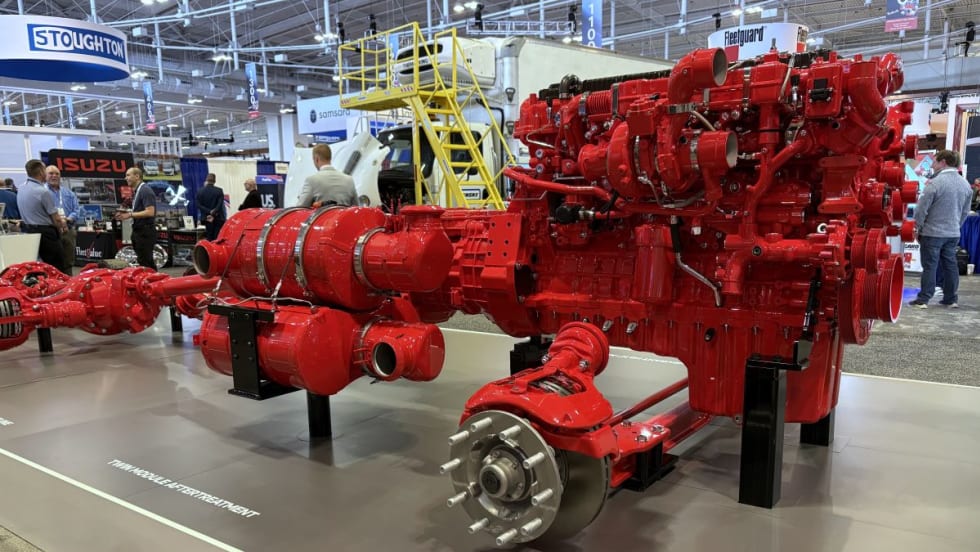
Cummins Adjusts 2027 Engine Rollout After EPA Proposal
The engine maker will gradually introduce its new Model Year 2027 diesel engines while continuing to offer current models during the transition, citing the EPA's proposed emissions rule changes.
Read More →
EPA Proposal Could Ease 2027 Truck Costs and Buying Uncertainty
The proposal doesn't change the tougher NOx standard, but it would revise key implementation requirements that manufacturers say have driven up costs and complicated fleet purchasing decisions.
Read More →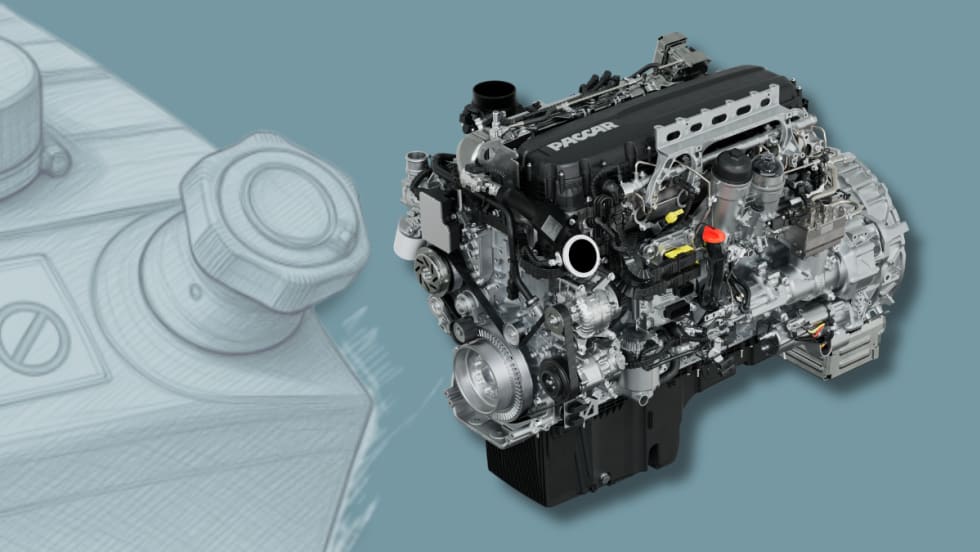
Cummins, Paccar Ease DEF Derates After EPA Guidance
Updated diesel engine software gives truck operators more time to address emissions-system issues while staying compliant with EPA emissions standards.
Read More →
Maintenance in the Messy Middle Part 3: Biodiesel
Biodiesel can reduce emissions, improve fuel-system lubricity and use existing diesel infrastructure. But NACFE’s Messy Middle maintenance report says fleets must actively manage storage, cold-weather operation, filters and oil drain intervals to avoid problems.
Read More →
Enhance Fleet Performance with High-Efficiency Auxiliary Power Units
Drive sustainable cost savings while increasing driver comfort during short- and long-haul logistics operations.
Read More →
Maintenance in the ‘Messy Middle’ Part 2: Renewable Diesel Fuel
NACFE's latest Messy Middle Powertrain Service & Maintenance report says renewable diesel gives fleets an opportunity to reduce carbon emissions without changing trucks, fueling infrastructure or maintenance practices. But technicians still need to understand several important operational differences.
Read More →
The Diesel Engine Enters NACFE’s ‘Messy Middle’
NACFE’s new Messy Middle Powertrain Service & Maintenance report says keeping modern diesel engines running now depends as much on software, diagnostics and data as traditional mechanical service.
Read More →
DTNA Software Update Gives Truckers More Time Before DEF Derates Take Effect
The changes reflect EPA guidance aimed at reducing downtime caused by emissions-system faults while maintaining compliance requirements.
Read More →
New Agentic Predictive Maintenance Report Demonstrates How Degraded Aftertreatment Systems Waste Fuel
Questar analyzed a large mixed-class fleet and discovered it was wasting as much as $30 in fuel per vehicle, per day, because of mechanically degraded aftertreatment systems.
Read More →