




House Bill Allows Twin 33s Nationwide; Keeps Restart Suspension Active
The House Appropriations Committee has approved a $55-billion spending bill that includes a provision to allow 33-foot long double trailers on Interstate and other highways— regardless of state laws.

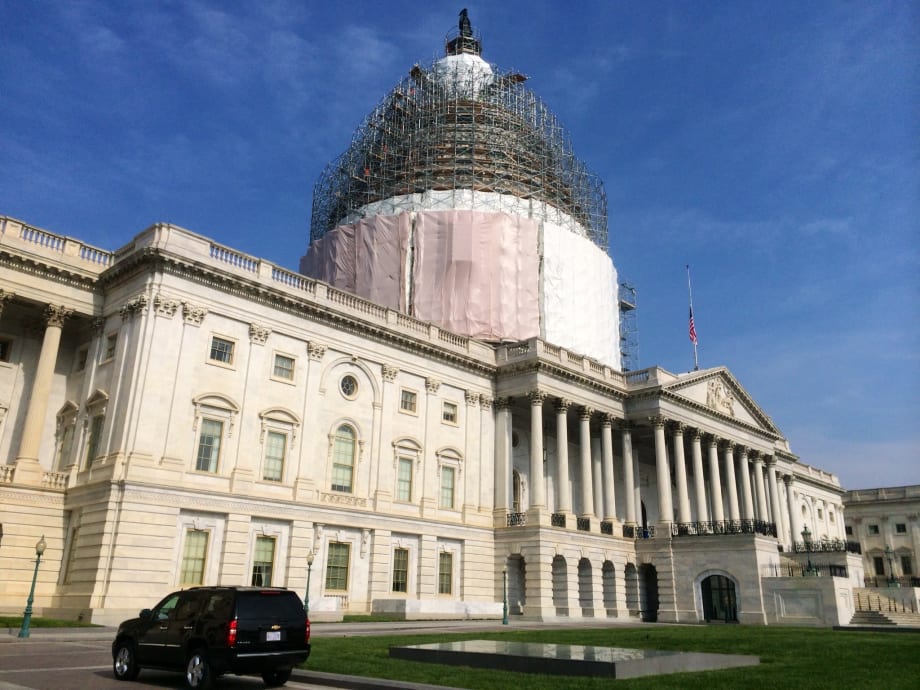
Photo: David Cullen

Photo: David Cullen
The House Appropriations Committee on Wednesday approved a $55-billion transportation and housing spending bill that includes a provision to allow 33-foot long double trailers to operate on Interstate and other highways— regardless of state laws. Currently, 28-foot doubles are allowed on Interstates.
The T-HUD bill also included provisions sought by trucking lobbyists to:
Keep the 34-hour restart rule suspended until a Federal study is completed and only revoke the rule suspension if that FMCSA impact report shows that “drivers who operated under the restart provisions… demonstrated statistically significant improvement in all outcomes related to safety, operator fatigue, driver health and longevity and work schedules” vs. drivers who had run under the rules in place before the 2013 change.
Prevent the government from increasing the $750,000 minimum liability insurance coverage now required for truckers
Remove funding to implement wireless roadside inspections on highways.
The 2016 fiscal year measure, passed along party lines, 30-21, must be approved by the full House and Senate before becoming law.
The specific language regarding double trailers is that “Section 31111(b)(1)(A) of title 49, United States Code is amended by striking ‘or of less than 28 feet on a semitrailer or trailer operating in a truck tractor- semitrailer-trailer combination,’ and inserting ‘or, not- withstanding section 31112, of less than 33 feet on a semitrailer or trailer operating in a truck tractor- 19 semitrailer-trailer combination.”
Rep. David Price (D-NC) had introduced an amendment to strike all the trucking-related riders that had been attached to the budget bill. Regarding the riders as policy items, Price argued they should be addressed by the House Transportation and Infrastructure Committee in writing the surface-transportation reauthorization bill so that each item could be vetted and debated.
Price’s amendment was defeated by the GOP-controlled committee by a vote of 31-20, mostly along party lines. But while the trucking riders remain in the House bill, the Senate has yet to consider any of these items.
"The Trucking Alliance supports higher minimum insurance requirements to protect the assets of trucking companies and we also support wireless roadside truck inspections to so that carriers can have their good inspections made part of the record, so we don’t like the idea of stripping funds for them as these [provisions] will do if Congress eventually passes them,” Lane Kidd, Managing Director of the coalition of trucking businesses that lobbies for truck-driver safety, told HDT.
“Trucking specific issues should go before the House Transportation and Infrastructure Committee,” he added, “where all transportation stakeholders can have a say in the matter, unlike today which was a 'sleight of hand' approach without regard to the ramifications they may have on small trucking companies."
As for the rider that keeps the 34-hour restart rule suspended, American Trucking Associations spokesman Sean McNally told HDT that the “language in this year’s T-HUD Appropriations bill only serves to make sure the ongoing hours-of-service restart study is conducted fairly and that its findings are analyzed transparently.
“ATA believes the driver selection may have been designed to influence the outcome of the [FMSCA] study. For example, the agency sought only nighttime drivers who average 60 or more hours per week, when the agency itself concedes the industrywide average for drivers is 52.1 hours, most of whom work daytime hours,” he continued.
McNally also remarked that, per the American Transportation Research Institute, “there was a ‘statistically significant’ increase in crashes after the restrictions were imposed in 2013 due to increased daytime driving caused by the restrictions.”
Turning to those longer doubles that the bill would allow, McNally said that “switching to 33 foot trailers—which would not change any weight limits-- would save 6.6 million trips, eliminate 1.3 billion miles driven and reduce carbon emissions by 4.4 billion pounds annually.”
In addition, McNally said that “A modest extension of five feet per trailer would increase the cubic capacity by 18 percent,” adding that “American consumers always benefit from truck efficiency and productivity gains.”
He also claimed that, based on Department of Transportation figures, “the change to twin 33s would result in 912 fewer crashes on America’s highways every year. According to analysis from a University of Michigan researcher, adding length would improve the handling properties of twin trailers,” McNally added. “The academic research is supported by real-world evidence from twin 33s’ sterling safety records in Florida and South Dakota.”
As to the wisdom of including a provision to prevent upping the insurance minimum, McNally noted that “ATA has yet to see data that says an increase in the minimums is necessary."
More Fleet Management

Why Private Fleets Are Taking More Freight
Private fleets are putting their own trucks on demanding customers and high-cost lanes as companies seek greater control over service, costs, and capacity.
Read More →
Color Match Smarter: Tools That Restore & Perform
For fleet managers and collision repair professionals keeping heavy-duty trucks on the road, getting the color right the first time isn't just about appearance — it's about efficiency, turnaround time, and bottom-line results. Discover how today's digital color tools are transforming the repair process from guesswork to precision.
Read More →
FMCSA Pauses Biennial-Update Enforcement Amid Motus Transition
Carriers whose updates were due on or after June 1 have more time, while FMCSA works to stabilize its new registration system and warns of phishing sites impersonating its new carrier registration system, Motus.
Read More →


2026 Blueprint for Countering Smarter Supply Chain Theft
Cargo theft is no longer just the cost of doing business. It's a multi-billion-dollar criminal enterprise exploiting vulnerabilities across your fleet, drivers, and supply chain.
Read More →
How Telematics Improves Visibility, Control, and Performance in Refrigerated Fleets
Explore how telematics help refrigerated fleets improve visibility, uptime, efficiency, compliance, and cargo protection across connected cold chain operations.
Read More →
What the U.S.-Canada Trade War Means for Trucking
Escalating U.S.-Canada tariffs could disrupt cross-border freight, reduce truck volumes, raise costs, and create new uncertainty for carriers on both sides of the border.
Read More →
What Are Trucking’s Top Concerns for 2026?
The American Transportation Research Institute wants to know what's worrying trucking fleet managers, drivers, and other stakeholders in its annual Industry Issues survey.
Read More →
American Trucking Associations Looks for a New Leader
ATA President and CEO Chris Spear abruptly left his job at the association on August 21, at a pivotal time for the trucking industry.
Read More →
Public Wi-Fi Cybersecurity Risks: How Truck Drivers and Fleets Can Protect Their Data
Public Wi-Fi can expose truck drivers and fleets to credential theft, malware, and other cyber threats. Here’s how to reduce the risk on the road.
Read More →
For Nicky Cupp, Fleet Innovation Starts With Frustration
HDT Truck Fleet Innovator Nicky Cupp turns everyday pain points at Fraley & Schilling into opportunities for better technology and smarter processes.
Read More →