




'Hot' Trucks May Be A Chronic Problem
State troopers in Indiana have developed innovative law enforcement solutions to take bad food loads off the road, before they make it to market. Yesterday, Truckinginfo reported that Indiana State Police have been citing a high number
State troopers in Indiana have developed innovative law enforcement solutions to take bad food loads off the road, before they make it to market.
Yesterday, Truckinginfo reported that Indiana State Police have been citing a high number of trucks transporting food at dangerous and illegal temperatures. The program to intercept spoiled loads is an innovative program by state police created in a response to an accidentally discovered problem.
"Every summer it seems we have occasion to do on a vehicle with refrigeration, and we noticed there were many problems," said Captain Wayne Andrews, assistant division commander of Commercial Vehicle Enforcement with the Indiana State Police.
It started, he said, with troopers pulling over trucks for other violations, or sometime random checks. In the course of a vehicle inspection, the trooper would find the truck transporting perishable food in summer weather with malfunctioning, or even absent, refrigeration units.
However, a reefer unit being out-of-service is not a violation in itself, and state police lack the authority to do perform a food inspection. That's health inspector territory.
"We think it was a big loophole for these guys," said Andrews.
After spotting the problem, Andrews helped organize a partnership last summer with the Indiana State Department of Health to enforce regulations that require food to be transported at 41 degrees or lower. When a trooper finds a suspected violation, he notifies health inspectors who can make an official judgment.
After some success last year, the program became more organized this summer. When troopers stop a suspected 'hot truck', he uses a laser temperature gauge normally used for testing brake temperature. If it gets a high reading, he makes a phone call to health inspectors.
Trends have been noticed. All of the violators are smaller delivery trucks from smaller operations (no Tyson trucks have been cited), and a high number are carrying ethnic food, such as a Chinese and Mexican food items. Andrews suspects this is because the nature of the food requires smaller trucks and operations.
A majority of inspections, about 70% according to Andrews, are secondary to another violation. But the remaining 30% are random safety inspections.
"It's not rampant," Andrews said. "But enough to continue [the inspections]"
A bigger problem?
It looks as if the Indiana State Police is the first police force to organize an enforcement partnership to make these sorts of citations. That raises the question: Could it be happening in other states as well? Andrews thinks so.
"In places that are much hotter [than Indiana], it is probably happening there, too," he said.
That's why next year the state police are considering a pilot program to formalize food safety enforcement on the highway. Currently, the police are collecting data and trying to decide what step to take next.
In the meantime, the Commercial Vehicle Safety Alliance has been alerted of the situation, and is gathering information on the issue more broadly. The effort could potentially lead to new rules, but whatever the ultimate outcome, Andrews will keep working hard.
"When you find a hole," he said, "you can either ignore it, or try to fix it."
More Safety & Compliance
A Camera Isn't a Safety Program. Here's What Brokers Are Screening for Now
Footage alone may not be enough to pass broker vetting processes. Here's what counts as a defensible safety program now.
Read More →
Marijuana and Trucking’s Drug-Testing Dilemma
Marijuana is getting stronger, laws are changing, and drug tests still can’t reliably establish impairment. What does that mean for truck drivers and the fleets that employ them?
Read More →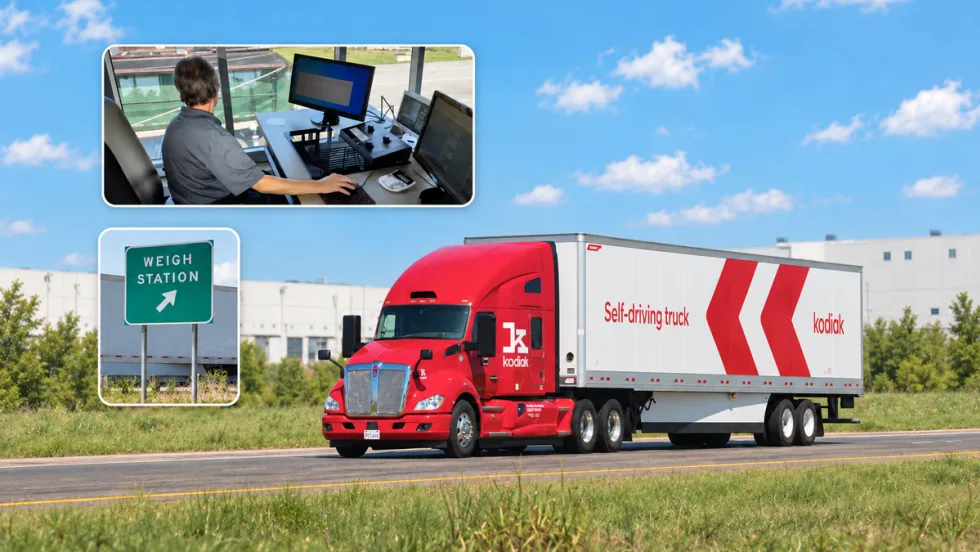
PrePass, Kodiak Connect Driverless Trucks to Roadside Enforcement
The system will allow enforcement agencies to verify Enhanced Inspection information and decide whether Kodiak’s autonomous trucks can bypass roadside screening sites.
Read More →

From One Generation to the Next: How Mentorship Builds Safer Truck Drivers
After three decades in trucking, Harold Perry shares what he's learned about driver safety, mentorship, and helping the next generation build confidence behind the wheel.
Read More →
FMCSA Pauses Biennial-Update Enforcement Amid Motus Transition
Carriers whose updates were due on or after June 1 have more time, while FMCSA works to stabilize its new registration system and warns of phishing sites impersonating its new carrier registration system, Motus.
Read More →
ZF Expands Commercial Vehicle Push in North America
ZF is expanding its North American commercial-vehicle presence with new transmission applications, electrification, trailer technology and autonomous-driving systems.
Read More →
Truck Drivers Need More Than Another Alert
Fleets have more visibility into truck health, safety events, and driver activity than ever. The next challenge is turning all that information into useful guidance for the person who has to decide what to do next.
Read More →
Tesla Wants a Self-Driving Semi. Are Cameras Enough?
Could Tesla’s camera-only autonomous driving technology work on an 80,000-pound Semi? In this commentary, HDT's Deborah Lockridge takes a look at Tesla, Cybercab, and how autonomous trucks see the road.
Read More →
What DOT’s Automated Vehicle Strategy Means for Trucking
The U.S. Department of Transportation issued a new automated-vehicle strategy that outlines plans for driverless-truck regulations, cross-state freight corridors, and federal safety standards.
Read More →
NYC Expands Speed, Pedestrian Safety Tech Across Fleet
New York City is expanding intelligent speed assistance and pedestrian-alert systems across its municipal fleet, moving the technologies from pilot programs into vehicle procurement and retrofit requirements.
Read More →