




Highway Bills Face Uphill Climb in Congress
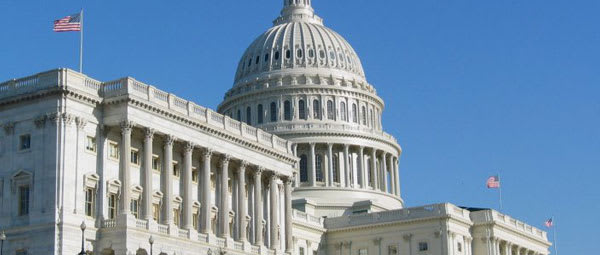
The Senate and House are taking their highway bills to the floor this week in the face of daunting odds. Passage of this key infrastructure legislation, which sets policy and funding levels, is going to be a near thing at best, given the politics of the bills and considering the March 31 deadline.
Aside from the challenges each bill faces in its own chamber, there is an enormous distance between the structure of the measures.
The Senate and House are taking their highway bills to the floor this week in the face of daunting odds. Passage of this key infrastructure legislation, which sets policy and funding levels, is going to be a near thing at best, given the politics of the bills and considering the March 31 deadline.
If a deal cannot be struck, the highway program will have to be extended for the ninth time since it expired in October 2009 - not a positive message to take home during an election year.
Aside from the challenges each bill faces in its own chamber, and a veto threat from President Obama of the House bill, there's an enormous distance between the structure of the measures. The Senate is proposing a two-year, $109 billion program, while the House wants a five-year, $260 billion program.
That said, both bills contain similar, substantive structural reforms that experts say would go a long way toward improving the federal highway program.
They eliminate earmarks, consolidate or eliminate overlapping programs at the Department of Transportation, give states more control over money and take steps to expedite the delivery of highway projects. They also contain provisions designed to improve federal and state performance.
"I think Congress is taking a big step toward reform," said Jack Schenendorf, a veteran transportation policy expert. "It's an essential step. There is a need to refocus and reform the program and I think both the House and the Senate are making very creditable efforts in trying to do that."
John Horsley, executive director of the American Association of State Highway and Transportation Officials, said he sees more similarities between the House and Senate bills than he see differences.
"We think there's a lot of substantive policy change in the House and Senate bills that will make a real difference," he said.
"Wedge-issue" Amendments
But to get those reforms, the bills have to pass. In the Senate, a key author of the two-year, $109 billion bill pressed to keep unrelated amendments from being attached.
Sen. Barbara Boxer, D-Calif., Chairman of the Environment and Public Works Committee that drafted the transportation policy portion of the bill, warned against "wedge-issue" amendments.
"I rise because I want to point out to the people of this country who may be watching this proceeding that what's happening here tonight on the Senate florr is just ridiculous," she said.
Noting that she and the ranking minority member of the committee, Sen. James Inhofe, R-Okla., are partners on the bill, she added: "We have to put aside these wedge issues. This is a bipartisan bill. This will save 1.8 million jobs and create an additional million jobs."
One issue was a move to attach the Keystone XL pipeline to the bill, which sets up a fight unrelated to transportation. It would allow work to begin immediately on all but the Nebraska portion of the line that would carry oil from Canadian oil sands to Texas.
This would in effect overrule President Obama's decision to postpone action on the pipeline until 2013, after the State Department has completed its review of the project. Nebraska figures in the amendment because it has objected to the initial plan to route the pipeline through its environmentally sensitive Sandhills region.
The amendment would be unlikely to survive a vote on the Senate floor, where Democrats have a majority.
The White House posted a statement that supports the Senate bill "to provide much needed certainty and funding for the nation's surface transportation programs."
The statement goes on to say that the White House will work with Congress on increased longer-term funding, as well as on an immediate $50 billion investment. The statement does not mention the source of that money but President Obama has suggested that Congress use the savings expected from the end of the war in Iraq and the withdrawal of some troops from Afghanistan.
In another statement, the White House threatened to veto the House bill.
"Because this bill jeopardizes safety, weakens environmental and labor protections, and fails to make the investments needed to strengthen the Nation's roads, bridges, rail, and transit systems, the President's senior advisors would recommend that he veto this legislation," the statement said.
In the House
Besides the veto threat, the House is facing challenges over both the funding and policy portions of its bill.
Taxpayers for Common Sense, for instance, opposes the bill because it relies on funding from oil and gas drilling leases in the Arctic and the Gulf of Mexico that it describes as "highly speculative."
"The Congressional Budget Office calculated that only $2 billion in revenue would be created over a five-year period from this new drilling," Taxpayers said in a statement.
Taxpayers also objects to the House's reliance on savings from restructuring the federal employee pension program. The restructuring, which will produce $40 billion over 10 years and provides the bulk of the new revenue in the House proposal, would be better used to reduce the federal deficit, the group said.
"Responsible transportation policy must rely on revenues collected from user fees," the group said. "If Congress is unwilling to raise additional revenues in this manner, then spending must be cut. Using revenues unrelated to transportation undercuts the user-pays principle that our transportation system is based upon and fails to ensure the long-term viability of the nation's transportation program."
House Democrats are very much opposed to the bill.
"The Republican Leadership's partisan signature jobs bill is not sustainable and would lead America's transportation programs down a reckless path toward bankruptcy," said Rep. Nick Rahall, D-W.Va. He referenced a Congressional Budget Office analysis that found the House bill would bankrupt the Highway Trust Fund by 2016.
Transportation Secretary Ray LaHood has described the bill has "the most partisan ever" and "the worst bill in decades."
On the Floor
In the face of such criticisms, and to manage a flood of more than 300 amendments, House leaders have decided to take the bill to the floor in separate pieces, the funding measure as one item and the transportation policy measure as another.
"The energy/infrastructure jobs plan will be considered on the floor in the same manner in which it was written and voted upon in committee - in separate pieces, allowing each major component of the plan to be debated and amended more openly, rather than as a single 'comprehensive' bill with limited debate and limited opportunity for amendment," said House Speaker John Boehner, R-Ohio, and Rules Committee Chairman David Dreier, R-Calif., in a statement.
One initiative by the trucking and rail industries should remove a possible stumbling block. American Trucking Associations and the Association of American Railroads announced that they oppose any floor amendments aimed at changing the truck size and weight provisions that are in the bill.
The original bill contained a provision given states authority to increase weight limits on Interstate highways from 80,000 to 97,000 pounds, with the addition of a sixth axle. But that was stripped from the bill by the House Transportation and Infrastructure Committee and substituted with an amendment that would have the Transportation Department do a three-year study of such a change.
More Drivers

EEOC Sues Texas Trucking Company Over Driver Age Limits
The agency says Trancasa USA rejected applicants over 65 and applied tougher driving-record standards to those over 60.
Read More →
Nussbaum, Roehl Announce Second Driver Pay Increase This Year
This year has seen a swath of major truck driver pay increases as freight capacity has tightened.
Read More →
From One Generation to the Next: How Mentorship Builds Safer Truck Drivers
After three decades in trucking, Harold Perry shares what he's learned about driver safety, mentorship, and helping the next generation build confidence behind the wheel.
Read More →
Truck Drivers Need More Than Another Alert
Fleets have more visibility into truck health, safety events, and driver activity than ever. The next challenge is turning all that information into useful guidance for the person who has to decide what to do next.
Read More →
FMCSA Removes 110 Truck Driver Training Schools from Certified ELDT List
Federal regulators also are targeting more than 160 additional training providers and launching a nationwide audit of third-party CDL skills testers as part of a broader crackdown on trucking fraud.
Read More →
Hours of Service Pilot Programs: FMCSA Readies for 2027 Rollout
Two pilot programs could eventually reshape hours-of-service rules, giving truck drivers options to pause their 14-hour clock or use longer split sleeper rest periods.
Read More →
Medical Cards, English Proficiency Reshape Roadcheck Violations
Medical-card violations jumped to the top of the driver out-of-service list during CVSA’s 2026 International Roadcheck, while English-language proficiency violations appeared among the leading violations for the first time.
Read More →
Driver Trust Can Make or Break the Success of Fleet Safety Technology
New Teletrac Navman research suggests that onboarding, transparency about driver data, and positive feedback can play a significant role in how commercial drivers respond to safety and coaching technology.
Read More →
EEOC Sues KLLM Over Alleged Sex Discrimination in Driver Training
KLLM is facing a federal sex-discrimination lawsuit over policies the EEOC alleges put female truck driver trainees at a disadvantage.
Read More →
FMCSA Moves to Codify English Language Requirements for Commercial Drivers
By changing regulations on English-language proficiency requirements for commercial drivers, rather than relying on a guidance memo, the FMCSA said future administrations won't be able to walk back the Trump administration's stricter enforcement with just a memo.
Read More →