




Heavy Exposure to Diesel Exhaust Linked to Lung Cancer Death in Miners
In a study of non-metal miners in the United States, federal government scientists found that heavy exposure to diesel exhaust increased risk of death from lung cancer. Researchers say the findings suggest other workers exposed to diesel exhaust could also be at risk, but an organization representing the diesel engine industry responded to the study noting that the exhaust coming from today's on-highway engines is vastly cleaner than in the past
In a study of non-metal miners in the United States, federal government scientists found that heavy exposure to diesel exhaust increased risk of death from lung cancer. Researchers say the findings suggest other workers exposed to diesel exhaust could also be at risk, but an organization representing the diesel engine industry responded to the study noting that the exhaust coming from today's on-highway engines is vastly cleaner than in the past.
The study of 12,000 miners was carried out by researchers from the National Cancer Institute (part of the National Institutes of Health), and the National Institute for Occupational Safety and Health part of the Centers for Disease Control and Prevention, both parts of HHS.
For the most heavily exposed miners, the risk of dying from lung cancer was three times higher than it was for those exposed to low doses. For non-smokers, the risk was seven times higher.
"The findings suggest that the risks may extend to other workers exposed to diesel exhaust in the United States and abroad, and to people living in urban areas where diesel exhaust levels are elevated," said Joseph F. Fraumeni, Jr., M.D., director of the National Cancer Institute's Division of Cancer Epidemiology and Genetics.
Two papers detailing the study's results were published in the Journal of the National Cancer Institute. One of them concluded that diesel-induced lung cancer "may represent a potential public health burden."
The investigators selected underground mines for their study setting because the heavy equipment used in these mines frequently runs on diesel fuel. In the fairly enclosed environments of these mines, exhaust builds up in the air to levels considerably higher than those found in other occupational settings, such as trucking depots or shipyards, and many times higher than the air inhaled by the general population.
According to the NCI press release, the study is "the first … based on historical exposure to diesel exhaust to yield a statistically significant, positive increase in lung cancer risk with increasing diesel exposure after taking smoking and other potential lung cancer risk factors into account."
"Over the last 10 years alone, emissions from heavy-duty diesel trucks and buses have been reduced by 99% for nitrogen oxides (NOx) - an ozone precursor - and 98% for particulate emissions," said Allen Schaeffer, executive director of the Diesel Technology Forum, noting that it would take 60 of today's clean diesel trucks to equal the same level of particulate emissions from one pre-1988 truck.
The study's release had previously been delayed, tied up in litigation. The Center for Public Integrity reported last month that publication of the $11.5 million study, conceived in 1992 by the NCI and the National Institute for Occupational Safety and Health (NIOSH), had been held up by litigation from the Mining Awareness Resource Group, an industry organization that first challenged the research effort in 1996.
More Safety & Compliance
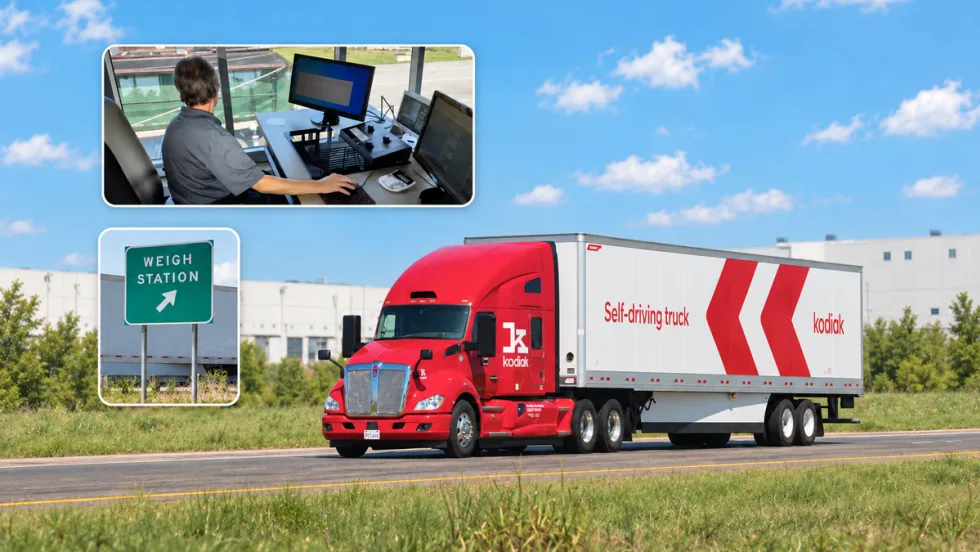
PrePass, Kodiak Connect Driverless Trucks to Roadside Enforcement
The system will allow enforcement agencies to verify Enhanced Inspection information and decide whether Kodiak’s autonomous trucks can bypass roadside screening sites.
Read More →
From One Generation to the Next: How Mentorship Builds Safer Truck Drivers
After three decades in trucking, Harold Perry shares what he's learned about driver safety, mentorship, and helping the next generation build confidence behind the wheel.
Read More →
FMCSA Pauses Biennial-Update Enforcement Amid Motus Transition
Carriers whose updates were due on or after June 1 have more time, while FMCSA works to stabilize its new registration system and warns of phishing sites impersonating its new carrier registration system, Motus.
Read More →
ZF Expands Commercial Vehicle Push in North America
ZF is expanding its North American commercial-vehicle presence with new transmission applications, electrification, trailer technology and autonomous-driving systems.
Read More →
Truck Drivers Need More Than Another Alert
Fleets have more visibility into truck health, safety events, and driver activity than ever. The next challenge is turning all that information into useful guidance for the person who has to decide what to do next.
Read More →
Tesla Wants a Self-Driving Semi. Are Cameras Enough?
Could Tesla’s camera-only autonomous driving technology work on an 80,000-pound Semi? In this commentary, HDT's Deborah Lockridge takes a look at Tesla, Cybercab, and how autonomous trucks see the road.
Read More →
What DOT’s Automated Vehicle Strategy Means for Trucking
The U.S. Department of Transportation issued a new automated-vehicle strategy that outlines plans for driverless-truck regulations, cross-state freight corridors, and federal safety standards.
Read More →
NYC Expands Speed, Pedestrian Safety Tech Across Fleet
New York City is expanding intelligent speed assistance and pedestrian-alert systems across its municipal fleet, moving the technologies from pilot programs into vehicle procurement and retrofit requirements.
Read More →
FMCSA Removes 110 Truck Driver Training Schools from Certified ELDT List
Federal regulators also are targeting more than 160 additional training providers and launching a nationwide audit of third-party CDL skills testers as part of a broader crackdown on trucking fraud.
Read More →
Beyond DOT Compliance: What Makes a Trucking Fleet Truly Safe?
A trucking fleet can follow every rule and still make unsafe decisions. The real test comes when safety conflicts with freight, productivity, or cost.
Read More →