




Greenlane Opens ‘Flagship’ Truck Charging Site in California
A new Greenlane charging site in Colton, California is the first in a series of charging stations for heavy, medium and light-duty zero-emission vehicles (ZEVs) on Interstate 15 from the Los Angeles to Las Vegas metro areas.

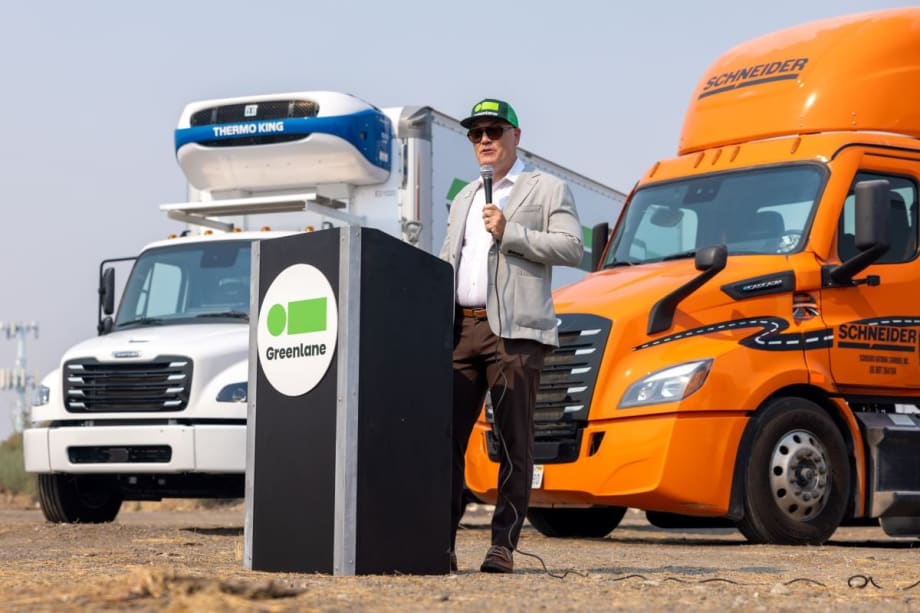
Patrick Macdonald-King with Greenlane speaks at the opening of a new truck charging facility in Colton, California.
Photo: Greenlane
Greenlane hosted a groundbreaking event at the company's new charging site in Colton, CA on September 9. Greenlane is a joint venture between Daimler Truck North America, NextEra Energy Resources, and BlackRock (through a fund managed by its Climate Infrastructure business).
A Commercial EV Charging Corridor
The event marks the beginning of the construction of the company’s first commercial EV charging corridor, which will run from the Los Angeles to Las Vegas metropolitan areas, primarily along Interstate 15.
The Colton site, at full build, is planned to include more than 60 chargers for heavy-, medium- and light-duty zero-emissions vehicles (ZEVs), the company said.
Key stakeholders, community leaders, and joint venture partners, including Daimler Truck North America leaders, John O’Leary and Rakesh Aneja, took part in a groundbreaking ceremony highlighting the importance of this project, its positive regional impact, and the commercial trucking industry as a whole.
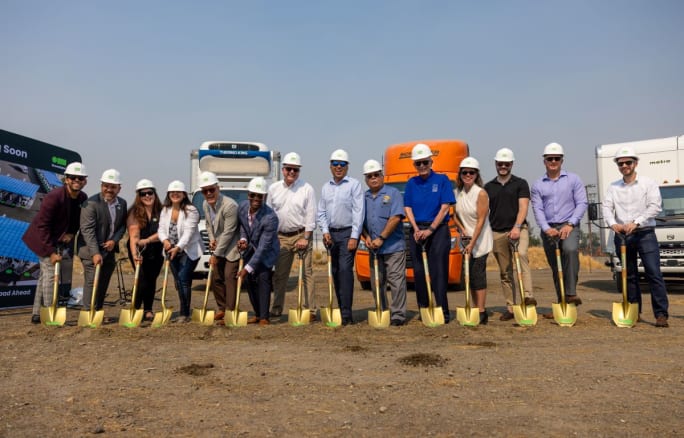
Greenlane, Blackrock and Daimler Truck North America executives break ground on a new electric truck charging facility in Colton, California.
Photo: Greenlane
“The establishment of this flagship charging site in Colton is a testament to the power of collaboration and shared vision,” said John O’Leary, president and CEO, Daimler Truck North America. “We are confident that this project will help to accelerate widespread adoption of zero-emission vehicles and drive the future of sustainable transportation by addressing the urgent need for a publicly available, nationwide electric charging infrastructure.”
$15 Million in Grant Money
The groundbreaking was held on the same day that Greenlane announced that they secured a $15 million grant from the South Coast Air Quality Management District (SCAQMD) under the Carl Moyer Zero-Emission Infrastructure Program.
The grant will allow Greenlane to accelerate the development of the Colton site for its commercial EV charging corridor. South Coast AQMD’s grant funds, specifically allocated for the Colton site, will be utilized for site design and engineering and charging infrastructure build-out, expediting development timelines to facilitate the opening of the Colton site by the end of 2024.
“The Colton charging site represents a major step forward in reducing emissions along several transportation corridors, while also benefiting the region economically in the long term,” said Greenlane CEO Patrick Macdonald-King. “We are grateful to all of our partners and local leaders in the community for making this vision become reality.”
Greenlane, alongside its JV partners, is developing a nationwide network of commercial charging infrastructure locations across the nation. Starting with electrifying heavy, medium, and light-duty vehicles, charging sites will also serve battery-electric passenger car and light-duty fleet customers. Greenlane also plans to provide hydrogen refueling for commercial vehicles in the near future.
More Fuel Smarts

How Volvo Updated Its D13 for EPA 2027 [Watch]
Volvo’s updated D13 promises lower emissions without sacrificing performance or fuel economy. Take a closer look at what changed inside the engine in this HDT Spotlight video.
Read More →
Diesel Price Spike Shortens Payback for Natural Gas Trucks, Report Says
Energy Vision estimates fleets could recover the higher purchase price of an RNG-fueled Class 8 tractor in 1.3 to 2.8 years under current fuel-price scenarios.
Read More →
Calstart Becomes Catalyst Mobility, Reflecting Broader Focus
Calstart is now Catalyst Mobility, reflecting the nonprofit’s growing national role in clean transportation, including zero-emission trucks, infrastructure and incentive programs.
Read More →

Record Diesel Prices Squeeze Trucking Fleets
Average U.S. diesel prices have climbed to nearly $6 a gallon, surpassing the 2022 record as tight refinery capacity and Middle East disruptions keep fuel costs elevated.
Read More →
How Fuel Delivery Shapes Engine Performance
Fuel delivery depends on more than what happens at the injector. For fleet, maintenance and technical professionals, looking at the full path from pump to injector can provide useful context for understanding engine performance.
Read More →
East Coast Port Launches $45M Electric Truck Push
The Port Authority of New York and New Jersey announced millions in incentives for zero-emission drayage trucks, yard tractors, and new charging hubs near the port.
Read More →
California Bill Could Shed Light on Electric Truck Prices
Why do battery-electric Class 8 trucks remain so expensive? A California bill headed to Gov. Gavin Newsom would give fleets and state agencies more visibility into what manufacturers charge.
Read More →
Detroit Opens Orders for EPA 2027 Engines
Detroit isn’t starting from scratch to meet EPA 2027 diesel emissions standards. Its Gen 6 DD13 and DD15 engines keep much of today’s platform while updating the fuel and aftertreatment systems.
Read More →
Zero-Emission Truck Corridor Planned for West Coast
California, Oregon, Washington, British Columbia and Baja California are coordinating plans for truck charging and hydrogen fueling from Canada to Mexico.
Read More →
A Closer Look at Kenworth’s Electric T880E Vocational Truck [Video]
Learn more about Kenworth's T880E battery-electric vocational truck at the Paccar Technical Center, including its range, applications, upfitting considerations, and PTO options, in this HDT Spotlight video.
Read More →