




Governors' Safety Group Sidesteps Cell Phone Ban
The Governors Highway Safety Association declined to follow Transportation Secretary Ray LaHood's lead and passed on an opportunity to call for an outright ban on cellphone use and test-messaging while driving
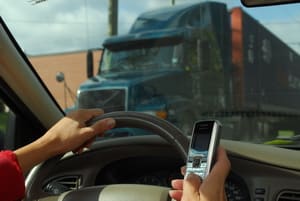
The Governors Highway Safety Association declined to follow Transportation Secretary Ray LaHood's lead and passed on an opportunity to call for an outright ban on cellphone use and test-messaging while driving.
During its annual meeting, held September 25 and 26 in Kansas City, the organization of state highway safety officials put aside a California proposal that urged state legislators to ban cellphone use and texting by persons operating motor vehicles. The move came just days after the Federal Motor Carrier Safety Administration posted a formal rule banning truck and bus drivers from texting while driving. That announcement was made at the second annual distracted driving summit hosted by the U.S. Department of Transportation in Washington.
A spokesperson for the group, Jonathan Adkins, was quoted by the Washington Post as saying, "We don't want this to become like the speeding issue, which we've already lost. Everybody speeds. They haven't shown that the laws we already have are very effective."
While few would argue against banning texting while driving, the argument for an outright ban on cellphone use -- handsfree or otherwise -- is less clear. Many states currently prohibit the use of hand-held cellular telephones while permitting hands-free operation. This would lend some credence to the theory that hands-free conversations are less likely to result in collisions. But some studies suggest that theory is faulty.
A 2006 study conducted by the University of Utah found that talking on a cell phone does in fact impair driver attentiveness. The study also concluded there was little difference in the degree of reduced attentiveness between hand-held and hands-free devices. As well, a report from the National Highway Traffic Safety Administration concluded that there is a "general delay in information processing and degradation in driver performance regardless of the mobile phone platform in use -- hand-held or hands-free."
In March of this year the national Highway Safety Council noted that bans on hand-held phones "give the false impression that using a hands-free phone is safer."
The Highway Loss Data Institute -- an organization funded by insurance companies -- notes that collision rates recorded in states that ban the use of hand-held cellphone varied little from states with no such restrictions, which suggests one of two things: either cellphone use does not lead to collisions, or drivers are switching to hands-free units, and the crash rate remains the same because the distraction factor is about the same.
According to the National Highway Traffic Safety Administration, drivers who use hands-free devices tend to talk longer and more frequently while driving because it's less cumbersome than holding a phone to one's ear. It could be surmised that hand-held cellphone bans might encourage conversations using hands-free phones, and therefore actually increase the crash risk.
And then there is the question of how any ban might be enforced. Texting bans are said to be difficult to enforce because the activity is often hidden from view, unlike the more obvious use of hand-held cellphones. Banning hand-held devices drives the activity underground, so to speak, onto hands-free units.
Currently, 31 jurisdictions prohibit texting while driving, and eight others restrict the use of hand-held devices. No jurisdiction has so far banned the use of any and all cellular communications technology. The Governors Highway Safety Association does not appear to be in a rush to change that.
More Safety & Compliance

Tesla Wants a Self-Driving Semi. Are Cameras Enough?
Could Tesla’s camera-only autonomous driving technology work on an 80,000-pound Semi? In this commentary, HDT's Deborah Lockridge takes a look at Tesla, Cybercab, and how autonomous trucks see the road.
Read More →
What DOT’s Automated Vehicle Strategy Means for Trucking
The U.S. Department of Transportation issued a new automated-vehicle strategy that outlines plans for driverless-truck regulations, cross-state freight corridors, and federal safety standards.
Read More →
NYC Expands Speed, Pedestrian Safety Tech Across Fleet
New York City is expanding intelligent speed assistance and pedestrian-alert systems across its municipal fleet, moving the technologies from pilot programs into vehicle procurement and retrofit requirements.
Read More →
FMCSA Removes 110 Truck Driver Training Schools from Certified ELDT List
Federal regulators also are targeting more than 160 additional training providers and launching a nationwide audit of third-party CDL skills testers as part of a broader crackdown on trucking fraud.
Read More →
Beyond DOT Compliance: What Makes a Trucking Fleet Truly Safe?
A trucking fleet can follow every rule and still make unsafe decisions. The real test comes when safety conflicts with freight, productivity, or cost.
Read More →
Hours of Service Pilot Programs: FMCSA Readies for 2027 Rollout
Two pilot programs could eventually reshape hours-of-service rules, giving truck drivers options to pause their 14-hour clock or use longer split sleeper rest periods.
Read More →
New Guide Offers Pet Safety Tips for Truck Drivers
Hundreds of thousands of pets travel in truck cabs. A new safety guide from Volvo Trucks and the Center for Pet Safety offers practical advice for truck drivers who bring dogs and cats along for the ride.
Read More →
Medical Cards, English Proficiency Reshape Roadcheck Violations
Medical-card violations jumped to the top of the driver out-of-service list during CVSA’s 2026 International Roadcheck, while English-language proficiency violations appeared among the leading violations for the first time.
Read More →
How Lance Evans Turns Enforcement Experience Into Better Fleet Safety
HDT Truck Fleet Innovator Lance Evans brings lessons from law enforcement to K&B Transportation’s approach to safety technology, data, driver coaching, and compliance.
Read More →
New FMCSA Chief Safety Officer Has Trucking Industry and Law Enforcement Experience
Steve Dowling joins FMCSA after serving as senior director of safety at Covenant Logistics and in leadership roles in commercial motor vehicle industry organizations.
Read More →