




Governors Safety Group Calls for Ban on Handheld Cell Phones
During its recent annual meeting, the Governors Highway Safety Association strengthened its policy positions regarding distracted driving and drugged driving, including calling for a ban on handheld cell phones for all drivers
During its recent annual meeting, the Governors Highway Safety Association strengthened its policy positions regarding distracted driving and drugged driving, including calling for a ban on handheld cell phones for all drivers.
Distracted Driving
GHSA's new policy broadens its support of distracted driving legislation to include a call for handheld bans for all drivers. Previously, the association supported text messaging bans for all drivers, as well as a total ban on electronic devices for novice and school bus drivers.
Recent enforcement demonstration projects sponsored by the Department of Transportation and the states in New York and Connecticut have shown that a handheld cell phone ban can be enforced effectively and can reduce driver use of a cell phone.
While texting and handheld bans are both critical, texting bans by themselves can be difficult for law enforcement to enforce. Often, in states without a handheld law, the driver will claim they were dialing when stopped for texting by a law enforcement officer. This has been the experience in California. According to the California Office of Traffic Safety, there were 460,487 statewide handheld cell phone convictions in 2011 while there were only 14,886 texting convictions.
GHSA Executive Director Barbara Harsha notes that the broader implication of GHSA's new policy is that it sends a clear message to drivers that cell phone use while driving is not acceptable.
Thirty-nine states and D.C. ban texting while driving for all drivers, while 10 states and D.C. ban handheld cell phone use.
Drugged Driving
For the second straight year, the association broadened its drugged driving policy. GHSA now supports drugged driving per se laws, also known as zero tolerance laws. A driver can be charged with impaired driving solely for having a drug is his/her system.
Seventeen states currently have enacted these laws.
Additionally, GHSA is encouraging states to adopt an enhanced penalty for driving under the influence of multiple drugs, such as a combination of alcohol and another drug, or the combination of multiple drugs (other than alcohol.)
More Safety & Compliance
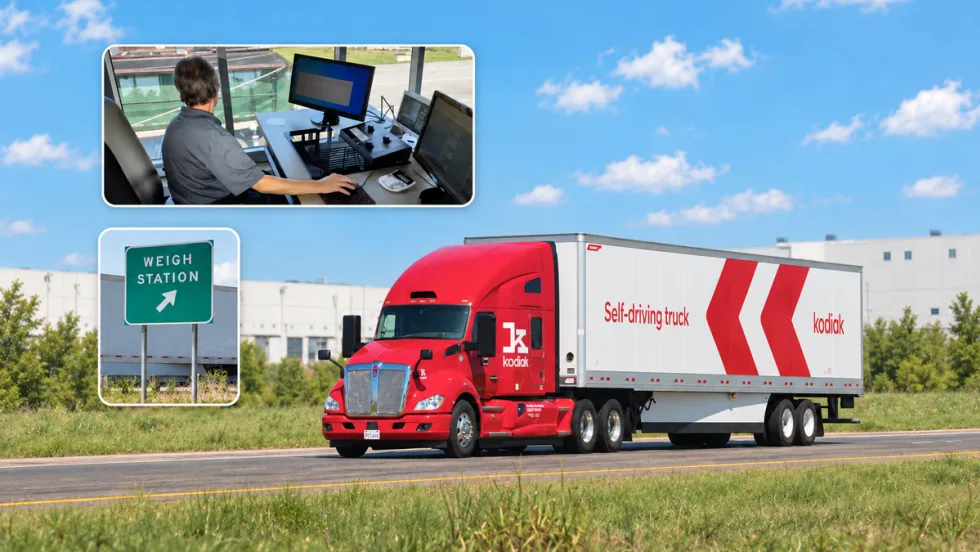
PrePass, Kodiak Connect Driverless Trucks to Roadside Enforcement
The system will allow enforcement agencies to verify Enhanced Inspection information and decide whether Kodiak’s autonomous trucks can bypass roadside screening sites.
Read More →
From One Generation to the Next: How Mentorship Builds Safer Truck Drivers
After three decades in trucking, Harold Perry shares what he's learned about driver safety, mentorship, and helping the next generation build confidence behind the wheel.
Read More →
FMCSA Pauses Biennial-Update Enforcement Amid Motus Transition
Carriers whose updates were due on or after June 1 have more time, while FMCSA works to stabilize its new registration system and warns of phishing sites impersonating its new carrier registration system, Motus.
Read More →
ZF Expands Commercial Vehicle Push in North America
ZF is expanding its North American commercial-vehicle presence with new transmission applications, electrification, trailer technology and autonomous-driving systems.
Read More →
Truck Drivers Need More Than Another Alert
Fleets have more visibility into truck health, safety events, and driver activity than ever. The next challenge is turning all that information into useful guidance for the person who has to decide what to do next.
Read More →
Tesla Wants a Self-Driving Semi. Are Cameras Enough?
Could Tesla’s camera-only autonomous driving technology work on an 80,000-pound Semi? In this commentary, HDT's Deborah Lockridge takes a look at Tesla, Cybercab, and how autonomous trucks see the road.
Read More →
What DOT’s Automated Vehicle Strategy Means for Trucking
The U.S. Department of Transportation issued a new automated-vehicle strategy that outlines plans for driverless-truck regulations, cross-state freight corridors, and federal safety standards.
Read More →
NYC Expands Speed, Pedestrian Safety Tech Across Fleet
New York City is expanding intelligent speed assistance and pedestrian-alert systems across its municipal fleet, moving the technologies from pilot programs into vehicle procurement and retrofit requirements.
Read More →
FMCSA Removes 110 Truck Driver Training Schools from Certified ELDT List
Federal regulators also are targeting more than 160 additional training providers and launching a nationwide audit of third-party CDL skills testers as part of a broader crackdown on trucking fraud.
Read More →
Beyond DOT Compliance: What Makes a Trucking Fleet Truly Safe?
A trucking fleet can follow every rule and still make unsafe decisions. The real test comes when safety conflicts with freight, productivity, or cost.
Read More →