




GAO Report Balks at Tanker Wetline Regulations
A new Government Accountability Office report throws cold water on Congressionally mandated plans to further regulate tanker wetlines, to the delight of the nation’s tanker carriers.
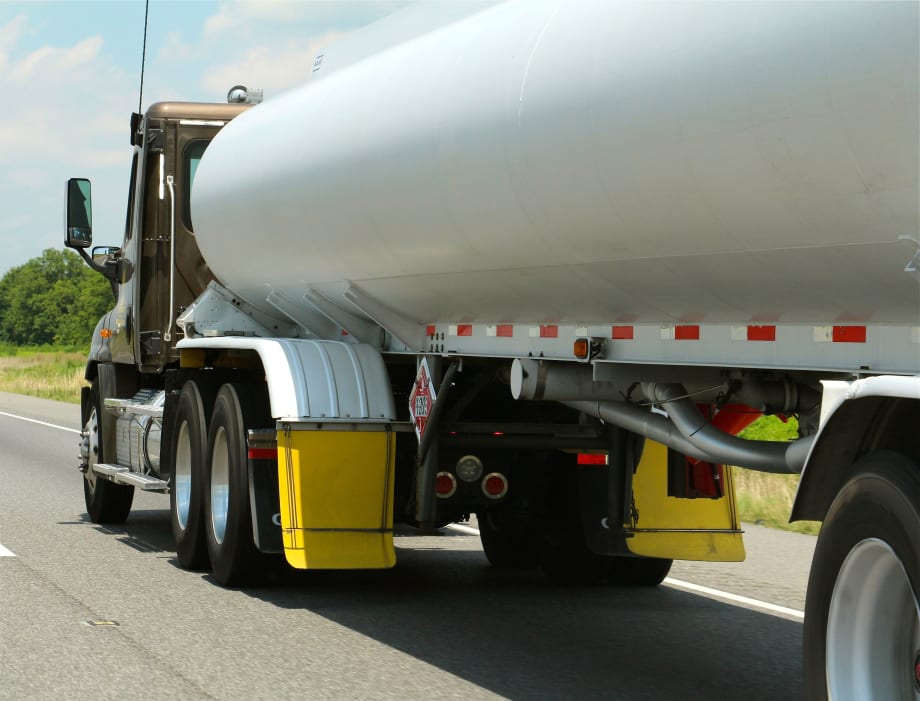
In 2011 PHMSA proposed new rules over requiring that these loading and unloading lines on tankers be absent of any flammable liquids. Photo: Evan Lockridge
UPDATED -- A new Government Accountability Office report throws cold water on Congressionally mandated plans to further regulate tanker wetlines, to the delight of the nation’s tanker carriers.
In 2011 PHMSA proposed new rules over requiring that these loading and unloading lines on tankers be absent of any flammable liquids. Photo: Evan Lockridge
The report says the Department of Transportation’s Pipeline and Hazardous Materials Safety Administration’s data cannot be used to reliably identify risks from incidents involving collisions involving tank trucks’ bottom lines or wetlines, because the data has inaccuracies and the agency did not properly examine the costs and benefits of such a rule changes.
“I am extremely pleased with GAO’s findings given its significance to the tank truck industry,” said Daniel R. Furth, president of the National Tank Truck Carriers, in a statement. “As we have mentioned repeatedly, the GAO approached its task in a very professional, thorough manner which led to the same conclusion that we have argued now three times since 1990."
In 2011 PHMSA proposed new rules over requiring that these loading and unloading lines on tankers be absent of any flammable liquids. It was blocked by Congress in last year’s highway funding authorization bill until a study could be completed.
Based on this study, Furth is uging PHMSA to withdraw this regulations and “allow the carrier and enforcement communities to collectively focus their talents and resources on legitimate safety concerns.”
GAO said the problem is that PHMSA requires carriers to report hazardous material incidents, but the reporting form does not specifically capture wetline incidents. Instead PHMSA officials identify wetline incidents through a process of reviewing carrier-reported incident narratives and other information. GAO found that the narratives do not always clearly indicate whether an incident is wetline related and that information about the consequences of incidents, including fatalities, is not always accurate.
GAO notes PHMSA analyzed the costs and benefits of its proposed 2011 rule to prohibit transportation of flammable liquids in unprotected wetlines, but did not account for uncertainties in its analytical assumptions and limitations in the underlying incident data. For example, PHMSA’s analysis overstated the number of fatalities the proposed rule would prevent when considering actual past incidents and based its cost analysis on the assumption that carriers would install a certain type of wetline purging system, but its limited adoption makes that cost uncertain.
GAO then recommends that PHMSA base any future wetlines rulemaking on the results of this improved data. Additionally, the report recommends changes to the hazmat release reporting process.
NTTC says it efforts were supported by American Trucking Associations, the American Petroleum Institute, the Petroleum Marketers Association of America, and the Truck Trailer Manufacturers Association.
Update adds comments from NTTC.
Related stories:
Tank Carriers Seek Relief from Pending Rules (2011)
Pressure Grows to Prohibit Flammables in Tanker Wet Lines (2009)
More Drivers

Truck Drivers Need More Than Another Alert
Fleets have more visibility into truck health, safety events, and driver activity than ever. The next challenge is turning all that information into useful guidance for the person who has to decide what to do next.
Read More →
FMCSA Removes 110 Truck Driver Training Schools from Certified ELDT List
Federal regulators also are targeting more than 160 additional training providers and launching a nationwide audit of third-party CDL skills testers as part of a broader crackdown on trucking fraud.
Read More →
Hours of Service Pilot Programs: FMCSA Readies for 2027 Rollout
Two pilot programs could eventually reshape hours-of-service rules, giving truck drivers options to pause their 14-hour clock or use longer split sleeper rest periods.
Read More →
Medical Cards, English Proficiency Reshape Roadcheck Violations
Medical-card violations jumped to the top of the driver out-of-service list during CVSA’s 2026 International Roadcheck, while English-language proficiency violations appeared among the leading violations for the first time.
Read More →
Driver Trust Can Make or Break the Success of Fleet Safety Technology
New Teletrac Navman research suggests that onboarding, transparency about driver data, and positive feedback can play a significant role in how commercial drivers respond to safety and coaching technology.
Read More →
EEOC Sues KLLM Over Alleged Sex Discrimination in Driver Training
KLLM is facing a federal sex-discrimination lawsuit over policies the EEOC alleges put female truck driver trainees at a disadvantage.
Read More →
FMCSA Moves to Codify English Language Requirements for Commercial Drivers
By changing regulations on English-language proficiency requirements for commercial drivers, rather than relying on a guidance memo, the FMCSA said future administrations won't be able to walk back the Trump administration's stricter enforcement with just a memo.
Read More →
Drivers Put Western Star Trucks to the Test at Star Nation Experience
Watch to get an inside look at the Western Star trucks, technology, and community behind the Star Nation Experience 2026!
Read More →
Trump Administration Looks to Put More Veterans Behind the Wheel
The Freedom Haulers program pulls together existing and expanded programs at several federal agencies to recruit veterans to drive commercial heavy-duty trucks and cut the red tape for them to get a CDL, training, and employment.
Read More →
Putting Mack’s Command Steer to the Test
A test drive of Mack’s Command Steer active steering system evaluates how it can make truck driving easier and less tiring.
Read More →