




Tank Carriers Seek Relief from Pending Rules
Tank carriers are asking the Department of Transportation to drop a pair of rules-in-progress on grounds that they are unnecessary and ineffective. John Conley, president of the National Tank Truck Carriers, the industry's national association, asked Transportation Secretary Ray LaHood to consider withdrawing two proposals that fit President Obama's description as putting "an unnecessary burden on businesses."
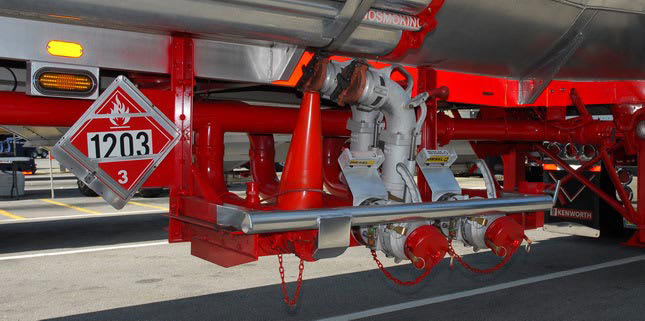
Proposed wetlines rules have twice been rejected by regulators on grounds that costs exceeded benefits. Photo by Jim Park.
Tank carriers are asking the Department of Transportation to drop a pair of rules-in-progress on grounds that they are unnecessary and ineffective.
John Conley, president of the National Tank Truck Carriers, the industry's national association, asked Transportation Secretary Ray LaHood to consider withdrawing two proposals that fit President Obama's description as putting "an unnecessary burden on businesses."
Obama last January issued an Executive Order for government agencies to cull unnecessary rules from their books. Conley said there are two proposals at the Pipelines and Hazardous Materials Safety Administration that fall into this category.
One would require carriers to make sure there is no gasoline in the loading lines of their tanks, the so-called "wetlines" rule. The other would outsource regulations covering standards for construction, testing and repair of tanks to private entities, Conley said.
The wetlines rule would prohibit transport of flammable liquids in the pipes beneath new and existing cargo tanks. Under the proposal, any trailer built two years after the rule goes into effect could carry no more than 0.26 gallons in its wetlines, or have structural protection. Existing tanks would have to be equipped with purging systems. Carriers would have 12 years to complete that work.
Conley told LaHood that the proposal has twice been rejected by regulators on grounds that its costs exceeded its benefits and is being considered now only for political reasons.
"As you know, the Chairman of the House Transportation & Infrastructure Committee in the last Congress (Rep. James Oberstar, D-Minn.) took a hatchet to PHMSA and inflicted harm that continues to this day," Conley said.
Oberstar's Argument
Oberstar, who was defeated in last year's elections, had proposed legislation to require the rule, citing crashes in which the wetlines rupture and the fuel ignites. That happened in 2008 in New Jersey, when a car struck a gasoline tanker, wedged beneath the tank and burned in the spill of 13 gallons of gas from the wetlines, killing the driver.
Oberstar said there have been 184 incidents over the past decade in which wetlines were damaged or ruptured. PHMSA has identified 13 fatalities and seven injuries from crashes involving wetlines. Six of the fatalities and all of the injuries were attributable to spills from the wetlines, as opposed to the impact of the collision.
Tank carriers replied with this statistic: There have been more than 180 million shipments of flammable liquids in the past decade, making the risk of a fatal wetlines incident about one in 30 million.
"The odds of being struck by lightning during your lifetime are 6,000 times greater than the odds of being killed in a wetlines incident," said Barbara Windsor, president of Hahn Transportation, in 2009 testimony on the issue.
Tank carriers also point out that the process of welding purging equipment onto tanks can be hazardous, considering the risk of igniting fumes inside the tank.
Congressional Debate
Congressional debate over the issue continued at a hearing earlier this year. Asked by Rep. Bill Shuster, R-Pa., why PHMSA was continuing with the rulemaking, agency administrator Cynthia Quarterman replied, "If a school bus full of children were to hit a wetline and burn, the analysis would be compelling, I think. We don't want that to happen if we can avoid it at the beginning."
Shuster replied, "It certainly would be a terrible, terrible tragedy if that were to happen to a school bus. But ... my understanding of what happens with a wetline accident is that a school bus couldn't get underneath a truck, and that would be highly unlikely to happen."
The rule was proposed last January. Comments still are being reviewed at the agency. When the agency is done, the rule must be vetted by LaHood's office and by the White House Office of Management and Budget. Publication is scheduled for next May.
Privatizing Regulations?
The other rule concerns PHMSA's plan to in effect privatize a public regulatory process, Conley said.
The proposal would remove key safety regulations that govern the construction, operation, test and inspection, and repair of cargo tanks from the federal code, and turn them over to private enterprise (the American Society of Mechanical Engineers and the National Board of Boiler and Pressure Vessel Inspectors), Conley said.
"The current open process would be replaced by one where a private entity ordained by PHMSA in a no-bid process would develop and copyright regulations which your department would adopt by reference," he said.
It takes the public out of the system in terms of developing the regulations and having access to them, he said.
"The (Engineers and Boiler Inspectors) look to make millions of dollars if they are successful in getting this through," Conley said in an interview. "There are regulations in place now that are working. Why are we going to change that system and fix something that isn't broken?"
More Drivers

Trump Administration Looks to Put More Veterans Behind the Wheel
The Freedom Haulers program pulls together existing and expanded programs at several federal agencies to recruit veterans to drive commercial heavy-duty trucks and cut the red tape for them to get a CDL, training, and employment.
Read More →
Putting Mack’s Command Steer to the Test
A test drive of Mack’s Command Steer active steering system evaluates how it can make truck driving easier and less tiring.
Read More →
Competition Heating Up for Truck Drivers
New report reveals rising driver hiring costs, the return of sign-on bonuses, growing AI advantages, and the operational factors shaping driver retention.
Read More →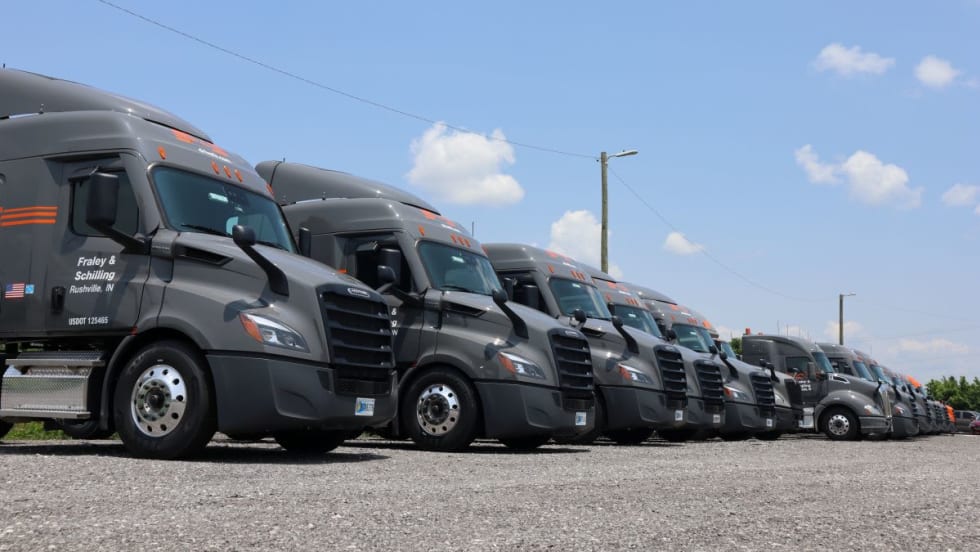
How Fraley & Schilling Improved Logbook Compliance by Over 50%
Fraley & Schilling needed a way to close a compliance workflow gap in its ELD system without adding more work from driver training, reminders, and back-office follow-ups. It found the answer in a custom driver app.
Read More →
Volvo Goes Gaming
Volvo has roared into American Truck Simulator with two new flagship trucks.
Read More →
What the Best Fleets to Drive For Teach About Driver Retention
Survey fatigue, AI-powered routing, owner-operator expectations, and the decline of social media all emerged as themes from this year's Best Fleets to Drive For program.
Read More →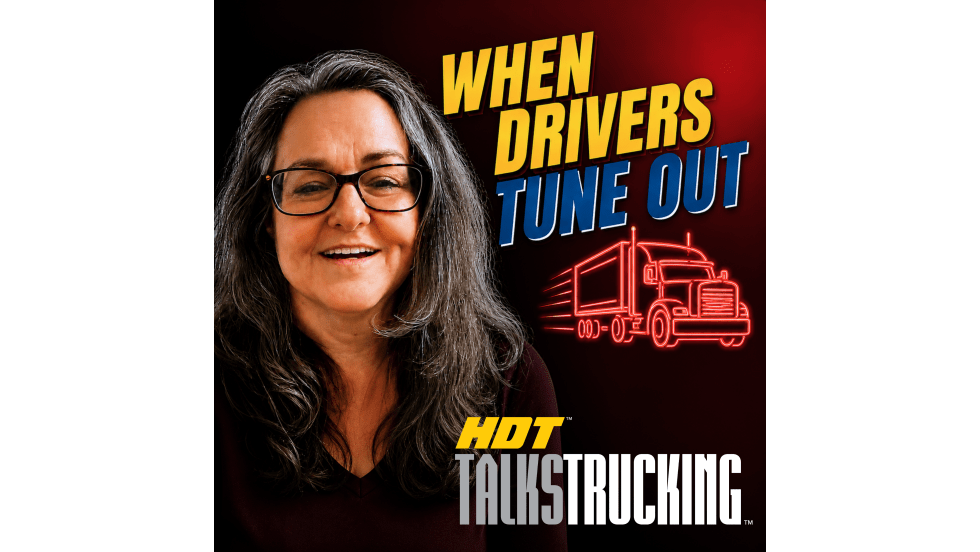
Driver Retention Lessons From the Best Fleets to Drive For
What separates trucking's best workplaces from the rest? Jane Jazrawy shares the biggest lessons from this year's Best Fleets to Drive For program on driver retention, communication, AI, and workforce trends on the HDT Talks Trucking podcast.
Read More →
Farewell, CDL: Why I'm Giving Up My Commercial Driver's License
After more than 20 years as a CDL holder, HDT Executive Editor Jack Roberts is letting his commercial license expire. Not because he wants to — but because trucking's nuclear verdict crisis has made the risks of public-road test drives too great for editors, manufacturers, and everyone involved.
Read More →
How Top Trucking Fleets Improve Driver Retention [Video]
What do healthy snacks, optimized routing, and just picking up the phone have in common? They're all strategies the Best Fleets to Drive For are using to retain truck drivers.
Read More →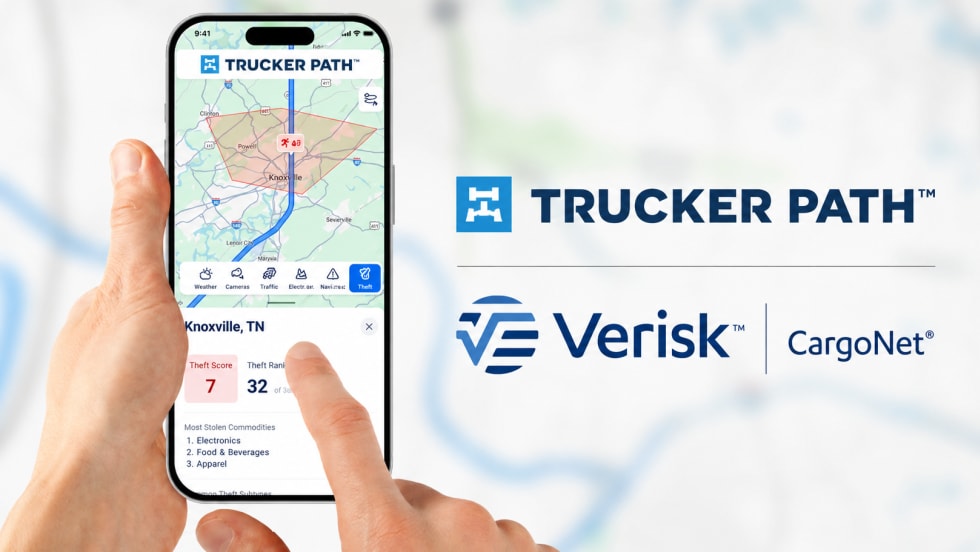
Trucker Path Adds Verisk CargoNet Theft Data to Navigation Platform
Trucker Path’s new cargo theft risk overlays give drivers and fleets visibility into high-risk areas, stolen commodity trends, and theft hotspots.
Read More →