




FTR Conference: Class 8 Sales Declining, Mediums, Trailers Still Good
Technology will boost productivity and truck utilization to where demand for equipment will greatly decline, one researcher says.

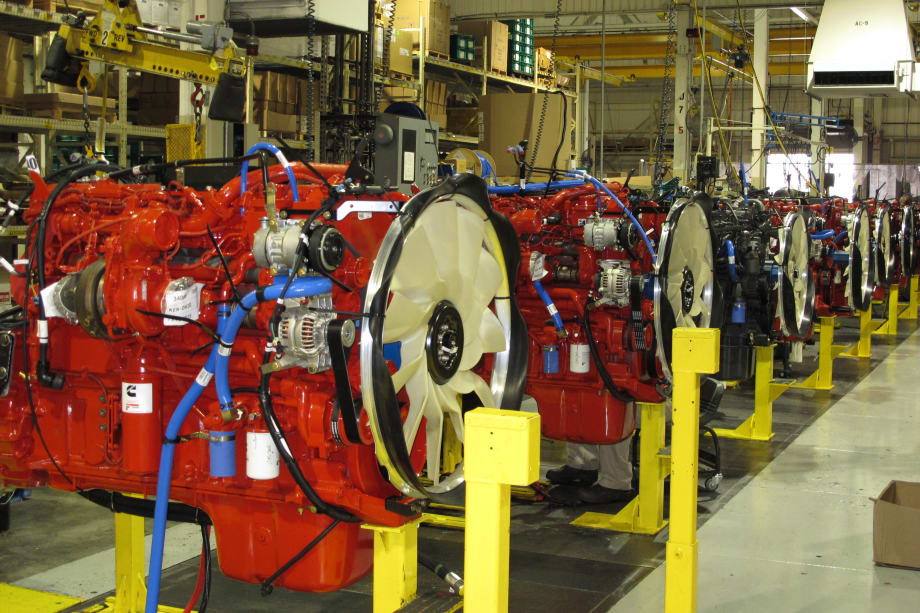
Sales of new heavy duty power units began moderating toward the end of 2015, as buyers adjusted orders placed during “better times.”
Sales of new heavy duty power units began moderating toward the end of 2015, as buyers adjusted orders placed during “better times.”
“This is a market where things aren’t expected,” said Eric Starks, chairman and CEO of FTR Associates, in introducing several hours of presentations during which speakers explained why things are similar to past recoveries and why they’re different.
Starks moderated the equipment half of FTR’s on-line virtual conference Tuesday afternoon, Feb. 16, where presenters said outlooks for truck and trailer orders and sales continue strong and steady, though lower than highs reached by Class 8 sales last year.
And, barring an unexpected recession, that will continue into 2017. Equipment business has paralleled growth in the general economy since the Great Recession ended in 2010. But medium-duty trucks and semitrailers are hanging on longer.
There’ll be extensive productivity gains through telematics and other technologies, presenters said. But don’t celebrate, because those very technologies will greatly reduce demand for trucks, possibly by the beginning of the next decade.
Class 8 trucks moderate
Sales of new heavy duty power units began moderating toward the end of 2015, as buyers adjusted orders placed during “better times” earlier in the year, said Chris Visser, senior analyst and product manager for commercial vehicles at NADA Used Car Guide, an arm of J.D. Power Associates. And they are trading in large numbers of three- to five-year-old tractors that has caused a drop in values.
“Quite a few more trucks were coming in 2015,” he said. “Lots of companies sent trucks to no-reserve auctions in mid ’15, which caused used-truck prices to fall,” and dealers must adjust.
“Dealers who had become accustomed to strong used-truck prices have to get used to lower, more normal prices,” he said. “They’re now in an adjustment period that began rather suddenly, with a shock point in mid-2015.”
Wholesale values of 2011 to ’13 trucks dropped 25% from August to the end of the year. Retail prices dropped 10% as dealers resisted losing so much money, Visser said. Prices of 2014 and later models, though, have remained strong.
Among used-truck dealers, “nobody’s happy about the depreciation, or seeing long times on lots” for some trucks, he said. But “pricing will adjust and dealers are waiting to see” what happens.
Small buyers are shocked to see the large depreciation in values. This is resulting in some fleets holding on to their equipment longer, hoping for higher prices later, he said, and putting off buying new equipment. That in turn will affect prices of new trucks.
“The normal price increases from manufacturers seen this time of year will not occur, and some discounting is there” now, Visser said. Meanwhile, 10% more used trucks will enter the market this year as large fleets hold to their planned trade cycles.
As for an outlook, “Trucks are bought to haul freight, and there is growth in the marketplace,” Visser said. “But growth is easing and freight will be slower going into 2017.” Various economic factors, coupled with the effects of customer truck purchases before the recession, argue for steady levels of business.
Midrange follows the economy
Sales of medium-duty trucks have historically mirrored the general economy, and that’s what’s happening now, said Jonathon Starks of FTR. Classes 4 through 7 are stable and have been growing steadily since the end of the recession.
Aside from some spikes, “There’s no slack off, and no acceleration” in sales, he said, just slow and steady improvement. “The last peak was in 2006, so there’s a lot of room for growth.”
The current sales trend matches figures published in the Chicago Federal National Activity Index, which shows unemployment slowly declining from 10% in the recession to 4.9% this January, he said. Retail sales climbed since 2011 and now have dropped, while construction spending accelerated since ’10 and now has leveled off to a steady pace.
“It’s been extremely stable,” Starks said. “Pent-up demand is in the system, and replacement is the biggest chunk” of medium-duty sales, which he estimated to be 194,300 units this year.
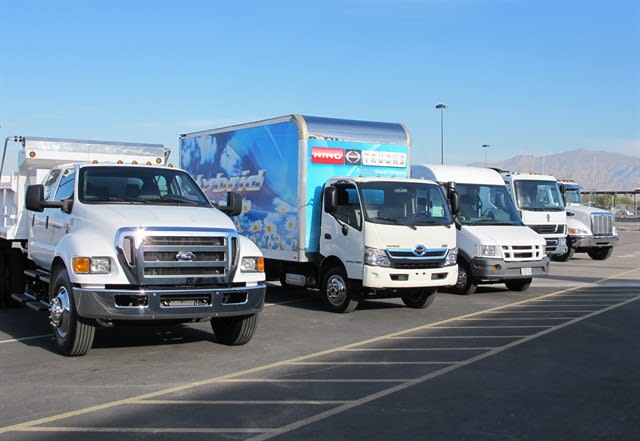
The leasing and rental segment will grow as midrange truck users get away from ownership and outsource truck acquisition and maintenance.
New entries in the medium-duty sector will not have much effect on major builders, said Jeff Sass, senior vice president for global sales and marketing at Navistar International, in response to a question about them. That’s because “it’s one thing to sell a new truck, but it’s quite another to support it.”
New entries do not have an extensive dealer body like Navistar’s, where trucks are serviced and repaired. One exception is Hino, which established U.S. production and set up a dealer body that can support its trucks.
One change that occurred in 2000 to ’07: a shift from heavier Class 6 and 7 trucks, the purvey of builders like Navistar, to Class 4 and 5, where Ford and Ram are strong, Sass said. That’s continuing in the current recovery.
Navistar has had the Class 4-5 TerraStar, but it has not sold well. However, the company expects to benefit from this shift by its recently announced production and joint-product deal with General Motors. There’ll be common chassis and powertrains but different sheet metal and other exterior details in Chevrolet and International versions of the trucks, he explained.
Asked about trends, Sass said the leasing and rental segment will grow as midrange truck users get away from ownership and outsource truck acquisition and maintenance.
“The medium-duty market is dominated not by big fleets but by your neighbors,” who operate small businesses that serve their communities, he declared.
Technology in equipment
Navistar does not see any serious use of autonomous trucks in the next 10 years, Jeff Sass said. And Sandeep Kar, global transportation research specialist at Frost & Sullivan, said a recent study indicated there might be only 8,000 of them by 2025.
The major hurdle to autonomous trucks is not lack of enabling regulations, because the government is preparing them, or technology, because it’s largely here, he said. The problem is psychological.
“’You say I’ll have a salaried, CDL-qualified driver behind the wheel?’” Kar postulated a financial executive saying. "‘What will $50,000 for autonomous technology get me?’ The answer is more generation of income” through better communications with customers, more efficient scheduling and higher utilization of equipment.
Kar sees strong growth in telematics to assist in diagnosis and servicing trucks, and to boost truck utilization by putting shippers in closer touch with carriers and fleets communicating better with drivers.
“Drivers will get home more often,” he said. “More utilization of trucks will mean a reduction in zombie (empty) miles, and that will mean lower demand for equipment.”
Trucks are getting more vertically integrated with builders’ proprietary powertrains, and are increasingly complex via advanced electronics, Kar said. Eventually customers will balk at paying the prices that complexity demands, and builders will have to find ways to design lower-cost and higher quality trucks.
Trailers remain strong
The “unexpected” cited in the introduction is the continued strength of trailer sales in spite of the moderation in Class 8 truck sales. Current sales numbers don’t match the typical historical pattern of the two staying close together, said Don Ake, FTR’s vice president for commercial vehicles.
“Class 8 is shrinking and so should trailers,” he said. The “correlation rate” between the two heavy vehicle types has been 87%, but that has dropped to 80% in the last four to five months. Why?
Pent-up demand, as fleets keep buying to replace old trailers that they kept during the recession, even if many were parked.
Increasing amount of drop-and-hook operations as distribution patterns and methods change.
Using trailers as “mobile warehouses” instead of erecting buildings to store cargo that must be held.
Increased sales for refrigerated vans to deliver restaurant food to feed consumers who are dining out more.
Pent-up demand from 2009-10, the Great Recession years, added up to 384,000 – the number of trailers that were not replaced, Ake said. Many still haven’t been because, like their counterparts in other industries, fleet executives have moved cautiously in purchasing.
“So there was no snap-back,” and satisfying that demand is still going on, he said. There’s no telling when it will happen, but it will probably be sometime this year. About 240,000 of the 305,200 trailers sold in 2015 may have come from such demand.
As for trailer types, dry van sales spiked in 2014 and ’15 and now have eased, while reefer vans remain in demand due to changing conditions, and Ake doesn’t see them dropping off. Vocational trailers, mostly flatbeds and dumpers, are at much lower numbers, but strength in construction keeps their sales steady.
American and Canadian forecasts from FTR and other sources call for 279,000 sales of all trailer types this year, 240,000 in ’17, 230,000 in ’18, and 240,000 again in 2019, Ake said. But a recession would seriously interfere, as would changes in various market conditions that would increase or decrease those numbers.
Productivity’s dark side
The benefits of higher productivity from “marvelous technology” plus the driver shortage will combine to reduce demand for trucks by the hundreds of thousands, believes Noel Perry, a senior researcher at FTR. They next few years will be good for sales, but they’ll be followed by a “big downturn.”
“If you’re in the equipment business, you’ll have to change from pushing sales to pushing quality,” he said. For truck operators, “Your fleet will be one-half the size that it is now.”
More Fleet Management

Color Match Smarter: Tools That Restore & Perform
For fleet managers and collision repair professionals keeping heavy-duty trucks on the road, getting the color right the first time isn't just about appearance — it's about efficiency, turnaround time, and bottom-line results. Discover how today's digital color tools are transforming the repair process from guesswork to precision.
Read More →
FMCSA Pauses Biennial-Update Enforcement Amid Motus Transition
Carriers whose updates were due on or after June 1 have more time, while FMCSA works to stabilize its new registration system and warns of phishing sites impersonating its new carrier registration system, Motus.
Read More →
2026 Blueprint for Countering Smarter Supply Chain Theft
Cargo theft is no longer just the cost of doing business. It's a multi-billion-dollar criminal enterprise exploiting vulnerabilities across your fleet, drivers, and supply chain.
Read More →


How Telematics Improves Visibility, Control, and Performance in Refrigerated Fleets
Explore how telematics help refrigerated fleets improve visibility, uptime, efficiency, compliance, and cargo protection across connected cold chain operations.
Read More →
What the U.S.-Canada Trade War Means for Trucking
Escalating U.S.-Canada tariffs could disrupt cross-border freight, reduce truck volumes, raise costs, and create new uncertainty for carriers on both sides of the border.
Read More →
What Are Trucking’s Top Concerns for 2026?
The American Transportation Research Institute wants to know what's worrying trucking fleet managers, drivers, and other stakeholders in its annual Industry Issues survey.
Read More →
American Trucking Associations Looks for a New Leader
ATA President and CEO Chris Spear abruptly left his job at the association on August 21, at a pivotal time for the trucking industry.
Read More →
Public Wi-Fi Cybersecurity Risks: How Truck Drivers and Fleets Can Protect Their Data
Public Wi-Fi can expose truck drivers and fleets to credential theft, malware, and other cyber threats. Here’s how to reduce the risk on the road.
Read More →
For Nicky Cupp, Fleet Innovation Starts With Frustration
HDT Truck Fleet Innovator Nicky Cupp turns everyday pain points at Fraley & Schilling into opportunities for better technology and smarter processes.
Read More →
Adam Buttgenbach’s Approach to Electric Trucks: Start With Where They Fit
HDT Truck Fleet Innovator Adam Buttgenbach helped PepsiCo build one of North America’s largest EV fleets by focusing on where electric trucks make operational sense.
Read More →