




As the U.S. struggles to develop new hours of service rules, fleets in France are doing some innovative things with technology to help them schedule drivers and trucks.
Until quite recently, trucking in France was a cottage industry. But now fleets there have equipped more than 15,000 vehicles with a radio communications system. They took this step forward in the use of information technology because of pressure from the authorities. In 1995, the French government, together with professional and worker organizations, reformed the country's safety regulations and the method of remuneration for the hours worked. A document accepted by the entire profession imposed payments for the time that truck drivers spent waiting at a warehouse for their goods to be unloaded.
Far-sighted carriers saw an opportunity to modernize their management. This was the case for Multi Transports, a trucking company located amongst the Auvergne volcanoes in central France, which employs 600 people and has an annual turnover of around $300 million. The fleet, which specializes in batch transport in France and abroad, is playing a pioneering role in the on-board computerization of trucks.
"Since 1995 we have wanted to obtain as quickly as possible information on driving times and drivers' resting or waiting times," says Jean Remy Dumunier, operations manager of Multi Transports. "In addition, we wanted our drivers to receive in real time our instructions for changes in routes and unexpected loads." The company made contact with Jean-Paul Michelon, a specialist on road information technology based in Lyon, and France Telecom, the principal French telecommunications operator.
Together, they developed an innovative tool that makes use of the GSM Data radio communications network. Known as the "Agat System," this tool is distributed in all countries by Jean-Paul Michelon's company GIT (Groeneveld Information Technology), a joint Franco-Dutch company.
Multi Transporters tested the Agat System on an initial fleet of ten trucks in 1997. The vehicles were equipped with an on-board computer as well as a GPS (Global Positioning System) satellite system. These were linked to the central computer installed at the company headquarters by the GSM Data radio communications network. "The road information technology system wouldn't work with an ordinary microcomputer," emphasizes Jean-Paul Michelon, of GIT. "It needed industrial on-board equipment which could withstand vibration and wide temperature variations."
Thanks to the on-board computer and the radio communications network, the driver can indicate to company headquarters the state of progress, signaling the delivery of goods. The volume of freight remaining on board the vehicle is also indicated. The transport company can then invoice customers without delay and send the driver new instructions, with the route optimized by computer.
The GPS system gives the geographical location of the truck at regular intervals. It provides a location every three to six miles, or even every quarter mile when the truck is traveling in an urban area. The on-board computer then communicates the route to the headquarters. Those responsible for planning can at any time modify and optimize the route plan and the scheduling of the vehicle's deliveries. The objective is that it arrives at the customer at the stated time without wasting time waiting and using up fuel. "The assignment orders and the instructions are displayed on the on-board computer screen," explains Dumunier. "It is unambiguous and cannot be mistaken by the driver."
Every night, the on-board computer sends to the headquarters the technical data on the state of the vehicle and its performance on the road. "Thanks to information technology, drivers are warned when they are tending to drive too fast and wasting fuel, causing unnecessary wear on their vehicles and putting their lives and the lives of others in danger," says Jean-Paul Michelon. The computer also sends back data on driving the rest hours. Even though the truck driver is away for weeks, his monthly wage sheet is drawn up accurately at the right time and with the right hours.
The on-board computer has a number of other advantages appreciated by drivers. It helps them manage their schedule, constantly warns them of the rest time that they can take, and beeps when their statutory rest time is approaching. For those drivers who are reluctant to communicate with their screen, there is always the option of using a mobile telephone.
As the company's headquarters, the processing of data transmitted by vehicles has lightened the task of the staff, making it possible to shorten the time for invoicing customers and paying drivers. "We were able to measure a reduction of 6% to 7% in our fuel consumption compared to turnover," says a delighted Jean Remy Dumunier. "This saving is due to the optimization of routes, because we can indicate to our drivers at all times the best route, while taking into account road hazards and changes in the planning deliveries." The company also achieved substantial time savings, thanks to being aware in real time of each truck's current and future deliveries. Today, the Auvergne hauler has 500 trucks equipped with on-board computers, and its progress is being closely followed by other European trucking firms.
French and European fleets intend to offer their customers full tracking of their goods via Intranet-Extranet communication networks and on board computers placed in the trucks. They have organized a project within the framework of the European Eureka research program to achieve this.
The Sicadom project includes the company Multi Transports, the computer services company GIT, as well as the French software house Deltis, the Belgian service provides Neosys which specializes in freight exchange, and the laboratory CEDITI (Center for the Dissemination of Information Technology), which produces Intranet enterprise software. Sicadom benefits from funding of around $2.2 million. It is due to finish the project at the end of 2000. "In a few months, a customer will be able to connect to a trucker's computer system to find out in real time the exact location of their merchandise," claims Dumunier.
The Sicadom project is of interest to freight exchanges, which bring together customers and truckers for orders which are generally urgent and of small volume. Truckers will be able to indicate on the freight exchange, in real time, the volumes that they have on their vehicles scattered throughout the continent. As soon as a transaction is concluded, they will be able to send details to the vehicle best able to carry the load.
French Fleets Use Technology to Schedule Drivers
As the U.S. struggles to develop new hours of service rules, fleets in France are doing some innovative things with technology to help them schedule drivers and trucks. Until quite recently, trucking in France was a
More Equipment
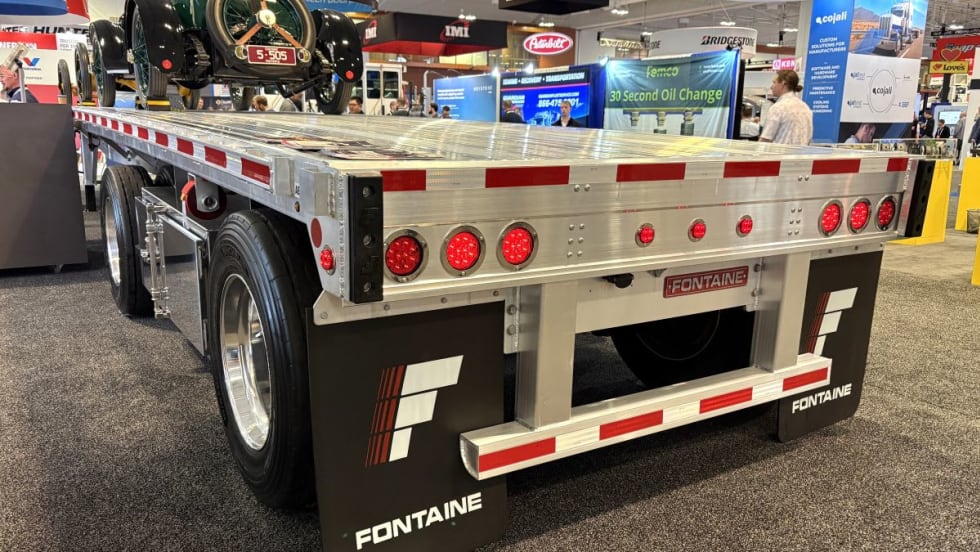
Fontaine Expands Flatbed Lineup with New Fleet-Focused Models, Eyes 2027 Launch
Fontaine is broadening its flatbed lineup with new models aimed at fleets, including a lightweight aluminum trailer expected in 2027 that emphasizes durability, repairability, and lower cost.
Read More →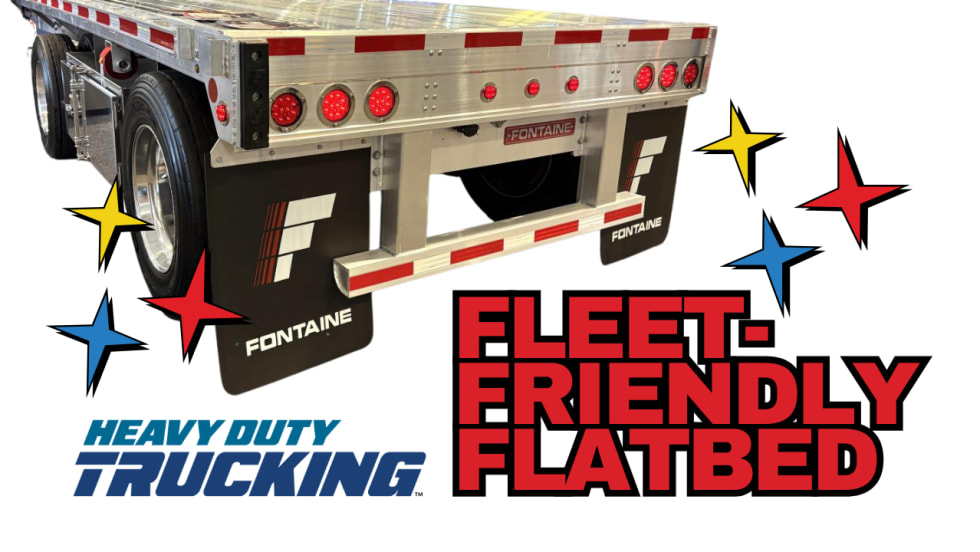
Fontaine's Fleet-Focused Force Flatbed Prototype [Watch]
A new prototype from Fontaine Trailer focuses on what fleets say they need most: easier repairs, lower maintenance costs, and practical, service-friendly design.
Read More →
From Long Haul to Short Loops: The New Math Behind Day Cabs
As warehouse networks expand, predictable regional routes are replacing long-haul runs—reshaping how fleets spec, operate, and resell day cabs.
Read More →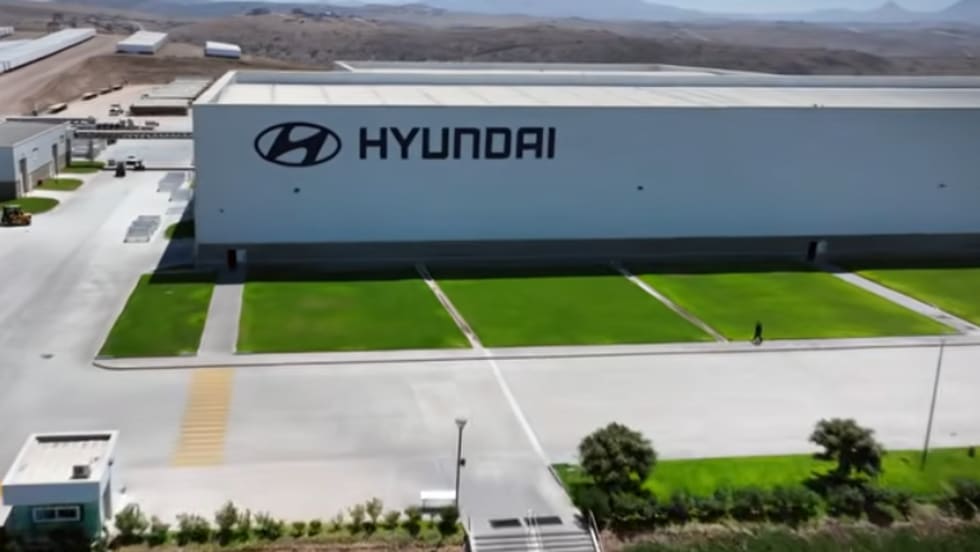
Hyundai Translead Bringing Trailer Production to U.S.
The new Hyundai Translead production sites will improve trailer and body delivery to customers by reducing lead times and leveraging a growing dealer network.
Read More →
HDT Honors the Best New Products of 2025 at TMC [Photos]
Heavy Duty Trucking's Top 20 Products awards recognize the best new products and technologies. Check out the award presentations at the 2026 Technology & Maintenance Council annual meeting.
Read More →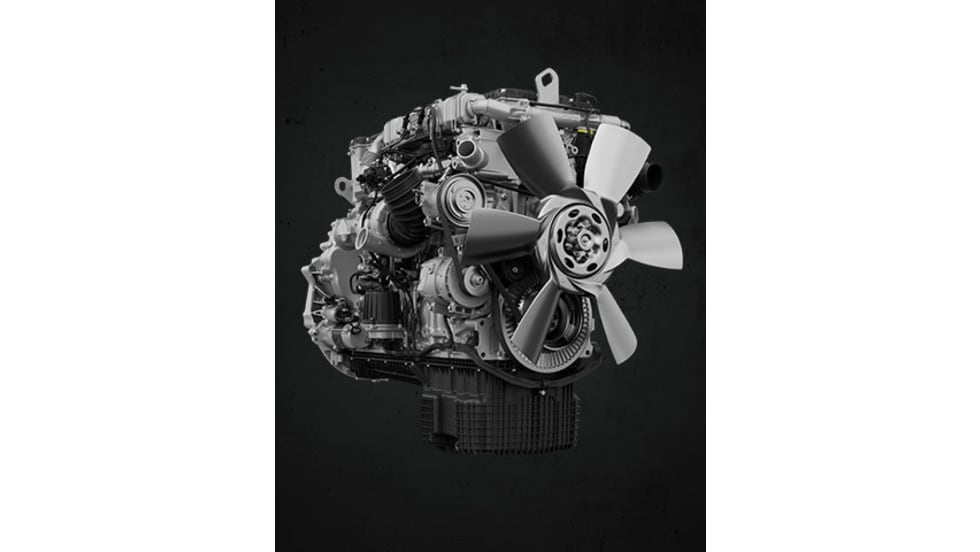
Detroit Engines: Trusted Performance, Built for What's Next
The Detroit® Gen 6 engine platform proves that real progress doesn’t require a complete redesign. Built on 20 years of trusted technology, these engines are designed for efficiency, stronger performance, and greater reliability than before. And they do it all while complying with 2027 EPA standards on every mile.
Read More →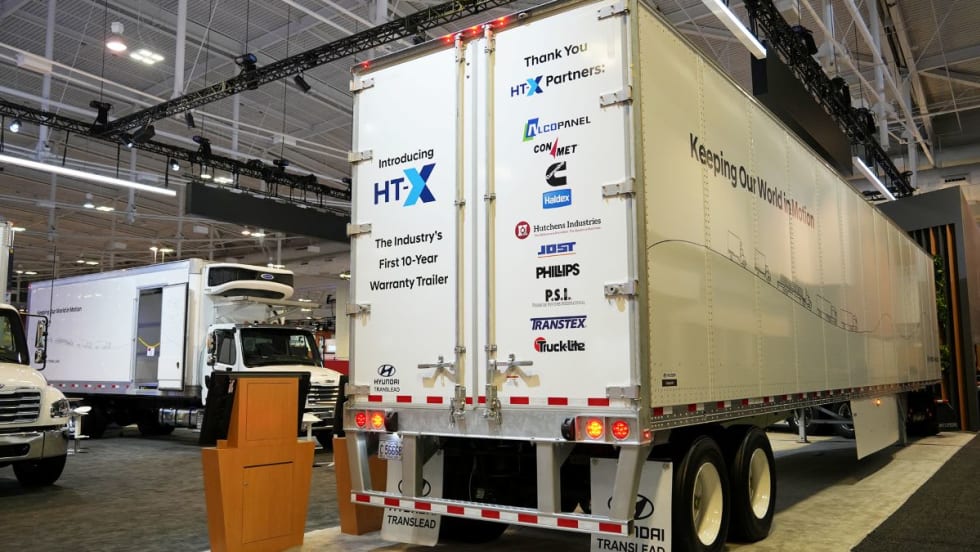
Hyundai Translead Expands Trailer Tech, Introduces Long-Life Dry Van, New Refrigerated Body
Smart safety systems, AI-powered visibility, a 10-year-warranty dry van, and a modular refrigerated body debuted at TMC.
Read More →
EPA Targets DEF Sensor Failures Behind Truck Derates
New guidance allows engine makers to replace problematic DEF sensors with NOx-based systems, aiming to reduce unnecessary derates and downtime caused by failures in the sensors designed to monitor diesel exhaust fluid on trucks.
Read More →
Heavy Duty Trucking is Searching for the Top Green Fleets of 2026
Is your company a leader in sustainability efforts among trucking fleets? If so, Heavy Duty Trucking's editors want to hear from you.
Read More →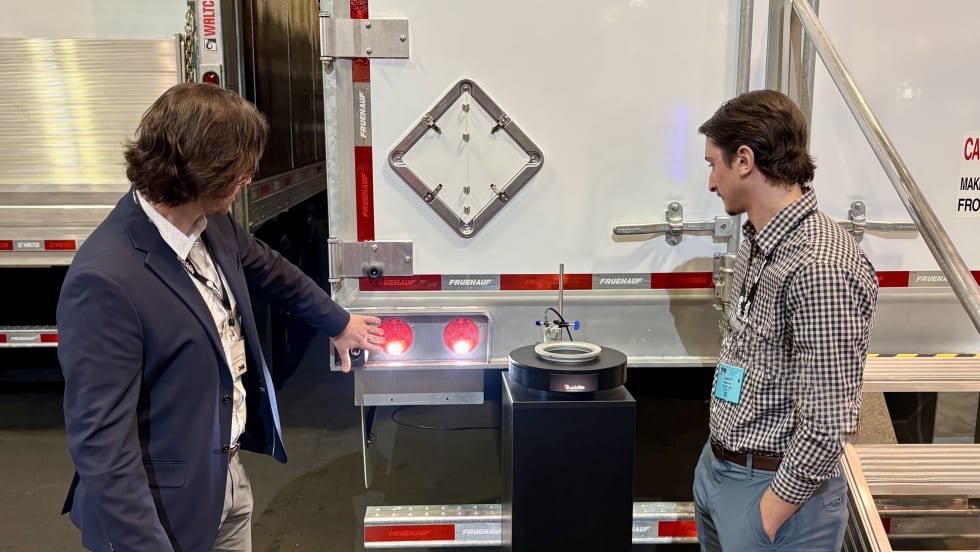
Clarience Technologies Expands Safety and Visibility Portfolio at TMC
From advanced connectivity to AI-powered cameras and next-gen fuel filtration, Clarience companies outlined a roadmap for safer, more connected trailers at TMC’s Annual Meeting.
Read More →