




Freightliner Custom Chassis Touts Fuel Agnosticism
As a company, FCCC is strategically fuel-agnostic, currently building products powered by a range of alternative fuels, including liquified propane gas (LPG) and compressed natural gas (CNG) as well as traditional diesel and gasoline products.


FCCC S2G Flatbed (propane autogas). Image: FCCC
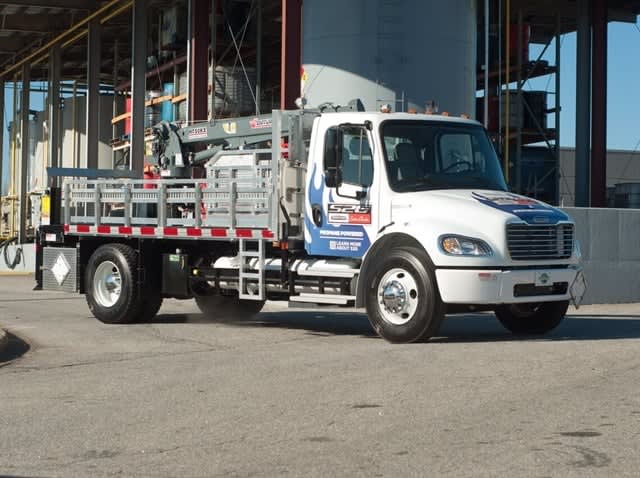
FCCC S2G Flatbed (propane autogas). Image: FCCC
Freightliner Custom Chassis Corp. (FCCC) currently builds products powered by a range of alternative fuels, including liquefied propane gas (LPG) and compressed natural gas (CNG) as well as traditional diesel and gasoline products.
"As a company, we are strategically fuel-agnostic. Our goal is to be the single source for our customers, regardless of fuel type – whether it's propane autogas, CNG, diesel, gasoline, etc. One fuel type certainly doesn’t fit all; we strive to be that one-stop shop for our customers regardless of fuel type," said Mike Stark, product manager - Commercial Chassis for FCCC.
Vocations that currently benefit the most from FCCC's alt-fuel products are ones that start and finish at the same location each day (parcel delivery or uniform/linen, for example). "In addition, vocations and companies that can offer refueling on-site can create additional benefits for alt-fuel options," Stark added.
And, the manufacturer isn't resting on its laurels. FCCC will continue to grow its portfolio of products.
"We believe there are vocations out there offering great opportunities for alternative fuels. These include beverage, yard spotters, and waste management, among others. We continue to invest heavily in alternative fuels and new technologies to consistently provide leading-edge products. We pride ourselves on being true partners to our customers, exploring new ideas and possibilities for their specific and unique needs and challenges," Stark said.
One fleet that has found success with FCCC's alt-fuel offerings is UPS. The parcel delivery company operates approximately 100,000 vehicles in the U.S., with another 35,000 vehicles operating globally.
"We currently utilize FCCC products powered by propane autogas and compressed natural gas. We’ve also previously operated hybrid-hydraulic and hybrid-electric vehicles from FCCC," said Mike Britt, senior director of Maintenance & Engineering and chief alternative fuel engineer for UPS.
On the alternative-fuel side of its company, UPS operates approximately 7,000 alternative-fuel products in the U.S. and an additional 1,500 alternative-fuel products internationally. All of its alt-fuel vehicles are utilized in its delivery fleet.
"We realize many benefits from the use of alternative-fuel vehicles, with the most important being lower emissions and costs for the fleet. Overall, we’ve been very happy with the performance and productivity we currently get through our alternative-fuel products through partners like FCCC," Britt said.
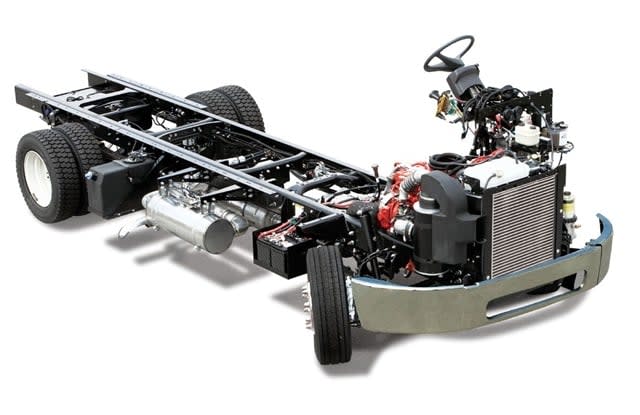
FCCC diesel MT 45-55 chassis. Image: FCCC
Established in 1995 and trusted by some of the most respected names in the RV, walk-in van, commercial bus, and school bus industries, FCCC is a leading manufacturer of premium vehicle chassis. Located in Gaffney, S.C., FCCC employs more than 650 employees in its manufacturing, customer support, and retail facilities.
FCCC is committed to reducing its environmental footprint with clean manufacturing efforts as well as has an almost decade-long history of developing green products.
In 2008, FCCC introduced ecoFRED, the motorhome industry’s first-ever hybrid-electric chassis, and the MB-HEV hybrid-electric commercial bus chassis.
In March 2009, the manufacturer introduced the hydraulic hybrid, built on the MT-55 walk-in van chassis. It also began manufacturing compressed natural gas (CNG) commercial vehicle chassis and hybrid-electric vehicle (HEV) chassis for the walk-in van market segment.
In 2013, the propane-autogas S2G chassis rolled off the line – the first ever factory-installed propane autogas engine and fuel system available for the medium-duty truck market.
More Fuel Smarts

How Volvo Updated Its D13 for EPA 2027 [Watch]
Volvo’s updated D13 promises lower emissions without sacrificing performance or fuel economy. Take a closer look at what changed inside the engine in this HDT Spotlight video.
Read More →
Diesel Price Spike Shortens Payback for Natural Gas Trucks, Report Says
Energy Vision estimates fleets could recover the higher purchase price of an RNG-fueled Class 8 tractor in 1.3 to 2.8 years under current fuel-price scenarios.
Read More →
Calstart Becomes Catalyst Mobility, Reflecting Broader Focus
Calstart is now Catalyst Mobility, reflecting the nonprofit’s growing national role in clean transportation, including zero-emission trucks, infrastructure and incentive programs.
Read More →

Record Diesel Prices Squeeze Trucking Fleets
Average U.S. diesel prices have climbed to nearly $6 a gallon, surpassing the 2022 record as tight refinery capacity and Middle East disruptions keep fuel costs elevated.
Read More →
How Fuel Delivery Shapes Engine Performance
Fuel delivery depends on more than what happens at the injector. For fleet, maintenance and technical professionals, looking at the full path from pump to injector can provide useful context for understanding engine performance.
Read More →
East Coast Port Launches $45M Electric Truck Push
The Port Authority of New York and New Jersey announced millions in incentives for zero-emission drayage trucks, yard tractors, and new charging hubs near the port.
Read More →
California Bill Could Shed Light on Electric Truck Prices
Why do battery-electric Class 8 trucks remain so expensive? A California bill headed to Gov. Gavin Newsom would give fleets and state agencies more visibility into what manufacturers charge.
Read More →
Detroit Opens Orders for EPA 2027 Engines
Detroit isn’t starting from scratch to meet EPA 2027 diesel emissions standards. Its Gen 6 DD13 and DD15 engines keep much of today’s platform while updating the fuel and aftertreatment systems.
Read More →
Zero-Emission Truck Corridor Planned for West Coast
California, Oregon, Washington, British Columbia and Baja California are coordinating plans for truck charging and hydrogen fueling from Canada to Mexico.
Read More →
A Closer Look at Kenworth’s Electric T880E Vocational Truck [Video]
Learn more about Kenworth's T880E battery-electric vocational truck at the Paccar Technical Center, including its range, applications, upfitting considerations, and PTO options, in this HDT Spotlight video.
Read More →