




Four Ways to Improve Your Fleet’s Safety Culture
There’s no magic wand for creating a safety culture within your trucking organization, but two fleets shared their own secrets to success June 24, during the Truckload Carriers Association’s Virtual Safety and Security Meeting.
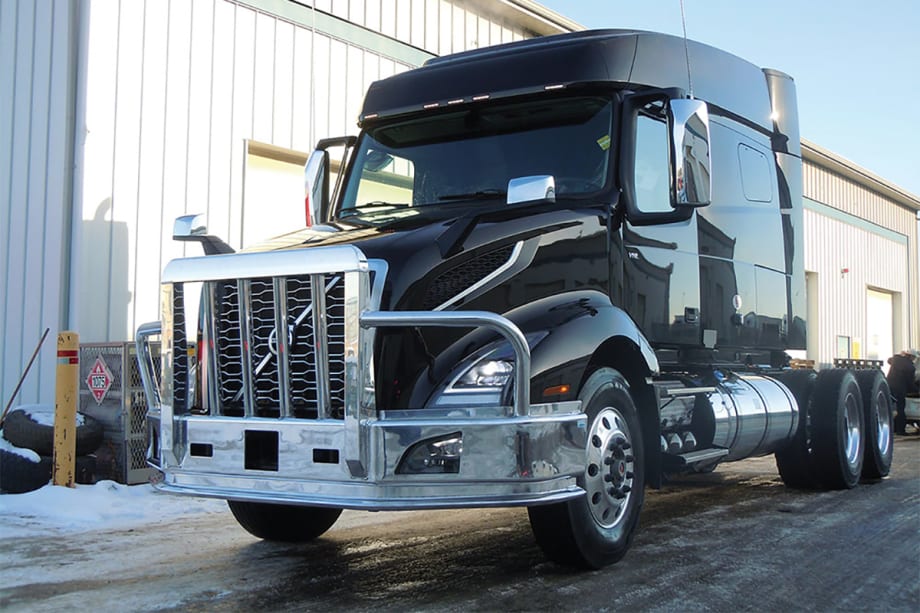
Deer guards are now a spec’ at Boyle Transportation, due to driver requests.
Photo: Magnum Trailer and Equipment
There’s no magic wand for creating a safety culture within your trucking organization, but two fleets shared their own secrets to success June 24, during the Truckload Carriers Association’s Virtual Safety and Security Meeting.
Give Drivers the Tools They Need to Succeed
At Boyle Transportation, drivers are given “a small library” of reference materials that walk them through everything they’ll encounter on their trips, including how to access specific customer locations. Michael Lasko, safety manager at Boyle, said reference materials need to be more than a checklist of what to, and not to, do to avoid getting in trouble.
“We try to equip our drivers with tools and knowledge on how to use these tools, so they have everything they need to be safe,” Lasko said.
This includes personal protective equipment, which of course has increased in importance in recent months with the Covid-19 pandemic.
Lucas Mowery, safety director for Grand Island Express, said his company provides drivers with a trucker’s atlas and trains them on how to use it.
“GPS is a good tool but it’s not something you can depend on all the time,” he said. “We teach our drivers how to read the map.”
Grand Island Express also supplies ice cleats, which have virtually eliminated slips, trips, and falls, and fifth wheel pullers – very cheap investments which have gone a long way to reducing injuries, according to Mowery.
Throw Away the Cookie Cutter
Lasko urged safety managers to abandon cookie cutter training, and to customize it so resources are better allocated. Boyle Transportation uses analytics to identify where knowledge gaps exist within the fleet, then tailors training accordingly.
Drivers are also trained based on individual habits, collected through video monitoring.
“Take specific data-driven actions to develop skills where they’re needed and identify your root causes,” advised Lasko.
Invest in Driver Assistance Technologies
Fleets owe it to their drivers to invest in the driver assistance technologies that can make their jobs easier and safer, Lasko said.
“We demonstrate our commitment to safety for our drivers, by allowing them to help us spec’ our equipment,” he added. “A lot of these (safety technologies) on our trucks are the result of direct feedback from our drivers.”
For example, deer guards are now spec’d based on driver input. “A bunch of drivers advocated for these and they’re one of the best investments we ever made,” Lasko said.
The safety technologies deployed by Boyle have seen it reduce its preventable DOT reportable accidents to just one in the past five years, while the average cost of incidents is now less than $1,500.
“The accidents we do have are at low speed in close quarters,” Lasko added.
A technological investment that’s paying off for Grand Island Express is a truck simulator, which Lowery said has prevented crashes. In one instance, a driver on the simulator wrote off the ‘virtual’ truck and later when he encountered the same scenario on the highway, he was able to take the proper action, preventing a crash. The driver credited the simulator with preventing the crash.
Coach to Educate, Not Discipline
When coaching drivers, make it about improving their behaviors and not disciplining them, suggested Lowery. Treat drivers with respect during coaching and give them a chance to tell their side of the story when reviewing incidents.
At Grand Island Express, in-cab cameras are used to monitor driver behavior – but they’re not perfect. Lowery said the artificial intelligence is useful, but can sometimes give false alerts, for example when picking up a stop sign that was intended for an adjacent lane of traffic.
“I can go in there, undo that and change that event for them,” Lowery said. And as important as it is to bring drivers in to discuss concerning behaviors, Lowery suggested also bringing them in to give praise where it’s due.
“The first interaction they have with the safety department other than orientation is a positive one that way,” he said. “Then they aren’t threatened every time they hear ‘Safety wants to see you’.”
James Menzies is the editor of Today's Trucking, where this article originally appeared, and was used with permission from Newcom Media as part of a cooperative editorial agreement.
More Safety & Compliance

FMCSA Pauses Biennial-Update Enforcement Amid Motus Transition
Carriers whose updates were due on or after June 1 have more time, while FMCSA works to stabilize its new registration system and warns of phishing sites impersonating its new carrier registration system, Motus.
Read More →
ZF Expands Commercial Vehicle Push in North America
ZF is expanding its North American commercial-vehicle presence with new transmission applications, electrification, trailer technology and autonomous-driving systems.
Read More →
Truck Drivers Need More Than Another Alert
Fleets have more visibility into truck health, safety events, and driver activity than ever. The next challenge is turning all that information into useful guidance for the person who has to decide what to do next.
Read More →
Tesla Wants a Self-Driving Semi. Are Cameras Enough?
Could Tesla’s camera-only autonomous driving technology work on an 80,000-pound Semi? In this commentary, HDT's Deborah Lockridge takes a look at Tesla, Cybercab, and how autonomous trucks see the road.
Read More →
What DOT’s Automated Vehicle Strategy Means for Trucking
The U.S. Department of Transportation issued a new automated-vehicle strategy that outlines plans for driverless-truck regulations, cross-state freight corridors, and federal safety standards.
Read More →
NYC Expands Speed, Pedestrian Safety Tech Across Fleet
New York City is expanding intelligent speed assistance and pedestrian-alert systems across its municipal fleet, moving the technologies from pilot programs into vehicle procurement and retrofit requirements.
Read More →
FMCSA Removes 110 Truck Driver Training Schools from Certified ELDT List
Federal regulators also are targeting more than 160 additional training providers and launching a nationwide audit of third-party CDL skills testers as part of a broader crackdown on trucking fraud.
Read More →
Beyond DOT Compliance: What Makes a Trucking Fleet Truly Safe?
A trucking fleet can follow every rule and still make unsafe decisions. The real test comes when safety conflicts with freight, productivity, or cost.
Read More →
Hours of Service Pilot Programs: FMCSA Readies for 2027 Rollout
Two pilot programs could eventually reshape hours-of-service rules, giving truck drivers options to pause their 14-hour clock or use longer split sleeper rest periods.
Read More →
New Guide Offers Pet Safety Tips for Truck Drivers
Hundreds of thousands of pets travel in truck cabs. A new safety guide from Volvo Trucks and the Center for Pet Safety offers practical advice for truck drivers who bring dogs and cats along for the ride.
Read More →