




FMCSA to Conduct Hazmat Testing
The Federal Motor Carrier Safety Administration (FMCSA) begins its Hazardous Materials Safety and Security Field Operational Test later this month
The Federal Motor Carrier Safety Administration (FMCSA) begins its Hazardous Materials Safety and Security Field Operational Test later this month.
This test is intended to measure the effectiveness of Intelligent Transportation Systems (ITS) safety and security technologies for safeguarding hazardous materials being transported by trucks.
The field operational test will determine the costs and benefits associated with transportation security technologies.
A prototype test is scheduled later this month, with full-scale testing to begin in late August. The field operational test, managed by the agency and largely funded by DOT's ITS Program, will be completed in late 2004.
The test will involve 100 trucks equipped with a variety of existing technologies. The technologies will be packaged in several different cost tiers, and will be tested across four different transportation scenarios.
The project will test the capabilities of technologies such as driver verification using password logins, fingerprint biometrics and smart cards; vehicle and load tracking, using satellites and other wireless systems; off-route and stolen vehicle alerts, using geo-fencing; cargo tampering alerts, using electronic seals; driver distress alerts, using driver panic buttons; and remote vehicle disabling in instances of known terrorist attacks.
The ITS field operational test deployment team is led by the Battelle Memorial Institute. Deployment team members include Qualcomm Inc., the American Transportation Research Institute, CVSA, TotalSecurity US, Savi Technology and Information Systems Support.
Participating state agencies include the California Highway Patrol, Illinois State Police, Illinois DOT, Texas DPS, and the New York State Police and DOT.
Original equipment and engine manufacturers also involved in the field operational test include Caterpillar Inc., Cummins Inc., Detroit Diesel Corp., Freightliner Truck Group and International Truck and Engine Corp.
"We must build on our continuous efforts to ensure the security of the more than 800,000 shipments of hazardous materials hauled on U.S. highways every day," Transportation Secretary Norman Y. Mineta said. "This operational test will help improve security and will help spur innovative technologies for safeguarding hazardous materials in the future."
More Safety & Compliance

Trump Administration Expands Homeland Security's Role in Trucking Enforcement
The administration's latest trucking crackdown goes beyond roadside inspections, expanding Homeland Security's role in commercial vehicle enforcement and investigations involving CDL training schools.
Read More →
Paccar Recalls 2027 Trucks Built This Summer for Possible Electrical Problem
The nearly 6,000 Kenworth and Peterbilt trucks in the recall could potentially lose engine power, among other things.
Read More →
Brake Safety Week to Focus on Drums and Rotors
Commercial vehicle inspectors will be focusing on brakes during CVSA's Brake Safety Week, August 23-29.
Read More →
Trump Administration Looks to Put More Veterans Behind the Wheel
The Freedom Haulers program pulls together existing and expanded programs at several federal agencies to recruit veterans to drive commercial heavy-duty trucks and cut the red tape for them to get a CDL, training, and employment.
Read More →
$604 Million Verdict Tests Broker Liability After Supreme Court Ruling
C.H. Robinson plans to appeal after a Texas jury found it bore the largest share of responsibility for a fatal 2021 crash, in a case that follows the Supreme Court's Montgomery decision allowing negligent hiring claims against freight brokers.
Read More →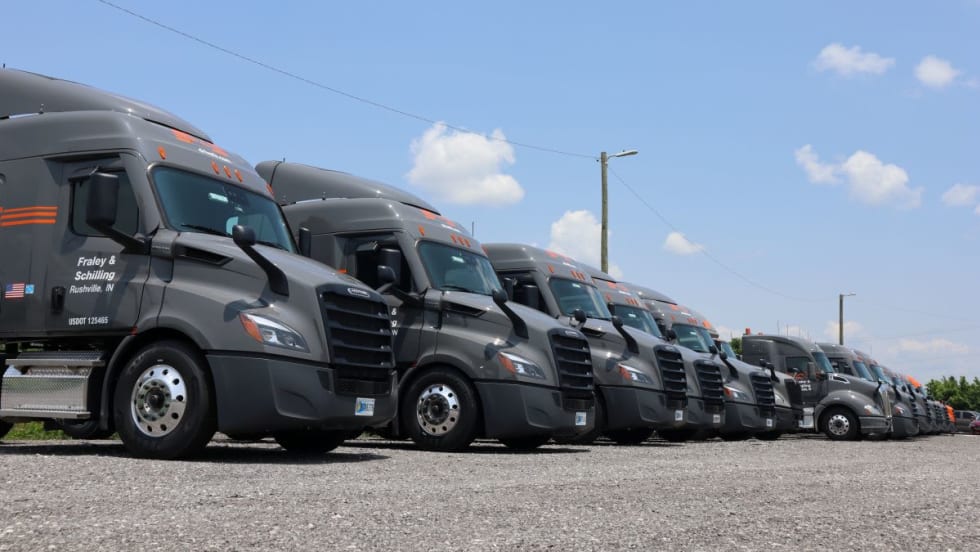
How Fraley & Schilling Improved Logbook Compliance by Over 50%
Fraley & Schilling needed a way to close a compliance workflow gap in its ELD system without adding more work from driver training, reminders, and back-office follow-ups. It found the answer in a custom driver app.
Read More →
Farewell, CDL: Why I'm Giving Up My Commercial Driver's License
After more than 20 years as a CDL holder, HDT Executive Editor Jack Roberts is letting his commercial license expire. Not because he wants to — but because trucking's nuclear verdict crisis has made the risks of public-road test drives too great for editors, manufacturers, and everyone involved.
Read More →
Enhance Fleet Performance with High-Efficiency Auxiliary Power Units
Drive sustainable cost savings while increasing driver comfort during short- and long-haul logistics operations.
Read More →
Wabash Trailers Recalled for Improperly Installed Underride Guards
More than 900 Wabash dry van trailers may not comply with the Federal Motor Vehicle Safety Standard for rear impact guards.
Read More →
Why K&B Trucking Is Embracing AI and Driver Safety Technology
Crunching data and embracing artificial intelligence are key in K&B Trucking's safety efforts, says the company's safety director.
Read More →