




FMCSA Testing Driver Monitoring Systems
The Federal Motor Carrier Safety Administration is taking a close look at whether onboard driver monitoring systems are an effective way to improve safety. The agency is mid-way through a multi-year research project designed to measure how well drivers respond to feedback from systems that track lane departures, impending collisions and fatigue, among other indicators. The research also will produce the largest continuous collection of naturalistic driving data ever undertaken
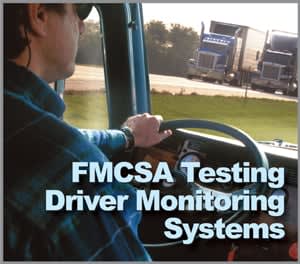
The Federal Motor Carrier Safety Administration is taking a close look at whether onboard driver monitoring systems are an effective way to improve safety.
The agency is mid-way through a multi-year research project designed to measure how well drivers respond to feedback from systems that track lane departures, impending collisions and fatigue, among other indicators. The research also will produce the largest continuous collection of naturalistic driving data ever undertaken,
said Olu Ajayi, a research statistician at the agency, in an article describing the effort.
It is not clear at this point what the agency might do with the information it gets from this study. Nothing in the record indicates it intends to write a rule concerning such technologies, and in any case it will be at least two years before the research produces any insights.
The Technology
In the study, 270 trucks from three volunteer carriers will be equipped with an onboard monitoring system, DriveVision Pro by Transecurity. The system integrates safety technologies such as forward collision and lane departure warning with driver observation systems designed to detect fatigue or inattention, and provides immediate feedback if the truck is at risk. Data from the device also is fed into a management information system to help with driver coaching.
Transecurity is a commercial spin-off from the Virginia Tech Transportation Institute, which conducts safety research for a number of clients, including FMCSA. It was created in 2006 by a team led by VTTI director Thomas Dingus.
Ajayi said in an interview that researchers will use the system to establish a baseline of the drivers' performance without any intervention, and then compare that to their performance while the system is responding. In a subsequent stage the researchers will see if any improvement can be sustained without the system responding.
Specifically, the study is intended to determine if driver performance improves with feedback from the system, and the comparative effectiveness of immediate versus management feedback. Researchers also want to know if they can use the system to determine a driver's risk potential.
Other goals are to see if any driver improvements can be sustained over time, and to gauge driver reaction to the system.
Potential Negatives
An inkling of what some drivers will say came from the Owner-Operator Independent Drivers Association, which said in comments to the agency that there are significant negatives attached to this kind of system.
Onboard monitoring systems can penalize drivers for defensive maneuvers, and they can be distracting, the association said.
On the other hand, the carriers that already use these kinds of systems have found significant benefits. C.R. England, for example, uses lane departure, forward collision and headway warning, as well as a stability control system that president Chad England described as "the biggest winner in safety technology as far as I am concerned."
At this point, the agency is preparing to gather information from the drivers who will participate in the 18-month field test. The agency last week asked for comments on this phase of the project (June 24 Federal Register). The study is scheduled to be completed by August 2013.
More Safety & Compliance
A Camera Isn't a Safety Program. Here's What Brokers Are Screening for Now
Footage alone may not be enough to pass broker vetting processes. Here's what counts as a defensible safety program now.
Read More →
Marijuana and Trucking’s Drug-Testing Dilemma
Marijuana is getting stronger, laws are changing, and drug tests still can’t reliably establish impairment. What does that mean for truck drivers and the fleets that employ them?
Read More →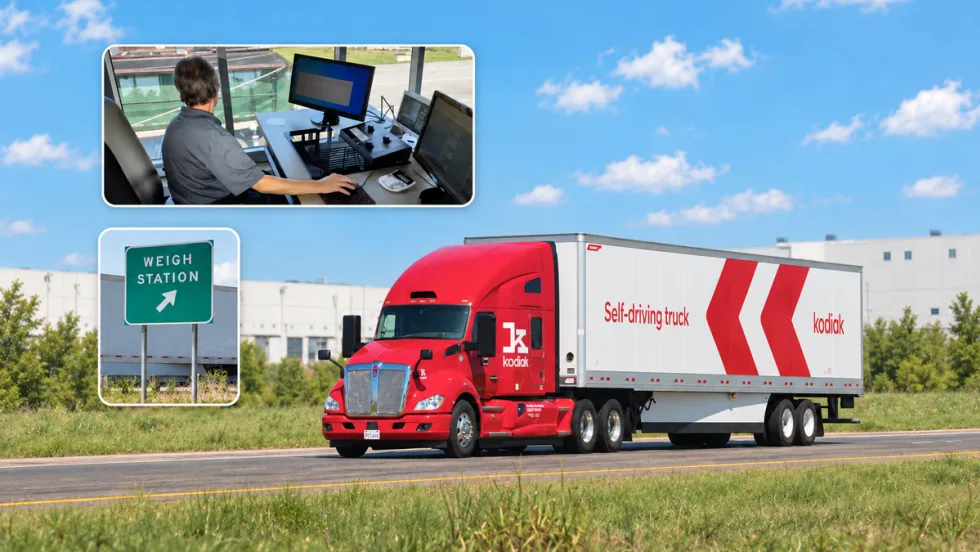
PrePass, Kodiak Connect Driverless Trucks to Roadside Enforcement
The system will allow enforcement agencies to verify Enhanced Inspection information and decide whether Kodiak’s autonomous trucks can bypass roadside screening sites.
Read More →

From One Generation to the Next: How Mentorship Builds Safer Truck Drivers
After three decades in trucking, Harold Perry shares what he's learned about driver safety, mentorship, and helping the next generation build confidence behind the wheel.
Read More →
FMCSA Pauses Biennial-Update Enforcement Amid Motus Transition
Carriers whose updates were due on or after June 1 have more time, while FMCSA works to stabilize its new registration system and warns of phishing sites impersonating its new carrier registration system, Motus.
Read More →
ZF Expands Commercial Vehicle Push in North America
ZF is expanding its North American commercial-vehicle presence with new transmission applications, electrification, trailer technology and autonomous-driving systems.
Read More →
Truck Drivers Need More Than Another Alert
Fleets have more visibility into truck health, safety events, and driver activity than ever. The next challenge is turning all that information into useful guidance for the person who has to decide what to do next.
Read More →
Tesla Wants a Self-Driving Semi. Are Cameras Enough?
Could Tesla’s camera-only autonomous driving technology work on an 80,000-pound Semi? In this commentary, HDT's Deborah Lockridge takes a look at Tesla, Cybercab, and how autonomous trucks see the road.
Read More →
What DOT’s Automated Vehicle Strategy Means for Trucking
The U.S. Department of Transportation issued a new automated-vehicle strategy that outlines plans for driverless-truck regulations, cross-state freight corridors, and federal safety standards.
Read More →
NYC Expands Speed, Pedestrian Safety Tech Across Fleet
New York City is expanding intelligent speed assistance and pedestrian-alert systems across its municipal fleet, moving the technologies from pilot programs into vehicle procurement and retrofit requirements.
Read More →