




FMCSA Survey Shows Increase in Safety Belt Use
New Federal Motor Carrier Safety Administration data that shows 78 percent of commercial truck and bus drivers wore safety belts while operating behind the wheel in 2010, compared to 74 percent in 2009
New Federal Motor Carrier Safety Administration data that shows 78 percent of commercial truck and bus drivers wore safety belts while operating behind the wheel in 2010, compared to 74 percent in 2009.
According to FMCSA's Safety Belt Usage by Commercial Motor Vehicle Drivers Survey, the number of commercial drivers that are wearing safety belts has increased by 14 percent since 2007. The 2010 survey observed 26,830 commercial drivers operating medium- to heavy-duty trucks and buses at 998 roadside sites nationwide. The survey found that safety belt use for commercial drivers and their occupants was higher, 80 percent, in states where law enforcement may stop drivers for not wearing a safety belt, versus 72 percent in states with weaker secondary enforcement belt use laws.
A regional breakdown showed that safety belt use rates for commercial drivers and their occupants were highest in the West, at 82 percent, compared with 79 percent in the South, 73 percent in the Midwest and 69 percent in the Northeast.
The new survey findings were released as FMCSA unveiled the two grand prize winners of this year's 'Be Ready. Be Buckled.', an art contest that encourages students nationwide to create posters urging commercial drivers to use their safety belts. The winners are Darby Kim, a second grader from Colin L. Powell Elementary School in Centreville, Va., and Lucia Choi, a fourth grader from James Madison Intermediate School in Edison, N.J. The contest is sponsored by the Commercial Motor Vehicle Safety Belt Partnership, which includes FMCSA and over 20 other government agencies and organizations.
Officials from the American Trucking Associations praised industry and law enforcement groups, as well as the federal government, for their efforts to improve seat belt usage among commercial truck drivers.
"Today's news is yet another reflection of the trucking industry's commitment to safety," ATA President and CEO Bill Graves said. "However, while these numbers are encouraging we acknowledge that there is still much more to do." Graves noted that crash fatality rate for truck drivers has plummeted in recent years.
ATA has been a long-time advocate of safety belt use and is a member of DOT's Commercial Motor Vehicle Safety Belt Partnership. Recently, ATA made safety belt initiatives a component of its progressive safety agenda. The agenda also calls for other strategies to induce seat belt use such as requiring that belts be of a sharply contrasting color, like bright orange, to allow for easier enforcement, admissibility in court of evidence that a driver failed to wear his/her seat belt, and denial of workers compensation claims for drivers who don't wear seat belts.
For more information: www.fmcsa.dot.gov
More Safety & Compliance
A Camera Isn't a Safety Program. Here's What Brokers Are Screening for Now
Footage alone may not be enough to pass broker vetting processes. Here's what counts as a defensible safety program now.
Read More →
Marijuana and Trucking’s Drug-Testing Dilemma
Marijuana is getting stronger, laws are changing, and drug tests still can’t reliably establish impairment. What does that mean for truck drivers and the fleets that employ them?
Read More →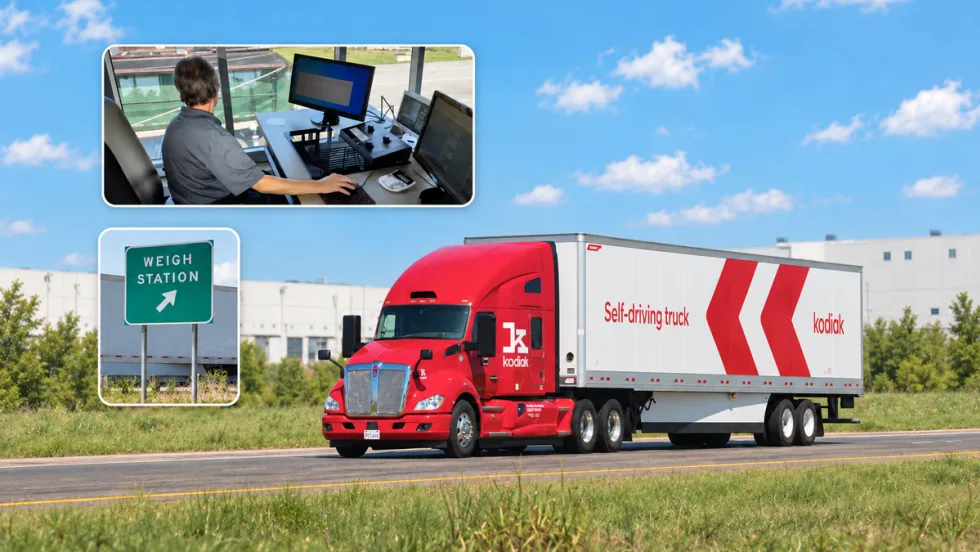
PrePass, Kodiak Connect Driverless Trucks to Roadside Enforcement
The system will allow enforcement agencies to verify Enhanced Inspection information and decide whether Kodiak’s autonomous trucks can bypass roadside screening sites.
Read More →

From One Generation to the Next: How Mentorship Builds Safer Truck Drivers
After three decades in trucking, Harold Perry shares what he's learned about driver safety, mentorship, and helping the next generation build confidence behind the wheel.
Read More →
FMCSA Pauses Biennial-Update Enforcement Amid Motus Transition
Carriers whose updates were due on or after June 1 have more time, while FMCSA works to stabilize its new registration system and warns of phishing sites impersonating its new carrier registration system, Motus.
Read More →
ZF Expands Commercial Vehicle Push in North America
ZF is expanding its North American commercial-vehicle presence with new transmission applications, electrification, trailer technology and autonomous-driving systems.
Read More →
Truck Drivers Need More Than Another Alert
Fleets have more visibility into truck health, safety events, and driver activity than ever. The next challenge is turning all that information into useful guidance for the person who has to decide what to do next.
Read More →
Tesla Wants a Self-Driving Semi. Are Cameras Enough?
Could Tesla’s camera-only autonomous driving technology work on an 80,000-pound Semi? In this commentary, HDT's Deborah Lockridge takes a look at Tesla, Cybercab, and how autonomous trucks see the road.
Read More →
What DOT’s Automated Vehicle Strategy Means for Trucking
The U.S. Department of Transportation issued a new automated-vehicle strategy that outlines plans for driverless-truck regulations, cross-state freight corridors, and federal safety standards.
Read More →
NYC Expands Speed, Pedestrian Safety Tech Across Fleet
New York City is expanding intelligent speed assistance and pedestrian-alert systems across its municipal fleet, moving the technologies from pilot programs into vehicle procurement and retrofit requirements.
Read More →