




Fed Cuts Interest Rates For Ninth Time This Year
The Federal Reserve has cut interest rates for the ninth time this year. Tuesday the Fed decided to lower its target for the federal funds rate by 50 basis points to 2.5 percent
The Federal Reserve has cut interest rates for the ninth time this year. Tuesday the Fed decided to lower its target for the federal funds rate by 50 basis points to 2.5 percent.
In a related action, the Board of Governors approved a 50-basis-point reduction in the discount rate to 2 percent.
In a written statement, the Federal Open Market Committee noted that the terrorist attacks "have significantly heightened uncertainty in an economy that was already weak. Business and household spending as a consequence are being further damped. Nonetheless, the long-term prospects for productivity growth and the economy remain favorable and should become evident once the unusual forces restraining demand abate."
Newport Communications Senior Economist Jim Haughey called the rate cuts "a confidence builder for nervous buyers and insurance against the current decline in the economy extending into the first half of next year.”
However, he cautions if this is enough to get the economy clearly started on the upswing early next year, then the Fed has to face moving rates back up. Haughey says a more normal rate of 4 percent to 5 percent in a balanced economy with 2 percent to 3 percent inflation is possible, but it likely won’t take place until late 2002.
But what if this rate cuts proves to be insufficient to restart the economy? Some ask why stop at a 2 percent discount rate? Why not 1.5 percent or even zero?
According to Haughey, lowering interest rates has no punch in the economy when high financial carrying cost is not the reason that buyers are reluctant to spend.
“Remember the 1930s when the fed pushed rates to zero without stimulating lending?” he says. He points out that Japan's central bank has had a near zero rate equivalent to the U.S. discount rate for several years, with no sucess in stimulating spending and moving Japan out of a decade-long recession.
“Investment shrinks when there is excess capacity," Haughey sayd. "The fed has done what it can with monetary policy; indeed it has probably gone the last several steps only to prevent the bankruptcy of some large Wall Street firms. Now the focus shifts to fiscal policy. Unless the economy rights itself quickly, expect huge new spending projects and more tax cuts,” he says.
The latter is very close to becoming realty. Congress and the President are close to agreeing on a stimulus package that will likely total around $100 million.
More Fleet Management

What Trucking Events are Happening in 2026?
Looking for trucking-related conventions, expos, and other events? Heavy Duty Trucking has developed this list of national and larger regional trucking shows and events.
Read More →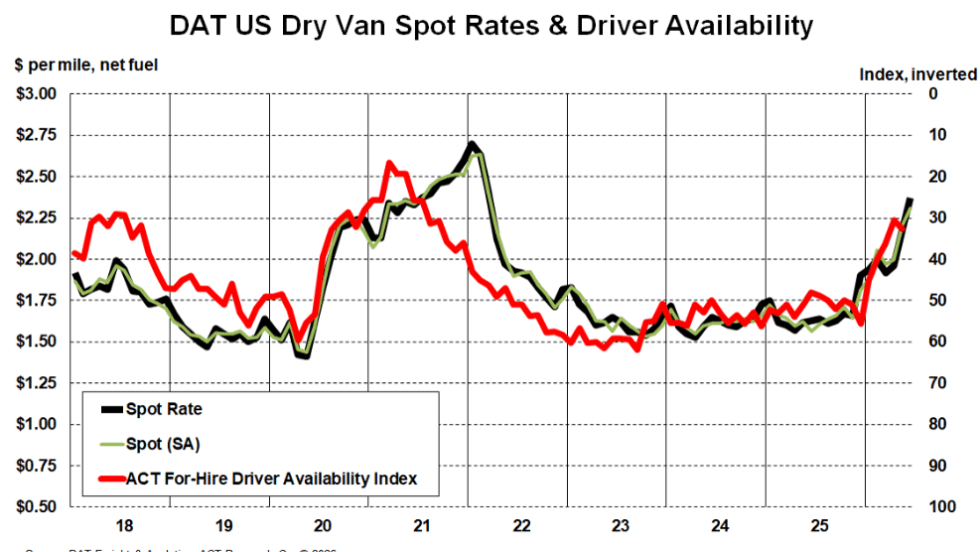
Truckload Rates Keep Rising as Tight Capacity Fuels Freight Market Recovery
Spot and contract rates continued climbing in May and June, not because freight demand is surging, but because fewer trucks and drivers are available.
Read More →
What Geotab's New AI Connector Means for Fleets
Fleets can now ask their usual AI assistants questions about maintenance, safety, fuel use, and vehicle performance, using their live Geotab data, and take action on the answers without leaving their preferred AI tool.
Read More →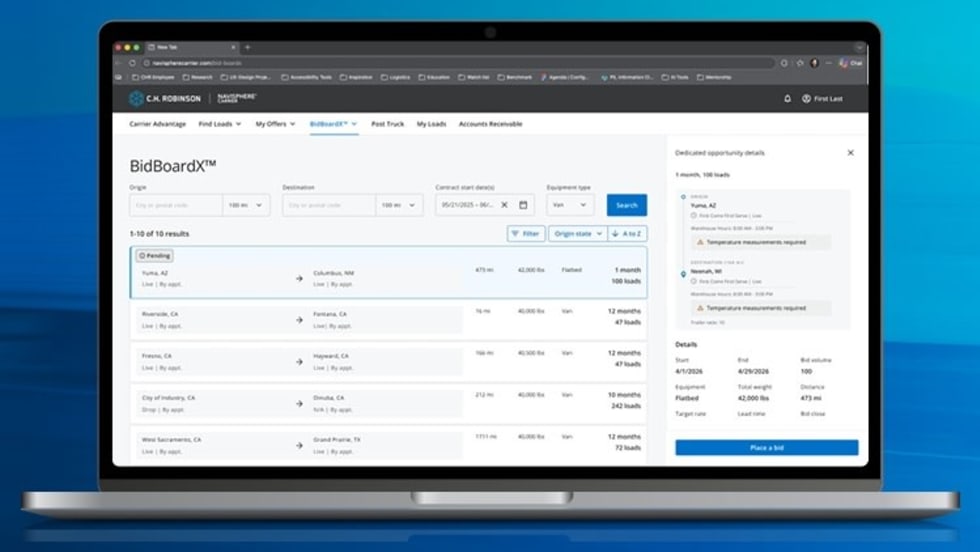
New C.H. Robinson Tool Opens Door to More Predictable Freight
BidBoardX lets carriers search, bid on, and secure committed freight opportunities through a single digital marketplace.
Read More →
New York City's Microhub Project is Delivering Results
Trucking, last-mile delivery companies, and environmental advocates like what they are seeing so far with New York's microhub program.
Read More →
Why Truck Detention Keeps Costing Fleets Time and Money
A 2024 ATRI study found detention affects nearly 40% of truckload stops and costs the industry more than $15 billion annually. Despite the toll on drivers, fleets, and supply chains, the problem remains stubbornly persistent.
Read More →
Time is Running Out to Apply for Exclusive HDT Event
Heavy Duty Trucking Exchange brings fleet managers and suppliers together for the deeper conversations that lead to ideas, partnerships, and solutions. Time is running out to apply for the September event.
Read More →
Amazon Launches Less-Than-Truckload Freight Offering for All Businesses
This launch is the latest addition to Amazon Supply Chain Services, a portfolio of supply chain capabilities from Amazon, including freight, distribution, fulfillment, and parcel shipping.
Read More →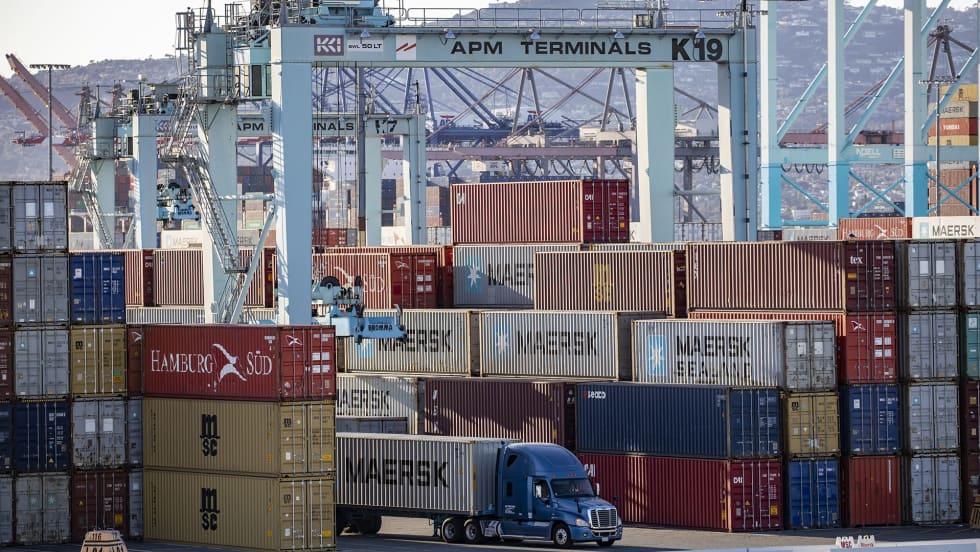
Import Cargo Volume to See Year-Over-Year Gain Again in June, Then Remain Below 2025 Levels Into Fall
After July, the report predicts a weakening in import volume as consumer uncertainty remains high and the impact of increasing inflation takes its toll.
Read More →
Volvo Trucks Adds Unattended Over-the-Air Software Update Capabilities
The latest evolution of Volvo’s over-the-air update technology allows software updates to run while trucks are parked, helping fleets keep vehicles current without disrupting operations.
Read More →