




Eye-Opener Report: FMCSA Should Boost Driver-Fatigue Research
A new report prepared by the National Academies of Sciences, Engineering, and Medicine advises the FMCSA to improve data and research methods “to support a more comprehensive understanding of the relationships between operator fatigue and highway safety and between fatigue and long-term health.”

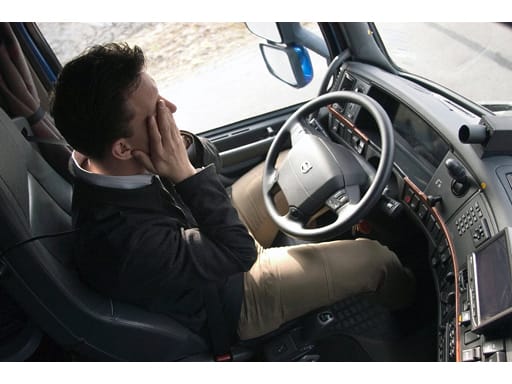
Photo: Volvo Group

Photo: Volvo Group
The Federal Motor Carrier Safety Administration should make numerous improvements in data and research methods “to support a more comprehensive understanding of the relationships between operator fatigue and highway safety and between fatigue and long-term health.”
That’s per a new report prepared for the agency by a committee of the National Academies of Sciences, Engineering, and Medicine.
The report argues that “the available crash reporting databases often provide a paucity of information on sleep deficiency in CMV drivers, their adherence to HOS rules, and their crash frequency as a result of fatigued driving. Therefore, research on the linkage among hours of service, fatigue, and accident frequency is hampered by imperfect knowledge of the three most central variables.”
That being said, the National Academies contends that any newly proposed changes to Hours of Service rules and those for the medical certification of CMV drivers as well as to the North American Fatigue Management Program (NAFMP)industry-wide educational effort “need to be based on research-supported understanding of the costs and benefits of such changes.”
Questions Needing Answers
From there, the report lists the research panel’s “attempt to articulate questions that, if answered satisfactorily, should assist FMCSA in understanding the costs and benefits of existing and proposed changes to its policies and regulations” in these areas:
How much sleep do typical CMV drivers need to maintain suitable sustained levels of alertness and to avoid being drowsy to the point of driving while impaired?
To what extent would any proposed change in HOS regulations affect the amount of sleep obtained by CMV drivers in different industry sectors?
What degree of hypopnea (severity level of OSA) results in enough sleep loss to increase the risk of crashes for CMV drivers?
To what extent does regular use of positive airway pressure (PAP) and related OSA treatment technologies mitigate that increased risk?
To what extent are various collision avoidance and driver fatigue alert technologies (both in-vehicle technologies and infrastructure measures such as roadway rumble strips) useful for reducing the risk of crashes?
What substances, if any, reduce impairment due to sleep insufficiency?
To what extent is chronic sleep deprivation related to an increased risk of developing health threats or various medical conditions?
To what extent do CMV drivers, their employers, corporate officials, fleet supervisors, safety and risk managers, and drivers’ families make use of the NAFMP [educational] materials on the internet?
To what extent do fatigue awareness training and fatigue management initiatives result in behavioral improvements in CMV drivers?
Allowing that “considerable progress has been made toward answering many of these questions” using various research methods, the authors point out that the range of study techniques deployed can result in “confounding influences when attempts are made to compare interventions or treatments.”
"Quality Information" Sought
After presenting a summary of “what is known” about the causes and effects of CMV fatigue, the report states that “Further progress in research on the relationship among CMV driver fatigue, drivers’ long-term health, and highway safety will require quality information” on these specific measures:
Driver loss of alertness in near real time (possibly obtained by a system that measures degree of eyelid closure)
Amount of quality sleep a driver received in the past 24 hours
Number of sleep-related crashes in which a driver was involved per vehicle-miles traveled over a long period of time (e.g., several years of driving)
Driver’s development of various health conditions that can affect alertness
Changes in components of a driver’s lifestyle, especially diet and health
Driver’s number of lane deviations, unusual speed changes, and unusual brake applications
A Kicker
Then, on page 27, comes a kicker. The panel says that answering these research questions will require better understanding “the links between the relevant inputs and the relevant outcomes. Achieving this understanding will in turn require having these input and outcome variables at the level of the individual driver.”
But getting that information on individual truckers will take “the ability to merge data across separate sources. At present, however, while the inputs or the outputs for many of the above research questions may be available to some parties (e.g., confidentially held by carrier/employers or accessibly electronically recorded by equipment manufacturers), many of these measures are not available to researchers.”
The report also points out that, “Despite almost three decades of research on the topic, technological innovations for detecting driver fatigue in near real time and operational strategies for their use are still in the early phases of understanding and application.”
Over the next nearly 200 pages, the authors detail their methodology and the research findings of their deep scientific dive into the yawningly wide topic of CMV drivers and fatigue.
The Recommendations...
Ultimately, the report makes these 13 specific recommendations, presented here in order and unedited:
The National Institute of Occupational Safety and Health should be enlisted to design and conduct a regularly scheduled survey every 5 to 10 years to gather information needed to better understand the demographics and employment circumstances of all commercial motor vehicle drivers in various industry segments.
FMCSA should conduct an evaluation to determine whether commercial motor vehicle drivers’ use of electronic on-board recorders correlates with reduced frequency of hours-of-service violations and reduced frequency of crashes compared with those drivers who do not use such instruments.
FMCSA has proposed that the use of electronic on-board recorders be mandated. Given the potential research benefits of the use of such data, the proposed rule should be modified before being adopted to allow for research use of the data thus captured in a manner that protects individualized confidential data from disclosure.
When commercial trucks and buses containing electronic data recorders that record data on the functioning of the driver and the truck or bus are involved in serious crashes, the relevant data should be made available to investigators and to safety researchers.
FMCSA should incentivize those who capture driver performance data (e.g., large fleets, independent trucking associations, companies that collect telematics data, insurance companies, researchers) to increase the availability of those data relevant to research issues of operator fatigue, hours of service, and highway safety. Any such efforts should ensure that data confidentiality is maintained, perhaps through restricted access arrangements or use of statistical techniques for disclosure protection.
FMCSA should work to improve the collection of and/or access to baseline data on driving exposure by including in its data collection efforts greater detail on the driving environment and by providing these data at low levels of geographic aggregation— even for individual highway segments. Comparisons enabled by the availability of these baseline data would benefit several proposed lines of new research.
FMCSA should support research aimed at better understanding the factors associated with driver behavior related to fatigue and sleep deficiency, including what motivates drivers’ decisions about whether to continue driving when they feelfatigued.
Using a human-systems integration framework, FMCSA and the National Highway Traffic Safety Administration, in consultation with the Centers for Disease Control and Prevention and the National Institutes of Health (NIH), should develop evaluation guidelines and protocols for third-party testing, including field testing, conducted to evaluate new technologies that purport to reduce the impact of fatigue on driver safety.
FMCSA should make greater use of independent peer review in crafting requests for proposals, making decisions regarding awards, and monitoring the progress of projects (including in the study design and analysis stages). Peer review should include expertise from all relevant fields, including epidemiology and statistics— especially causal inference— to address appropriate design and analysis methods.
The Department of Health and Human Services and/or the U.S. Department of Transportation should fund, design, and conduct an ongoing survey that will allow longitudinal comparisons of commercial motor vehicle drivers to enable tracking of changes in their health status, and the factors likely to be associated with those changes, over time. In addition, it would be highly desirable for the data thus collected to include sufficient information to enable linking of the survey data to relevant electronic health records, with a particular focus on conditions that may threaten drivers’ health and safety.
FMCSA should continue to encourage all individuals included in the National Registry of Certified Medical Examiners to utilize current best practices in identifying drivers who should be referred for additional sleep malady testing and in making determinations about commercial driver’s license renewal extensions. It would be highly preferable, as soon as possible, to supply the examiners with clear criteria or guidance on when it is appropriate to refer presenting drivers for sleep malady testing.
FMSCA should support peer-reviewed research on obstructive sleep apnea (OSA) and commercial motor vehicle drivers throughout all the research stages, from the drafting of requests for proposals through analysis of data. The supported research should be focused on a better understanding of the incidence of OSA in commercial motor vehicle drivers; its impact on driver fatigue, safety, and health; and the benefits of treatments. Specific research topics might include: determining the number of commercial motor vehicle drivers whose quantity/quality of sleep and driving performance are likely affected at various levels of apnea-hypopnea (index of OSA severity); determining what rules for sleep-screening referrals are effective in discriminating between those commercial motor vehicle drivers with and without OSA; delineating the causal chain from diagnosis of OSA (preferably as a function of severity) to increased likelihood of crash frequency among commercial motor vehicle drivers; determining the impact of treatment with positive airway pressure (PAP) and similar devices on long-term health and crash rates among commercial motor vehicle drivers with varying degrees of apnea severity; and identifying the required/recommended duration of initial PAP treatment (e.g., suggested number of hours of treatment per day/week) before a driver can be certified to return to driving.
FMCSA should carry out a research program on driver fatigue management and training. This research program should include: evaluating the effectiveness of the NAFMP for educating truck and bus drivers in how to modify their behavior to remedy various potential sources of fatigue; determining how effective the North American Fatigue Management Program (NAFMP) training modules are in meeting the needs of drivers’ employers, including fleet managers, safety and risk managers, dispatchers, driver trainers and other corporate officials (e.g., those conducting carrier-sponsored employee health and wellness programs); evaluating any new education programs regarding sleep apnea that FMCSA has or plans to develop; and examining possibilities for the development and evaluation of incentive-based programs for improving health and fitness, including regular coaching, assessment, and support.
“The committee that conducted the study and wrote the report found that substantial data gaps limit understanding of the factors that affect the health and wellness of CMV drivers,” said the National Academies.
It added that the recommendations made aim to improve “data and research methods by FMCSA to support a more comprehensive understanding of the relationships between operator fatigue and highway safety and between fatigue and long-term [driver] health.”
More Drivers

Driver Trust Can Make or Break the Success of Fleet Safety Technology
New Teletrac Navman research suggests that onboarding, transparency about driver data, and positive feedback can play a significant role in how commercial drivers respond to safety and coaching technology.
Read More →
EEOC Sues KLLM Over Alleged Sex Discrimination in Driver Training
KLLM is facing a federal sex-discrimination lawsuit over policies the EEOC alleges put female truck driver trainees at a disadvantage.
Read More →
FMCSA Moves to Codify English Language Requirements for Commercial Drivers
By changing regulations on English-language proficiency requirements for commercial drivers, rather than relying on a guidance memo, the FMCSA said future administrations won't be able to walk back the Trump administration's stricter enforcement with just a memo.
Read More →
Drivers Put Western Star Trucks to the Test at Star Nation Experience
Watch to get an inside look at the Western Star trucks, technology, and community behind the Star Nation Experience 2026!
Read More →
Trump Administration Looks to Put More Veterans Behind the Wheel
The Freedom Haulers program pulls together existing and expanded programs at several federal agencies to recruit veterans to drive commercial heavy-duty trucks and cut the red tape for them to get a CDL, training, and employment.
Read More →
Putting Mack’s Command Steer to the Test
A test drive of Mack’s Command Steer active steering system evaluates how it can make truck driving easier and less tiring.
Read More →
Competition Heating Up for Truck Drivers
New report reveals rising driver hiring costs, the return of sign-on bonuses, growing AI advantages, and the operational factors shaping driver retention.
Read More →
How Fraley & Schilling Improved Logbook Compliance by Over 50%
Fraley & Schilling needed a way to close a compliance workflow gap in its ELD system without adding more work from driver training, reminders, and back-office follow-ups. It found the answer in a custom driver app.
Read More →
Volvo Goes Gaming
Volvo has roared into American Truck Simulator with two new flagship trucks.
Read More →
What the Best Fleets to Drive For Teach About Driver Retention
Survey fatigue, AI-powered routing, owner-operator expectations, and the decline of social media all emerged as themes from this year's Best Fleets to Drive For program.
Read More →