




EPA Offers Nearly $1 Billion in Grants for Class 6-7 Electric Vehicle Transition
The Environmental Protection Agency launched a new grant program to provide $1 billion to support the transition of Class 6 and Class 7 vehicles to zero-emissions.

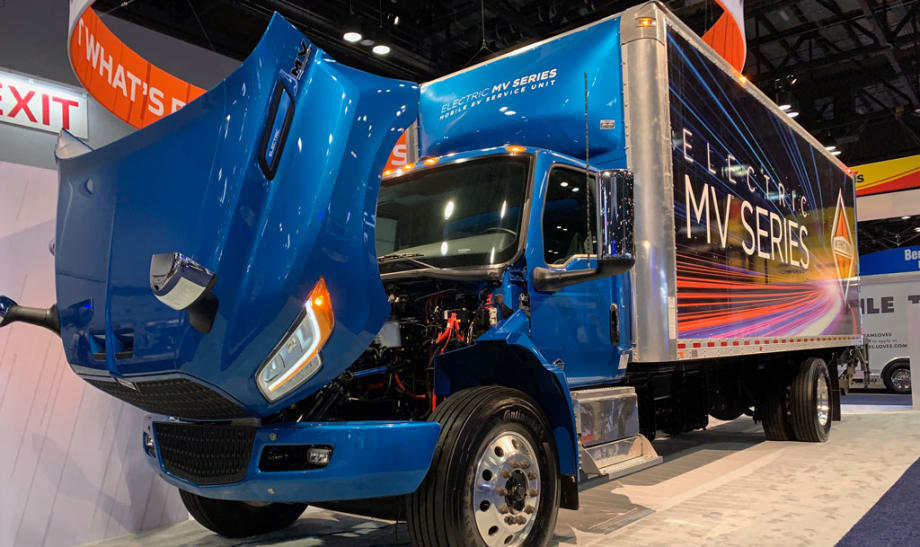
A new grant program will help with the adoption of zero-emission Class 6 and 7 trucks, such as this International eMV.
Photo: Deborah Lockridge
The Environmental Protection Agency launched a new grant program that would provide nearly $1 billion to support the transition of Class 6 and Class 7 vehicles to zero-emissions.
The Clean Heavy-Duty Vehicles Grant Program is funded through the Inflation Reduction Act. The program will award competitive grants for projects to reduce climate and air pollution from Class 6-7 vehicles.
“In addition to all the progress we’re making to electrify light-duty vehicles, today's funding from the EPA will catalyze projects that bring electric school buses, garbage trucks, and delivery vans to neighborhoods across America,” said John Podesta, senior advisor to the president for International Climate Policy.
The Clean Heavy-Duty Vehicles Grant Program
The 2024 Clean Heavy-Duty Vehicles Grant Program will support the adoption and deployment of eligible Class 6 and 7 zero-emission vehicles while also funding zero-emission vehicle fueling infrastructure and workforce development and training.
Across the nation, over 3 million Class 6 and Class 7 vehicles are currently in use, spanning a wide variety of vehicle types and vocations, including school buses, refuse haulers, and utility and delivery trucks, according to the EPA announcement.
The 2024 Clean Heavy-Duty Vehicles Grant Program is designed to help applicants across the country transition to zero-emission vehicles and reduce air pollution.
School Bus and Vocational Sub-Programs
EPA is providing two separate sub-program competitions:
The School Bus Sub-Program for applicants replacing school buses.
The Vocational Vehicles Sub-Program for applicants replacing non-school bus Class 6 and 7 vehicles – including box trucks, refuse haulers, dump trucks, street sweepers, delivery trucks, bucket trucks, and utility trucks.
EPA anticipates approximately 70% of available funding will be for projects under the School Bus Sub-Program and approximately 30% of available funding will be for projects under the Vocational Vehicles Sub-Program.
What Vehicles Are Covered Under the Grant Program?
Eligible vehicles under the 2024 Clean Heavy-Duty Vehicles Grant Program include:
Class 6 and Class 7 school buses
Other non-school bus Class 6 and Class 7 vehicles, including (but not limited to):
Refuse Haulers/Dump Trucks
Class 6/7 Transit Buses
Delivery Trucks
Utility Trucks
Bucket Trucks
Other Box Trucks
To be eligible for replacement, existing vehicles must:
Be a Class 6 or Class 7 heavy-duty vehicle with Gross Vehicle Weight Rating between 19,501 lbs to 33,000 lbs.
Be fully operational at the time of application submission.
Be an engine model year 2010 or older diesel-powered vehicle that will be scrapped if selected for funding. (There are also options if a fleet has no eligible EMY 2010 or older diesel-powered vehicles.)
Additional requirements for vehicles being replaced through the Vocational Vehicles Sub-Program include that vehicles must have accumulated at least 7,000 miles/year during each of the two years prior to replacement.
Eligible applicants for both competitions include states, municipalities (including school districts), Indian Tribes, territories, and nonprofit school transportation associations.
The deadline to apply for the 2024 Clean Heavy-Duty Vehicles Grant Program is July 25, 2024. EPA expects to announce awards by the end of this year.
More Fuel Smarts

How Volvo Updated Its D13 for EPA 2027 [Watch]
Volvo’s updated D13 promises lower emissions without sacrificing performance or fuel economy. Take a closer look at what changed inside the engine in this HDT Spotlight video.
Read More →
Diesel Price Spike Shortens Payback for Natural Gas Trucks, Report Says
Energy Vision estimates fleets could recover the higher purchase price of an RNG-fueled Class 8 tractor in 1.3 to 2.8 years under current fuel-price scenarios.
Read More →
Calstart Becomes Catalyst Mobility, Reflecting Broader Focus
Calstart is now Catalyst Mobility, reflecting the nonprofit’s growing national role in clean transportation, including zero-emission trucks, infrastructure and incentive programs.
Read More →

Record Diesel Prices Squeeze Trucking Fleets
Average U.S. diesel prices have climbed to nearly $6 a gallon, surpassing the 2022 record as tight refinery capacity and Middle East disruptions keep fuel costs elevated.
Read More →
How Fuel Delivery Shapes Engine Performance
Fuel delivery depends on more than what happens at the injector. For fleet, maintenance and technical professionals, looking at the full path from pump to injector can provide useful context for understanding engine performance.
Read More →
East Coast Port Launches $45M Electric Truck Push
The Port Authority of New York and New Jersey announced millions in incentives for zero-emission drayage trucks, yard tractors, and new charging hubs near the port.
Read More →
California Bill Could Shed Light on Electric Truck Prices
Why do battery-electric Class 8 trucks remain so expensive? A California bill headed to Gov. Gavin Newsom would give fleets and state agencies more visibility into what manufacturers charge.
Read More →
Detroit Opens Orders for EPA 2027 Engines
Detroit isn’t starting from scratch to meet EPA 2027 diesel emissions standards. Its Gen 6 DD13 and DD15 engines keep much of today’s platform while updating the fuel and aftertreatment systems.
Read More →
Zero-Emission Truck Corridor Planned for West Coast
California, Oregon, Washington, British Columbia and Baja California are coordinating plans for truck charging and hydrogen fueling from Canada to Mexico.
Read More →
A Closer Look at Kenworth’s Electric T880E Vocational Truck [Video]
Learn more about Kenworth's T880E battery-electric vocational truck at the Paccar Technical Center, including its range, applications, upfitting considerations, and PTO options, in this HDT Spotlight video.
Read More →