




EPA Fines Estes Express $100,000 for California Violations
EPA has fined Estes Express Lines $100,000 for failing to install diesel particulate filters on 15% of its California fleet.

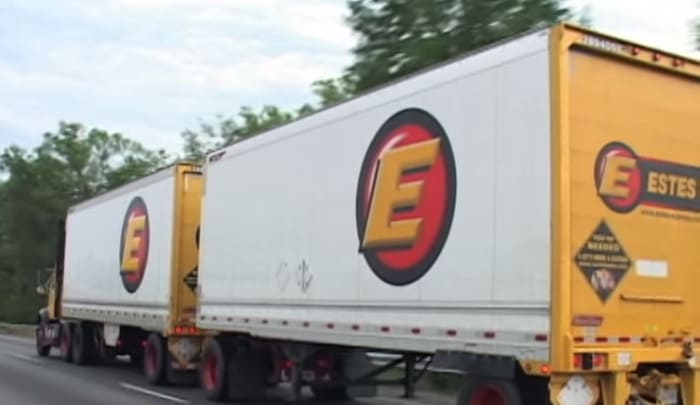
Image via Estes YouTube
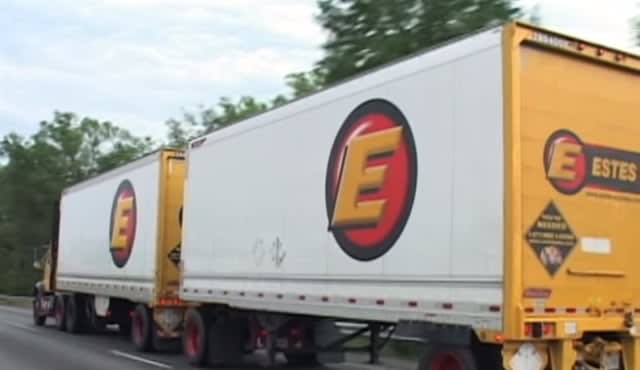
Image via Estes YouTube
The U.S. Environmental Protection Agency has fined Estes Express Lines $100,000 for failing to install diesel particulate filters on 15% of its California fleet. Virginia-based Estes is a for-hire trucking company that owns and operates vehicles across the U.S.
In February, EPA issued a notice of violation to Estes when it found that the company had not equipped 73 of its trucks with DPFs and failed to verify compliance with the Truck and Bus Regulation for its hired motor carriers.
The California Truck and Bus Regulation requires any trucking company to ensure that its subcontractors are only using compliant trucks. It also requires companies to upgrade their vehicles to meet specific NOx and PM2.5 performance standards in California and part of meeting that regulation requires the adoption of diesel particulate filters, which significantly reduce emissions. The regulation was adopted into the Clean Air Act plan requirements in 2012.
Estes has been working with the EPA on a settlement for the violations, according to company spokesman Nick Scola. Per a statement to HDT, Estes said it believed it was working within California's environmental regulatory standards when the violations occured.
Estes now operates only new trucks in California. The carrier also said it has invested hundreds of millions of dollars to reduce its fleets carbon footpint in the past five years.
Of the 73 vehicles found in violation of the emissions standards, 45 were headquartered in adjoining states and traveled into California for local deliveries. The total non-compliant miles driven by the 73 vehicles made up less than 0.5% of Estes annual miles driven in California, according to Estes.
“Estes Express Lines would never knowingly be out of compliance with any state or federal law," said Rob Estes, president and CEO of Estes, in the statement. "We regret that the first-ever federal action taken to enforce the California Truck and Bus Regulation is associated with the good name of our nearly 85-year-old company.”
As part of its settlement with the EPA, Estes will contribute $290,400 towards a project to educate the out-of-state trucking industry on the regulations it violated and for the non-trucking related emissions cause of replacing old wood-burning devices in the San Joaquin Valley.
The company will also pay $35,000 to University of California Davis Extension to implement a state-approved training program for out-of-state trucking firms on compliance with the rule.
In additon, Estes will pay $255,400 to the San Joaquin Valley Air Pollution Control District’s Burn Cleaner Incentive Program, which will be used to replace 80 or more wood-burning devices with cleaner alternatives.
“Trucks represent one of the largest sources of air pollution in California, and the state has the worst air quality in the nation,” said Jared Blumenfeld, EPA’s regional administrator for the Pacific Southwest. “EPA’s enforcement efforts are aimed at ensuring all truck fleets operating in California are in compliance with pollution laws.”
More Fuel Smarts

Wex Adds Cardless Fuel Payments for Over-the-Road Customers
A new fuel card feature for Wex customers offers convenience and security.
Read More →
New California Law Could Shed Light on Electric Truck Prices
Why do battery-electric Class 8 trucks remain so expensive? A California bill signed by Gov. Gavin Newsom would give fleets and state agencies more visibility into what manufacturers charge.
Read More →
How Volvo Updated Its D13 for EPA 2027 [Watch]
Volvo’s updated D13 promises lower emissions without sacrificing performance or fuel economy. Take a closer look at what changed inside the engine in this HDT Spotlight video.
Read More →

Diesel Price Spike Shortens Payback for Natural Gas Trucks, Report Says
Energy Vision estimates fleets could recover the higher purchase price of an RNG-fueled Class 8 tractor in 1.3 to 2.8 years under current fuel-price scenarios.
Read More →
Calstart Becomes Catalyst Mobility, Reflecting Broader Focus
Calstart is now Catalyst Mobility, reflecting the nonprofit’s growing national role in clean transportation, including zero-emission trucks, infrastructure and incentive programs.
Read More →
Record Diesel Prices Squeeze Trucking Fleets
Average U.S. diesel prices have climbed to nearly $6 a gallon, surpassing the 2022 record as tight refinery capacity and Middle East disruptions keep fuel costs elevated.
Read More →
How Fuel Delivery Shapes Engine Performance
Fuel delivery depends on more than what happens at the injector. For fleet, maintenance and technical professionals, looking at the full path from pump to injector can provide useful context for understanding engine performance.
Read More →
East Coast Port Launches $45M Electric Truck Push
The Port Authority of New York and New Jersey announced millions in incentives for zero-emission drayage trucks, yard tractors, and new charging hubs near the port.
Read More →
Detroit Opens Orders for EPA 2027 Engines
Detroit isn’t starting from scratch to meet EPA 2027 diesel emissions standards. Its Gen 6 DD13 and DD15 engines keep much of today’s platform while updating the fuel and aftertreatment systems.
Read More →
Zero-Emission Truck Corridor Planned for West Coast
California, Oregon, Washington, British Columbia and Baja California are coordinating plans for truck charging and hydrogen fueling from Canada to Mexico.
Read More →